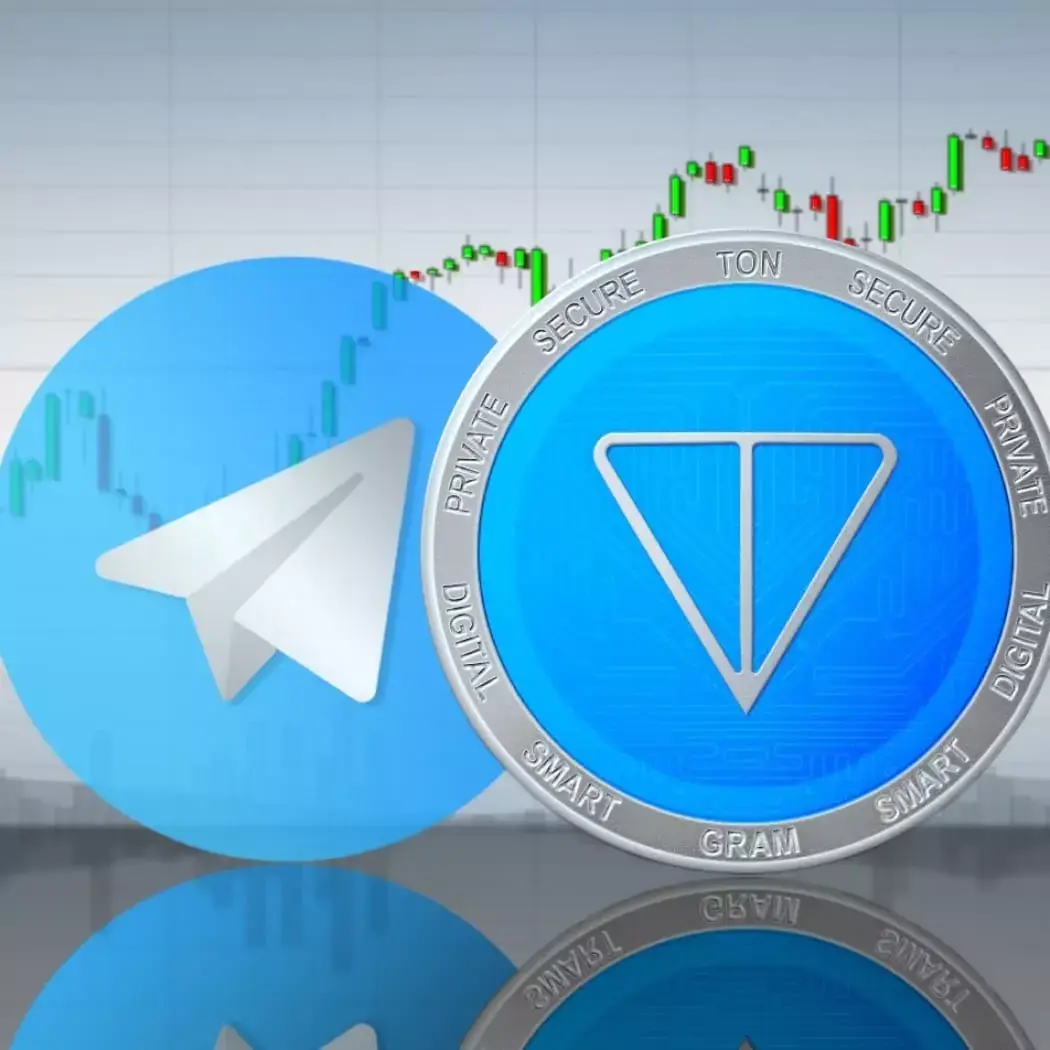
















The Open Network (TON) blockchain was initially created for the popular messaging app Telegram. The goal was to build a blockchain offering high-speed, cost-effective, scalable transactions at global scale. Toncoin forms the backbone of TON’s financial ecosystem, serving various functions such as transaction fees.
In 2026, TON has evolved beyond its original Telegram-linked concept into a full-scale messaging-native Web3 infrastructure layer powering payments, Mini Apps, AI agents, DeFi, and decentralized services directly inside Telegram.
While Toncoin has been on the market for a few years, more and more crypto investors are interested in this coin, as well as in the TON wallets that the platform offers. TON wallet Telegram is an app that enables users to store, manage, and transfer their crypto, including Toncoin, within the TON blockchain.
As of 2026, TON wallets are no longer just storage tools — they are becoming financial identity layers inside Telegram, enabling USDT (TON), NFTs, GameFi assets, Mini App payments, and AI-driven trading automation.
Telegram wallets are no longer financial tools—they are distribution infrastructure for Web3 liquidity inside chat-native environments.
Everything you need to know about TON wallets and popular Telegram-integrated crypto wallets that support other cryptocurrencies, from Peiko. You will discover what is Telegram wallet, and how to create a wallet in Telegram made for crypto by following the main stages: defining project scope, creating intuitive design, coding, deploying, and others. Also, we will consider the top TON wallet Telegram options in 2026 (updated ecosystem landscape shaped by Mini Apps and AI integration) and how the Peiko team can help you create the next high-growth Telegram-native Web3 product.
What is a Telegram crypto wallet?
TON was conceived as a blockchain platform by the Telegram team, designed from the outset to prioritize speed and scalability. A TON wallet serves as a secure cryptocurrency storage solution, enabling users to store, send, and receive digital currencies securely. These wallets emerged as part of the evolution from the Telegram Open Network.
In 2026, Telegram crypto wallets have become a core Web3 onboarding layer, replacing browser extensions, standalone crypto apps, and even exchanges for millions of users inside Telegram Mini Apps.

TON wallets provide diverse functionalities. So that you don’t get confused, let’s clarify the types of the TON crypto wallets.
There is a native Telegram crypto wallet called Wallet. There are various Telegram bot wallets and Telegram Mini Apps wallets that are integrated with Telegram. Also, there are diverse custodial and non-custodial wallets that support the transfer of TON tokens (Tonkeeper), but they are not integrated with Telegram.
The biggest shift is the rise of Mini App wallets, which in 2026 dominate the ecosystem due to superior UX, embedded payments, AI automation, and frictionless onboarding.
Key insight: Wallets are no longer products—they are interfaces into Telegram’s financial ecosystem.
So, to answer what is Telegram wallet shortly – it’s a cryptocurrency management tool that integrates with the Telegram app, allowing users to securely store, send, receive, and sometimes trade digital assets.
Reasons to build a Telegram wallet
Telegram is no longer just a messaging app with crypto add-ons—in 2026, it has effectively become a distribution layer for Web3 finance. That shift completely changes why Telegram wallets exist, who builds them, and what “success” even means.
Here are several key advantages that attract users:
- The popularity of Telegram: With 950+ million users in 2026, developing a crypto wallet on Telegram promises a highly profitable endeavor due to its vast and engaged user base. You can successfully promote your crypto wallet with such a huge target audience, and apply different monetization models to generate revenue. For example, use a paid advertisements. In 2026, Telegram Mini Apps have turned wallets from optional tools into default onboarding infrastructure for Web3 ecosystems.
- User-friendly interface and accessibility: Utilizing a crypto wallet on Telegram is straightforward due to its familiar interface. Users find it easy to navigate, as all transactions occur within the usual chat environment, eliminating the need for additional app installations. This will attract a wider user base for your project. 2026 update: most wallets now use “no-app UX” flows inside Mini Apps, reducing onboarding friction to near-zero.
- Robust security features: Telegram is renowned for its robust encryption and commitment to safeguarding user data. Crypto wallets integrated with Telegram inherit these stringent security measures, ensuring the protection of digital assets. Users will use your crypto wallet solution with peace of mind, trusting it with their money. In 2026, many wallets also integrate MPC (multi-party computation), passkeys, and biometric authentication for enhanced security.
- Mobility and cross-platform availability: Telegram is accessible across various devices, including smartphones and computers. So users can enjoy the convenience of using their crypto wallets from anywhere. In turn, the developers will expand their target audience.
- Integration with diverse services: Many Telegram-based crypto wallets offer additional functionalities. These can include currency exchange, trading on exchanges, and participation in ICOs (initial coin offerings). All these activities are directly accessible within the messenger interface. In 2026, this expanded into DeFi swaps, NFT marketplaces, GameFi economies, and AI trading assistants embedded directly into wallets. TG crypto wallets enhance user experience by gathering multiple services in one platform.
As we can see, Telegram’s role in Web3 has fundamentally changed by 2026. It is no longer just a messaging platform with crypto integrations—it has evolved into a native distribution layer for financial applications, identity systems, and on-chain interactions.
This shift is redefining the entire category of Telegram wallets: they are no longer standalone tools for storing or sending crypto, but embedded components of a much larger ecosystem driven by Mini Apps, AI agents, and real-time financial flows inside chats.
As a result, the criteria for building and evaluating wallets has changed as well. The focus is no longer on isolated product features, but on how deeply a wallet is integrated into Telegram’s ecosystem infrastructure: from onboarding and security to transaction execution and user retention loops.
The table below summarizes the key structural shifts that define Telegram wallets in 2026 and explains why this category is rapidly converging into ecosystem-level infrastructure rather than traditional fintech products:
| Shift | What it used to be | What it is in 2026 | Why it matters |
| Mini Apps → Infrastructure layer | Wallets were standalone apps or bots | Wallets are embedded inside Mini Apps as core infrastructure | Wallets are no longer products — they are payment + identity rails powering ecosystems |
| No-app UX onboarding | Users installed wallets, used extensions, managed seed phrases | Wallets are created and used inside chats with minimal steps | Removes onboarding friction and makes crypto feel native to Telegram, not external to it |
| Security model shift | Users managed seed phrases, private keys, browser extensions | MPC, passkeys, biometrics, session-based security inside Mini Apps | Security becomes invisible and system-driven, enabling mass adoption |
| Wallet as ecosystem loop | Wallet = storage + sending crypto | Wallet = entry point + transaction layer + retention engine + identity layer | Turns wallets into behavior systems, not tools |
| Market competition shift | Wallet vs wallet (MetaMask vs Trust Wallet etc.) | Ecosystem vs ecosystem (Telegram-native vs external Web3 stacks) | Competitive advantage moves from features → distribution + ecosystem control |
How to create Telegram wallet? Begin by researching and selecting a development company specializing in Telegram Mini Appі development or Telegram wallet bot development.
Telegram Wallet Architecture: How a Modern Crypto Wallet Works
Telegram wallets have evolved far beyond simple cryptocurrency storage. In 2026, they function as complete financial platforms that combine user authentication, secure key management, blockchain interaction, payment processing, and real-time portfolio management within the Telegram ecosystem.
Unlike traditional crypto wallets that operate as standalone applications, Telegram wallets are deeply integrated with Mini Apps, TON Connect, blockchain infrastructure, and backend services. This architecture allows users to send payments, interact with decentralized applications, manage digital assets, and authorize transactions without leaving Telegram.
A well-designed wallet architecture separates user interface, business logic, security, and blockchain communication into independent layers. This modular approach improves scalability, enhances security, and simplifies long-term maintenance.

User Interface Layer
The wallet interface is the only component users interact with directly. Modern Telegram wallets provide a streamlined experience for viewing balances, managing assets, approving transactions, monitoring portfolio performance, and interacting with decentralized applications.
Because the interface runs inside Telegram, users can access financial services without downloading separate software or repeatedly authenticating across multiple platforms.
Authentication Layer
Authentication is handled through Telegram identity combined with secure wallet authorization.
Instead of exposing sensitive credentials, users verify ownership through trusted authentication methods such as:
- Telegram account verification
- TON Connect
- biometric authentication
- passkeys
- multi-factor authentication
This layered authentication model significantly improves both usability and security.
Wallet Backend
The backend coordinates all wallet operations that should never be processed directly on the client.
Typical backend responsibilities include:
- portfolio synchronization
- transaction preparation
- notification delivery
- token price aggregation
- compliance verification
- fraud detection
- user preferences
- activity logging
Separating backend services from blockchain logic enables better scalability while reducing security risks.
Blockchain Layer
The blockchain layer processes all on-chain operations including:
- asset transfers
- token swaps
- staking
- smart contract interactions
- NFT ownership verification
- transaction confirmation
Many Telegram wallets now support multiple blockchain networks while maintaining a unified user experience inside Telegram.
Data & Analytics Layer
Although blockchain records transaction history, additional application data is stored off-chain to improve performance and enable advanced features.
Typical off-chain data includes:
- portfolio analytics
- watchlists
- user preferences
- notification settings
- transaction history caching
- performance statistics
- AI recommendations
This hybrid architecture combines blockchain transparency with enterprise-grade responsiveness.
Architecture Components
| Layer | Primary Responsibility | Typical Technologies |
|---|---|---|
| User Interface | Wallet experience | React, Next.js |
| Authentication | Identity & authorization | Telegram Login, TON Connect |
| Backend | Business logic | Node.js, NestJS |
| Blockchain | Transaction execution | TON, Ethereum APIs |
| Smart Contracts | Asset operations | TON Smart Contracts |
| Database | Application data | PostgreSQL, Redis |
| Analytics | Portfolio insights | Mixpanel, GA4 |
Best Practices for Wallet Architecture
To build a scalable Telegram wallet, development teams should follow several architectural principles:
- Separate wallet logic from blockchain communication.
- Never expose private keys to backend services.
- Process all blockchain interactions through trusted wallet providers.
- Cache portfolio data to improve application performance.
- Design APIs that support multiple blockchain networks.
- Monitor transaction status in real time.
- Keep authentication independent from payment execution.
These principles help create wallets that remain secure, maintainable, and capable of supporting large user bases.
Why Architecture Matters
A scalable architecture directly affects wallet performance, security, and future extensibility. As Telegram continues expanding its financial ecosystem, modular wallet architectures allow businesses to integrate new blockchain networks, payment methods, and Mini App capabilities without redesigning the entire platform.
For organizations building next-generation crypto products, investing in a well-structured architecture reduces technical debt while enabling faster feature development and easier long-term maintenance.
How to make a Telegram wallet
If you’ve been wondering how to create wallet in Telegram, you’re in the right place. This guide will walk you through the straightforward process of setting up a Telegram crypto wallet, securing it, and unlocking its full potential. Nowadays, this process is often simplified further with embedded onboarding, passkeys, and instant wallet creation inside Mini Apps.
Whether you’re a casual user or an active trader, this solution provides speed, security, and simplicity—all from the palm of your hand. Ready to explore? Let’s start!
You can create your own wallet in Telegram made for crypto already just by reading our guide on how to create Telegram wallet.
Step 1: Search for @Wallet in a Telegram app
Firstly, use the search bar at the top of the Telegram interface to type “@Wallet” and select the verified Telegram wallet bot. It is a gateway to your Telegram wallet bot, allowing you to create, manage, and trade digital currencies like Toncoin (TON) or USDT with ease.
In 2026, many users now enter wallets via Mini Apps rather than bot search, but @Wallet remains the main entry point.
Step 2: Initiate and secure your Telegram crypto wallet
After locating the @Wallet bot, tap “Start” to begin the setup process. 2026 update: security setup increasingly uses passkeys or biometric authentication instead of traditional password-only systems.
You’ll be prompted to set up a password for your wallet. Enable two-factor authentication (2FA) for an added layer of security. This ensures your Telegram crypto wallet is protected against unauthorized access. Wondering, is Telegram wallet safe? Of course, with proper security measures like 2FA and password protection, the wallet offers robust safeguards for your digital assets.
Step 3: Fund your wallet
Next, you’ll need to fund your Telegram wallet bot. You can do this in several ways:
- Transfer crypto from another wallet: Copy your wallet address and transfer cryptocurrencies like TON, USDT, or BTC directly.
- Purchase crypto: Use the wallet’s built-in feature to buy digital assets with a bank card or through a peer-to-peer (P2P) platform.
- Telegram wallet TON integration: This allows you to add Toncoin, the native cryptocurrency of the Telegram Open Network (TON), to your portfolio.
In 2026, fiat onboarding is significantly faster due to integrated payment rails and Telegram-native payment systems.
Step 4: Start managing and try your wallet
With your waller funded, explore its features. The Telegram crypto wallet interface is designed to be user-friendly, even for beginners. Here’s what you can do:
- Send and receive payments: Use the “Send” and “Receive” options to transfer cryptocurrencies to other users. Enter wallet addresses or Telegram usernames for seamless transactions.
- Track transactions: Monitor all activity in your wallet, including deposits, withdrawals, and trades, through a detailed transaction history.
- Explore trading options: Many Telegram wallets, such as Tonkeeper, offer integration with decentralized exchanges, enabling you to trade cryptocurrencies directly within Telegram.
2026 upgrade: wallets now integrate AI-assisted analytics and automated trading suggestions inside Telegram.
Step 5: Personalize your wallet
Now that your wallet is set up, it’s time to make it truly yours! Luckily in 2026, personalization includes AI portfolio insights, automated rules, and cross-Mini App identity layers.
The API of the Telegram crypto wallet unlocks endless opportunities to tailor your wallet experience to your needs. Your Telegram wallet is a gate to personalized and comprehensive crypto management. Make it as dynamic and versatile as you are!
For everyday users, the adventure doesn’t stop here. Check out innovative TON Telegram crypto wallet solutions like Tonkeeper or third-party bots to explore additional features and expand functionality. Your wallet seamlessly connects to these platforms.
Managing cryptocurrency doesn’t have to be complicated, while creating a wallet in Telegram made for crypto is similarly simple. In the app, the telegram wallet API will take care of the complicated processes.
The target audience for your Telegram wallet
A crypto wallet Telegram solution includes specific offerings and functionalities to benefit a large target audience. Let’s consider what are the people this solution will be developed for:
- Active Telegram users: Individuals who frequently use Telegram for messaging and are comfortable with its interface.
- Cryptocurrency enthusiasts: Those actively engaged in the cryptocurrency market, including traders, investors, and enthusiasts.
- Tech-savvy consumers: Users familiar with digital wallets and technology-driven solutions, prioritizing convenience and security for managing digital assets.
- Peer-to-peer traders: Individuals interested in direct cryptocurrency transactions facilitated by the wallet’s features.
- NFT (non-fungible token) enthusiasts: The Telegram wallet’s NFT integration capabilities attract those who engage in digital collectibles and blockchain-based assets.
Custodial vs Non-Custodial Telegram Wallets: Which Model Should You Choose?
One of the most important architectural decisions when developing a Telegram crypto wallet is choosing between a custodial and a non-custodial model. This decision affects user experience, regulatory requirements, security responsibilities, and long-term product scalability.
Custodial wallets manage users’ private keys on behalf of customers, providing a familiar experience similar to traditional banking applications. Non-custodial wallets give users complete control over their digital assets by allowing them to own and manage their private keys directly.
Neither approach is universally better. The right choice depends on your target audience, business model, compliance obligations, and the level of user control your application aims to provide.
Comparison Table
| Feature | Custodial Wallet | Non-Custodial Wallet |
|---|---|---|
| Private Keys | Managed by provider | Controlled by user |
| User Onboarding | Very simple | Slightly more complex |
| Password Recovery | Available | Usually impossible |
| Regulatory Requirements | Higher | Lower |
| User Responsibility | Low | High |
| Security Responsibility | Provider | User |
| Web3 Compatibility | Medium | Excellent |
| DeFi Integration | Limited | Full |
| Asset Ownership | Provider safeguards assets | User has full ownership |
| Best For | Fintech, exchanges, beginners | Web3, DeFi, experienced users |
Custodial Wallets
Custodial wallets provide a familiar user experience by managing wallet infrastructure on behalf of customers.
This approach is commonly used by:
- centralized exchanges
- fintech applications
- payment platforms
- consumer financial products
- onboarding-focused crypto services
Because users do not manage private keys directly, they can recover access through traditional authentication methods such as email verification, biometric authentication, or multi-factor authentication.
However, custodial providers assume responsibility for asset security, infrastructure protection, regulatory compliance, and operational risk.
Non-Custodial Wallets
Non-custodial wallets allow users to maintain complete ownership of their cryptocurrency.
Instead of trusting a third party, users authorize every blockchain transaction using their own wallet credentials through technologies such as TON Connect.
This model is preferred for:
- decentralized finance
- NFT platforms
- tokenized assets
- DAO participation
- staking
- self-custody solutions
Although non-custodial wallets require users to manage recovery phrases or secure authentication methods, they provide significantly greater transparency and asset ownership.
Hybrid Wallet Models
Many modern Telegram wallets combine elements of both custodial and non-custodial architectures.
For example, an application may:
- authenticate users with Telegram;
- allow instant onboarding using a custodial wallet;
- enable migration to self-custody at any time;
- support both fiat payments and decentralized assets;
- integrate TON Connect for advanced blockchain interactions.
Hybrid architectures provide businesses with greater flexibility while accommodating users with different levels of blockchain experience.
Decision Matrix
| Business Goal | Recommended Wallet Model |
|---|---|
| Crypto Exchange | Custodial |
| Banking Application | Custodial |
| Payroll Platform | Custodial |
| Consumer Payments | Custodial |
| DeFi Platform | Non-Custodial |
| NFT Marketplace | Non-Custodial |
| Web3 Game | Non-Custodial |
| DAO Platform | Non-Custodial |
| Token Launchpad | Non-Custodial |
| Enterprise Wallet | Hybrid |
Top Telegram wallets in 2026
Let’s consider some of the leading Telegram wallets, revolutionizing cryptocurrency storage and offering convenience, security, and innovative features for users worldwide. By the way, a lot of popular self-custodial and non-custodial wallet projects like Trust Wallet, SafePal, Tonkeeper, and others have launched their bots in Telegram.
In 2026, the key shift is that wallets are no longer standalone tools—they are becoming embedded financial layers inside Telegram Mini Apps, bots, and ecosystem infrastructure.
Telegram-native wallets & ecosystem wallets:
| Wallet | Custody | TON Native | Multi-Chain | Staking | NFT Support | Swap | Best For |
|---|---|---|---|---|---|---|---|
| Tonkeeper | Non-Custodial | ✅ | Limited | ✅ | ✅ | ✅ | Everyday TON users |
| Wallet (Telegram Wallet) | Custodial | ✅ | Limited | Partial | Partial | ✅ | Beginners |
| MyTonWallet | Non-Custodial | ✅ | Limited | ✅ | ✅ | ✅ | Advanced TON users |
| Trust Wallet | Non-Custodial | Partial | ✅ | ✅ | ✅ | ✅ | Multi-chain investors |
| OKX Wallet | Non-Custodial | ✅ | ✅ | ✅ | ✅ | ✅ | Web3 & DeFi |
| MetaMask* | Non-Custodial | ❌ | Ethereum Ecosystem | Limited | ✅ | ✅ | Ethereum applications |
Telegram bot wallets (legacy layer):
| Wallet | Type | Position in Ecosystem (2026) | Key Features | Strategic Advantage |
| CRYPTO BOT | Telegram bot | Legacy bot-based wallet layer | Multi-asset storage, payments, basic trading functions | High accessibility, but being replaced by Mini Apps |
| Swapster | Telegram trading bot | Exchange-oriented wallet layer | Multi-currency support, cross-chain transfers, swap features | Strong for fast trading flows inside Telegram |
Telegram wallet infrastructure systems (emerging layer)
| System | Type | Key Change in 2026 | Strategic Role |
| TON Embedded Wallet systems | Infrastructure layer | Auto-generated wallets inside Mini Apps | Instant wallet creation without onboarding |
| Telegram Mini App Wallet SDK (TON Pay ecosystem) | Payment + wallet SDK | Unified checkout + wallet integration layer | Turns wallets into payment rails |
| Passkey / seedless wallet systems | Authentication layer | Removes seed phrases | Enables mainstream adoption |
| TON Pay Wallet Layer | Payments infrastructure | Native in-chat payments | Powers merchant + creator economy |
Gamified wallet onboarding systems:
| System | Type | Key Idea | Strategic Impact |
| Notcoin-linked wallet flows | Gamified onboarding layer | Wallet creation through gameplay loops | Viral distribution + mass adoption |
| Hamster Kombat wallet layer | Gamified ecosystem wallet | Wallet embedded into progression mechanics | Converts gameplay into wallet adoption |
Notcoin-linked wallet systems and Hamster Kombat wallet layers represent a new wave of gamified Web3 onboarding inside Telegram.
Telegram-native financial evolution layer:
| System | Type | Position | Key Role |
| Telegram Wallet | Native custodial wallet | Platform-level wallet layer | Default entry point for mass users |
| Telegram Payment Wallet Layer (Stars / in-app finance) | Platform payment layer | Embedded commerce system | Enables creator economy payments |
| AI-assisted wallet interfaces | Smart UX layer | Emerging Mini App standard | Automates trading and portfolio management |
CRYPTO BOT
This solution stands out as a widely used multi-currency wallet facilitating storage, transmission, and reception of TON, BTC, BUSD, USDC, BNB coins, and Telegram USDT. Bots like this increasingly integrate AI automation for portfolio management and trading insights in 2026.
It leverages proprietary payment providers for seamless withdrawals and deposits, enhancing user convenience.
Swapster
It emerges as a robust Telegram chatbot designed for storing and trading cryptocurrency. It boasts a rapid and user-friendly multi-currency TON coin Telegram wallet, prioritizing transaction security. Account safety is fortified through Telegram’s protective measures and Google Authenticator’s two-factor authentication. Cryptocurrencies supported by Swapster include BTC, ETH, USDT, USDC, BNB, TRX, TON, and EUR. Fresh upgrade: improved cross-chain execution and DeFi routing efficiency.

Trust Wallet
It is a versatile and decentralized digital wallet. In 2026, Trust Wallet expanded Telegram interoperability and embedded Web3 access layers.
Tonkeeper
The solution is a specialized wallet tailored for the Toncoin ecosystem. 2026 update: deeper integration with Telegram Mini Apps and TON-native DeFi services.

How to start trading cryptocurrency using Telegram wallet
In 2026, trading inside Telegram wallets has shifted from simple swaps to AI-assisted and Mini App-based financial ecosystems.
With a wallet in Telegram made for crypto, you can seamlessly integrate buying, selling, and exchanging digital assets into your everyday Telegram experience. Whether you’re new to trading or a seasoned investor, Telegram wallets offer you a streamlined and secure platform for managing crypto transactions. Review everything you need to know to get started and trade confidently below.
Overview of trading options available within Telegram Wallet
Telegram wallets provide a variety of trading options, making it easy to manage and expand your digital assets. Here’s what you can do:
- Buy and sell cryptocurrencies directly within the app, often at competitive rates.
- Swap currencies using built-in exchange features, eliminating the need for external platforms.
- Trade tokens on decentralized exchanges (DEXs), especially within the TON blockchain ecosystem, offering access to a broad range of assets.
Whether you’re a casual trader or an active investor, these options offer flexibility and convenience, helping you manage your crypto with ease.
Sending and receiving crypto payments
The Telegram wallet is designed to make transactions as intuitive as a text message. Sending crypto to friends, family, or business partners is as simple as entering their Telegram username or wallet address, specifying the amount, and hitting send. There’s no need for long, confusing addresses or external apps—Telegram takes care of it all.
Receiving payments is just as straightforward. Share your wallet address or Telegram ID, and funds can be transferred instantly and securely. With a Telegram wallet, transferring digital assets becomes as effortless as chatting with friends.
Managing your portfolio and tracking transactions
A Telegram wallet is a powerful portfolio manager. You can monitor your cryptocurrency holdings in real-time, gaining insights into your asset values as they fluctuate. Transaction histories are displayed clearly, ensuring you always know the source or destination of your funds.
For those who like to dig deeper, some Telegram wallets offer analytics tools to track performance and trends over time. By providing a holistic view of your assets, these wallets ensure you’re always in control of your financial decisions.
Best practices for trading safely
Trading cryptocurrency requires vigilance, even in secure platforms like Telegram wallets. To learn not only how to make Telegram wallet but how to employ it securely, consider the following:
- Start by enabling two-factor authentication (2FA) to safeguard your wallet from unauthorized access.
- Always verify recipient usernames or wallet addresses before sending funds to avoid falling victim to scams.
- Be cautious about third-party integrations and updates.
- Stick to verified bots and wallet providers, and keep an eye out for phishing attempts or malicious links.
A little caution can go a long way in protecting your assets while trading in the fast-moving crypto market. This way, you safeguard your funds and enjoy a secure, worry-free trading experience.
Telegram API integration
For those looking to supercharge their trading experience, the Telegram wallets API offers endless possibilities. Developers can create custom trading bots, set up automated alerts for price changes, or even design portfolio trackers tailored to specific needs. Imagine receiving instant notifications when a token reaches your desired price or executing trades automatically based on pre-set rules—all within Telegram.
Even for non-developers, the API opens up advanced functionalities, making Telegram wallets not just tools for trading but dynamic hubs for managing your entire crypto ecosystem.
Overall, with its intuitive design, robust security, and versatile trading options, a Telegram wallet for crypto is the perfect companion for navigating the cryptocurrency market.
The cost of developing a Telegram crypto payment wallet
Determining the cost of developing a Telegram TON wallet depends on several variables. Chief among these is the chosen development team’s pricing structure, which can vary widely based on their expertise and geographical location. For example, Telegram wallet USA developers typically command higher rates compared to those in Eastern Europe, Asia, or South America.
Another critical factor influencing costs is the complexity of the wallet’s features. Basic functionalities such as sending and receiving cryptocurrencies generally incur lower costs. However, more advanced features like multi-currency support, integration with external services, customized UI/UX design, and stringent security measures can significantly increase expenses.
Investing in comprehensive testing before deployment is essential to ensure the wallet operates securely and efficiently. This phase involves quality assurance, bug fixing, and compliance checks, adding to the overall development budget.
Furthermore, ongoing maintenance and support post-launch are crucial for addressing updates, security enhancements, user feedback, and industry developments. These considerations collectively contribute to the total cost of developing a Telegram crypto wallet, which can vary widely based on project-specific requirements and objectives.
Typically, the cost of creating a Telegram Toncoin wallet ranges from $17,000 to $27,000.
In 2026, advanced AI integration, Mini App architecture, and MPC security can increase budgets significantly depending on scope.
Conclusion
Telegram crypto wallets, whether bots or Mini Apps, offer robust capabilities for cryptocurrency asset management. In 2026, they have evolved into full Web3 financial layers embedded inside Telegram itself. They combine strong security measures with user-friendly features.
By grasping their functionalities and adhering to the development steps detailed in this guide, you can build an outstanding wallet that will generate profit.
Contact us if you need help with your Telegram crypto wallet development needs. Our team of experts possesses extensive expertise in Web3 technologies and is prepared to create high-quality solutions tailored specifically to your requirements. You can check our portfolio and customer reviews on platforms like Clutch to rest assured of our competence. Let’s build the next great project together!
No comments yet. Be the first to comment!