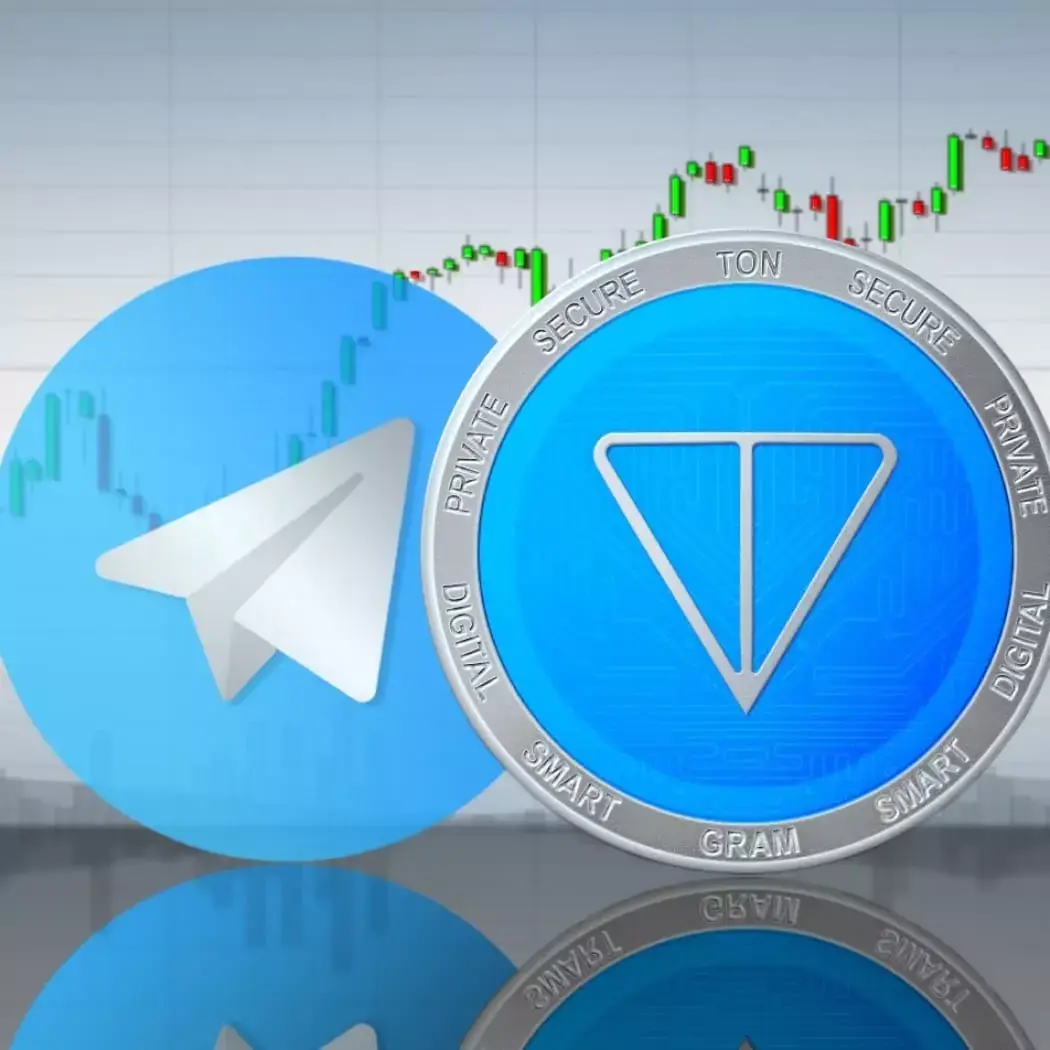















Telegram, a major player in the messaging landscape, has evolved beyond mere communication. Its integration into gaming has turned it into one of the most active arenas for cryptocurrency startups — a maturing ecosystem with proven monetization rails, but one where execution quality, not just timing, now decides who wins.
With an extensive user base of 900 million users as of 2026, Telegram presents a distinctive chance to merge entertainment with blockchain technology. For startup founders, this scale means one thing: the audience is already there — the opportunity now depends on building something that stands out and converts that reach into engaged, paying players
In this Telegram game guide, we will explore the field of Telegram-based games, what they are, and which types exist. You will discover the main steps of how to make a Telegram game, including market research, design, app implementation, integration of the game to the Telegram platform, and future project support. We’ll also cover where AI now fits into gameplay in 2026 and what compliance considerations matter for monetized or gambling-adjacent mechanics — details that separate a game that scales from one that stalls. Let’s start!
What are Telegram Mini games?
Telegram Mini App crypto games are a now-established genre of blockchain-based games built as Mini Applications within the Telegram platform. By 2026, this is where the platform’s strongest monetization and retention numbers show up – gameplay tied directly to earning, trading, or staking digital assets keeps players coming back in a way that traditional in-game currency doesn’t.
Telegram’s vast user base of 900 million is a key factor in the popularity of crypto games. Currently, over 300 Mini Apps are officially published and promoted in the Telegram marketplace, including games. Below, we will consider the main types of games in Telegram in more detail.

Telegram Games Market in 2026
Telegram games have evolved from simple tap-to-earn experiences into a rapidly growing ecosystem of Mini Apps that combine gaming, payments, digital ownership, and community engagement. With continued improvements to the Telegram Mini Apps platform, TON integration, Telegram Stars, and expanding developer tools, Telegram has become one of the most attractive environments for launching browser-based games without requiring users to install a separate application.
For startups and businesses, Telegram offers a unique opportunity to build products with instant distribution, simplified onboarding, and access to a highly engaged global audience. Compared to traditional mobile games, Telegram Mini Games benefit from lower acquisition friction, built-in social features, and seamless integration with messaging, communities, and digital payments.
Telegram Games Ecosystem at a Glance
| Category | 2026 Overview |
|---|---|
| Platform | Telegram Mini Apps |
| Primary Blockchain | TON (The Open Network) |
| Authentication | Telegram Account |
| Payments | Telegram Stars, TON, external payment providers |
| Distribution | Directly inside Telegram |
| Supported Devices | iOS, Android, Desktop, Web |
| Monetization | Stars, subscriptions, in-app purchases, NFTs, advertising |
| Typical Development Stack | React, Next.js, NestJS, TON SDK |
Why Businesses Are Investing in Telegram Games
- Access an audience of 1 billion+ monthly active users — with around 500 million already engaging with Mini Apps monthly — without requiring app installation.
- Reduce user acquisition friction with instant launch inside Telegram.
- Combine social engagement with built-in sharing and community features.
- Support multiple monetization models, including Telegram Stars, subscriptions, digital assets, and premium content.
- Launch cross-platform experiences that work consistently across mobile, desktop, and web.
Key Trends Shaping Telegram Games
| Trend | Business Impact |
|---|---|
| Mini Apps ecosystem growth | Larger potential audience and stronger product discovery |
| Telegram Stars adoption | Simpler in-app monetization for digital goods |
| AI-powered gameplay | Personalized experiences and smarter NPCs |
| Cross-platform gameplay | Consistent experience across all Telegram clients |
| Community-driven mechanics | Higher retention through referrals, leaderboards, and social challenges |
| Blockchain integration | Digital ownership, collectibles, and token-based economies where appropriate |
Where AI fits in. By 2026, a growing share of Telegram games use AI not for trading logic (as in DeFi bots), but for gameplay itself: NPCs that respond dynamically instead of following scripted trees, matchmaking that adapts to player skill and retention risk, and procedurally generated content that keeps repeat sessions fresh. For a genre where session length and daily return rate directly drive Stars revenue, this is quickly becoming a competitive differentiator rather than a nice-to-have.
Why This Matters
For companies planning to build a Telegram game in 2026, success depends not only on gameplay but also on selecting the right monetization strategy, technology stack, user engagement mechanics, and product architecture. Understanding the current ecosystem before development begins helps reduce risks, improve scalability, and accelerate time to market. This matters more than it might seem: of the roughly 55,000 active Mini Apps on Telegram today, only a small fraction generate meaningful revenue — the gap between the two groups usually comes down to execution, not the underlying idea.
Types of Telegram crypto games
Before moving to the section on how to create Telegram game, you should first define which type of game you want to implement. The diversity of game genres available on Telegram caters to a wide audience, offering endless opportunities for innovation.

Play-to-earn games
Such games in Telegram are designed to allow players to accumulate cryptocurrency or digital assets through their in-game activities. Unlike conventional games, where in-game currency is confined to the game itself, play-to-earn games use blockchain technology to provide players with tokens or NFTs (non-fungible tokens) that have real-world value.
Tap-to-earn games
These crypto games are a type of mobile game that allows players to earn cryptocurrency or digital rewards by interacting with the game through simple actions like screen tapping. These rewards (tokens) can be traded or used in the game.
Some of the most recognizable examples of this model are Notcoin and Hamster Kombat – both launched in 2024 and still active in 2026, though their token values have cooled significantly since the initial hype cycle. They proved the tap-to-earn model could pull in tens of millions of users fast, but they’re also a reminder that early virality doesn’t guarantee lasting token value. A well-designed tap-to-earn game today needs a retention and monetization plan that doesn’t rely solely on speculative token upside.

Crypto gambling games
Such crypto games Telegram offers introduce cryptocurrencies into traditional gambling formats. Players can use digital currencies to place bets or engage in games of chance, with blockchain technology ensuring transparency and fairness in game outcomes. This is also the most heavily regulated category on this list — gambling laws vary sharply by country, and app store policies (Apple, Google) restrict real-money gambling content even when accessed through a Mini App wrapper. Any project in this category needs jurisdiction-specific legal review before launch, not after.
Trivia and quiz games
These crypto games Telegram includes are designed to challenge players’ knowledge on an array of subjects, presenting questions in formats such as multiple-choice or true/false.
Strategy games
Such crypto games on Telegram cater to players who enjoy deep thinking and tactical planning. These games require users to manage resources, devise strategies, and make strategic choices to reach their objectives. Increasingly, these games use AI-driven opponents or advisors that adapt difficulty to the player’s skill level, keeping the challenge calibrated instead of static.
Educational games
They merge learning with play, making the acquisition of knowledge enjoyable and interactive. These games are designed to teach subjects like languages, math, or history.
Puzzle games
They engage players with intricate challenges that test their logical and problem-solving abilities. These games range from navigating complex mazes to unraveling hidden codes.
Role-playing games
These crypto games on Telegram offer an immersive escape into fictional realms where players can take on different character roles and embark on various adventures. In 2026, many RPGs on the platform use AI-generated dialogue or dynamic NPC behavior to make these worlds feel less scripted and more responsive to player choices
Current trends in the Telegram game market
What trends can we see in Telegram Mini Apps in 2026? Here’s what we can highlight now:
NFT user engagement
TON continues to show strong on-chain engagement heading into 2026, with total network accounts surpassing 162 million and monthly active wallets around 1.78 million. Gaming remains a major driver of NFT activity industry-wide, accounting for roughly 61% of all NFT wallet interactions — a signal that game-based NFT mechanics (skins, collectibles, in-game assets) are where most real NFT usage now happens, more so than standalone art or PFP collections.
Hamster Kombat, a hugely popular game on Telegram with over 300 million users, announced plans to integrate NFTs in 2026.
At Peiko, we can help you create not only Telegram games but also assist with NFT marketplace development if you are interested in this subject.
Growth in player interaction
Session durations across Telegram games have been trending upward as competition pushes studios toward deeper gameplay loops rather than single-tap mechanics. Games built around progression, social features, or strategy — not just repetitive tapping — are the ones retaining players past the first session.
Focus on a European audience
Unlike other web3 platforms, where Asia and Latin America dominate, Telegram’s gaming user base is predominantly from Europe, with 55.91% of players hailing from the region. This trend offers developers insights for tailored content and marketing strategies to engage specific audiences.

Rising popularity of certain game genres
The Telegram gaming landscape is diversifying, with various genres like simulations, RPGs (role-playing games), and puzzles gaining traction. This shift indicates that Telegram is evolving from a platform for simple games to one offering a broader array of gaming experiences for different player preferences — and, as covered earlier, RPGs and strategy games are increasingly where AI-driven NPCs and adaptive difficulty are being tested first.
Telegram Game Development Cost
Building a Telegram game can range from a simple Mini App to a feature-rich multiplayer ecosystem integrated with blockchain technology, digital assets, and Telegram Stars. The final project budget depends on gameplay complexity, backend infrastructure, blockchain integration, monetization features, and post-launch scalability.
Below are typical starting budgets for different categories of Telegram games, based on current market rates as of 2026. Costs shift as tooling, blockchain fees, and talent rates change, so treat these as a planning baseline rather than a fixed quote — every project gets a tailored estimate based on scope
| Telegram Game Type | Complexity | Typical Timeline | Starting From |
|---|---|---|---|
| Tap-to-Earn Game | Low | 4–6 weeks | $15,000 |
| Trivia & Quiz Game | Low | 4–6 weeks | $18,000 |
| Puzzle Game | Medium | 6–8 weeks | $20,000 |
| Strategy Game | High | 8–12 weeks | $35,000 |
| Multiplayer Game | High | 10–16 weeks | $45,000 |
| RPG Game | Very High | 12–20 weeks | $60,000+ |
| Blockchain Telegram Game | Very High | 10–20 weeks | $50,000+ |
What Influences Telegram Game Development Cost?
| Cost Factor | Impact on Budget |
|---|---|
| Gameplay complexity | Determines overall development effort and implementation time. |
| Multiplayer functionality | Requires real-time communication, matchmaking, and scalable infrastructure. |
| UI/UX design | More screens, animations, and interactions increase design effort. |
| Blockchain integration | Smart contracts, wallets, and token mechanics require additional development. |
| Payment systems | Integration with Telegram Stars or third-party providers adds implementation work. |
| Backend infrastructure | Authentication, APIs, databases, leaderboards, and cloud services influence project scope. |
| Testing & QA | Cross-platform compatibility, performance optimization, and security testing extend delivery timelines. |
| Post-launch support | Maintenance, analytics, monitoring, and feature updates should be planned from the beginning. |
How to Reduce Development Costs
If you’re building an MVP, it’s often better to start with a focused feature set rather than developing a full-scale gaming platform. Launching a smaller product allows you to validate gameplay mechanics, measure user engagement, collect feedback, and expand the game based on real player behavior instead of assumptions.
A few other ways to control costs without cutting corners on quality: reuse proven Telegram-native integrations (Stars, Wallet SDK) instead of building custom payment rails from scratch, and decide on your blockchain and monetization model before development starts — reworking these mid-build is one of the most common sources of budget overruns.
Cost Optimization Tips
| Recommendation | Business Value |
|---|---|
| Launch an MVP first | Validate demand before investing in advanced functionality. |
| Prioritize core gameplay | Reduce development time and accelerate time-to-market. |
| Use existing Telegram capabilities | Minimize custom development effort. |
| Build scalable architecture | Simplify future feature expansion. |
| Plan monetization early | Avoid expensive redesigns after launch. |
Technologies and tools for developing Telegram games
How to create Telegram game? Developing successful Telegram crypto games requires a carefully chosen technology stack that supports seamless user interactions, efficient performance, and smooth integration with Telegram’s platform. Let’s consider the best tech stack options for the Telegram game create process.
| Technology | Primary Purpose | Best Used For |
|---|---|---|
| React / Next.js | Building fast, responsive Telegram Mini App interfaces. Next.js enhances performance through server-side rendering (SSR) and static site generation (SSG), resulting in faster loading times and improved SEO. | Casual games, quiz games, dashboards, Telegram Mini Apps with complex user interfaces. |
| Vue.js / Nuxt | Creating lightweight and flexible front-end applications. Nuxt simplifies development with SSR and optimized rendering, delivering smooth user experiences across devices. | Lightweight Mini Apps, casual games, rapidly developed MVPs, and content-driven game interfaces. |
| Node.js | High-performance JavaScript runtime for backend services, handling real-time communication, APIs, matchmaking, and concurrent player sessions. | Multiplayer games, leaderboards, chat systems, notifications, and scalable game servers. |
| NestJS | Enterprise-grade backend framework built with TypeScript, offering a modular architecture, dependency injection, and maintainable server-side applications. | Large-scale Telegram games, microservices, authentication systems, and long-term product development. |
| Unity & Unreal Engine | Professional game engines for developing advanced gameplay mechanics, physics simulations, animations, and high-quality graphics. | 2D and 3D games, multiplayer experiences, action games, RPGs, and visually intensive projects. |
| PostgreSQL | Relational database for storing player accounts, game progress, transactions, achievements, and other structured data. | Persistent game data, user profiles, analytics, and production environments. |
| Redis | In-memory database used for caching, matchmaking, leaderboards, and session management, improving application performance and responsiveness. | Multiplayer games, real-time gameplay, high-load applications, and fast data access. |
| Stripe & PayPal | Secure payment gateways for processing purchases, subscriptions, and premium content while ensuring reliable payment experiences for players. | Premium games, subscriptions, in-game purchases, and digital content sales. |
| Sentry | Real-time error tracking and performance monitoring platform that helps identify crashes, monitor application health, and improve user experience. | Production monitoring, debugging, quality assurance, and post-launch support. |
| TON SDK | SDK for integrating Telegram-native blockchain functionality, wallet connectivity, token operations, and digital asset management. | Telegram Web3 games, blockchain mechanics, tokenized economies, and NFT-enabled experiences. |
| Solidity | Smart contract programming language used to build secure blockchain logic for digital assets, game economies, NFTs, and decentralized transactions. | Ethereum-compatible blockchain games, NFT ownership, token systems, staking, and smart contract development. |
To create Telegram game that will be engaging for users, you should apply Telegram-specific tools.
- BotFather: Essential for creating and managing Telegram gaming bots, allowing for the integration of game features and interactions within the Telegram environment.
- Telegram Bot API: The tool helps to integrate your Mini App with the Telegram platform. This versatile API provides a wide range of features, such as managing messages, authenticating users, and sharing media, which enable rich and interactive experiences within your Mini App.
- Wallet SDK: Facilitates the integration of cryptocurrency payments and wallet functionalities directly into your Telegram game. By the way, at Peiko, we know how to build a Telegram wallet that users will like.
- Telegraf.js: A powerful Node.js library for building and managing Telegram bots, simplifying the process of incorporating Telegram interactions into your game.
Step-by-step guide to creating a Telegram game
So, how to make a Telegram game? By following the steps below, the Peiko team can help you to create a Telegram Mini App game that satisfies user expectations and delivers compelling and enjoyable gaming experiences.

1. Market research
The first step in our guide on how to make Telegram game is research and analysis. We start with comprehensive market research to grasp the latest gaming trends and understand Telegram users’ preferences. Our specialists examine existing Telegram games to pinpoint successful features and add to your project idea.
2. Adaptive and responsive design
We focus on creating a mobile-first design that adapts and responds well across various devices and screen sizes. Developing an intuitive and engaging user interface (UI) with adaptable layouts is vital to ensure a seamless experience of crypto games on Telegram. Also, we utilize animations and visual effects to enhance the gameplay and captivate players.
3. Implementation
Our experts build the game according to the design and feature specifications from the planning phase. We integrate core gameplay mechanics, interactive elements, and any blockchain or cryptocurrency functionalities.
4. Quality testing
It is the next vital step in our guide on how to make a Telegram game. Testing the game on various devices and operating systems is important to ensure it functions correctly and delivers a consistent user experience.
5. Integration with Telegram
At this stage, which we can’t mention in our step-by-step guide on how to make Telegram game, we integrate the game with Telegram by utilizing its APIs (application programming interfaces) and features effectively.
We ensure compatibility with Telegram’s chat functions, notifications, and user authentication processes. We verify that the game adheres to Telegram’s guidelines and provides a seamless experience within the app.
6. Further support and maintenance
After launching the game, we continue to provide support and maintenance to tackle any issues and roll out updates based on user feedback.
Project Deliverables at Every Development Stage
Each stage of Telegram game development produces tangible deliverables that help align business goals, reduce project risks, and simplify collaboration between stakeholders, designers, developers, and QA engineers.
| Development Stage | Key Deliverables |
|---|---|
| Market Research | Product vision, competitor analysis, feature list, technical requirements |
| UI/UX Design | Wireframes, user flows, interactive prototypes, UI designs |
| Development | Telegram Mini App, backend APIs, gameplay mechanics, integrations |
| Quality Assurance | Bug reports, performance testing, compatibility testing, security validation |
| Telegram Integration | Telegram authentication, Mini App integration, payment setup, wallet integration (if required) |
| Launch & Support | Production deployment, monitoring, analytics configuration, maintenance roadmap |
Common Mistakes When Developing Telegram Games
Even well-designed Telegram games can struggle to attract and retain players if critical product decisions are overlooked during development. Many challenges arise not from technology itself but from planning, gameplay design, monetization, and user experience. Identifying these risks early helps reduce development costs, accelerate product launch, and improve long-term player engagement.
| Common Mistake | Why It Matters | Best Practice |
|---|---|---|
| Skipping market validation | Building features players don’t actually need increases development time and reduces adoption. | Research competitors, validate the concept, and define your target audience before development begins. |
| Making onboarding too complex | Players often leave within the first few minutes if the game is difficult to understand. | Create a simple onboarding flow that allows users to start playing almost immediately. |
| Building too many features for the first release | Large MVPs require more time, budget, and maintenance while delaying market validation. | Launch a focused MVP and expand the game based on player feedback and analytics. |
| Ignoring performance optimization | Slow loading times and poor responsiveness negatively affect retention and user satisfaction. | Optimize assets, backend performance, and client-side rendering from the beginning. |
| Weak monetization planning | Adding monetization as an afterthought often leads to poor user experience and lower revenue. | Define your monetization strategy during product planning and integrate it naturally into gameplay. |
| Launching without analytics | Without user data, it becomes difficult to improve retention, engagement, and monetization. | Track player behavior, funnels, retention, and in-game events from the first release. |
Why Deliverables Matter
Clearly defined deliverables help keep the project organized and transparent throughout development. Instead of focusing only on completed tasks, every stage produces measurable outcomes that simplify communication, accelerate decision-making, and ensure the game is ready for the next phase of development.
For startups, this structured approach makes it easier to validate the product early, control development costs, and prepare for future feature releases without unnecessary rework.
Best Practices for a Successful Telegram Game Launch
The most successful Telegram games are built iteratively rather than trying to deliver every feature in the first version. Start with a clear gameplay loop, validate the concept with real users, monitor player behavior through analytics, and continuously improve the experience based on feedback. This approach reduces project risks, accelerates time to market, and creates a stronger foundation for long-term product growth.
Marketing and promoting your Telegram game
So, you understand how to make Telegram game, and which Telegram Mini Apps development services you need. Now, it is time to determine ways to promote the game. This comes with challenges due to the competitive market and high game saturation. Standing out requires strategic, targeted efforts.
Challenges in promoting a Telegram game
The main difficulty lies in the crowded game market and Telegram’s emphasis on privacy, limiting traditional advertising. Reaching the right audience without overwhelming them requires effective targeting and engagement.
Effective marketing techniques
So, what is it possible to do in terms of marketing?
- Foster a strong community by creating active Telegram channels and groups for player interaction.
- Partner with Telegram influencers to broaden your game’s reach.
- Promote gameplay on social media to generate interest.
- Run events like giveaways or challenges to boost engagement and excitement.
- Introduce referral and social sharing incentives to encourage player-driven promotion.
Increasing visibility in a saturated market
To distinguish your game, you can emphasize unique gameplay elements or trends, such as NFTs, that set it apart. Focus on reaching specific player demographics, actively participating in Telegram gaming communities, and providing consistent content updates to sustain interest and visibility in a competitive market.
For example, one of the best Telegram games, Tap Fantasy, became popular by leveraging a combination of blockchain and play-to-earn mechanics, allowing players to earn real-world value through in-game activities.
The game integrated NFTs, enabling players to collect, trade, and use digital assets, which attracted players interested in the growing Web3 trend. It also introduced the unique design-to-earn feature, encouraging players to create content and earn rewards, further engaging the community.

Tips to stand out in the market
If things don’t go as planned, at least you’ll gain valuable insights into your target audience and generate free publicity for your project.
Here are some ways to improve if your game still stands invisible to players:
- Reconsider rewards: Offer in-app rewards like collectible cards with real-life value or status in other games to foster collaborations beyond follow-for-follow tactics.
- Add real-life use cases for rewards: Tie rewards to real-world applications to prevent players from dumping their tokens too soon.
- Create a unique experience: Move away from repetitive tapping mechanics. Offer an engaging, interactive storytelling experience that doesn’t feel like a grind, but still rewards dedicated players.
- Pursue diverse partnerships: Expand partnerships beyond Telegram bot games to bring in new players. Collaborating with on-chain games like Axie Infinity or Web2 games like Minecraft can introduce fresh dynamics.
- Embrace the creator economy: Allow players to contribute to the game, encouraging participation. User-generated content boosts virality, helping to grow engagement and reach.
Hire our blockchain creation company

Monetizing Telegram games
Since June 2024, Telegram has rolled up an update of Telegram Stars. Now, Telegram Mini App developers can swap their Stars for TON tokens. So, what are Telegram Starts?
Stars are new tokens aimed at streamlining payments for digital goods and services on its platform.
Users have the option to acquire Stars via in-app purchases on Apple and Google stores or through the PremiumBot bot. These Stars can subsequently be used to buy a variety of digital goods, including Telegram game items. In turn, the developers of the games can swap these Stars for cryptocurrency or use them to purchase Telegram Ads.
Telegram imposes minimal commissions on Stars transactions, with only taxes and payment system fees applicable.
Have you heard about Telegram Jettons? Telegram Jettons (or tokens) are a feature that allows developers to create and monetize their own services within the Telegram app ecosystem.
There are some options for games’ creators to generate revenue with Telegram Jettons:
- Token minting: Developers can create new Jettons by invoking specific functions in the minter contract if the token is mintable. Typically, such actions are overseen by an admin address.
- Transaction fees: Developers can impose fees on transactions involving Jettons, such as transfers between wallets or contract interactions. These fees are paid in TON and compensate for the network resources utilized.
Also, Telegram launched an exciting feature that allowed users to send NFT-based gifts, merging personalization with cutting-edge technology. This feature was built upon the Telegram Gifts feature, which was introduced in October 2024. By incorporating this feature, developers can increase the appeal of their Telegram apps and keep users invested in the platform.
Telegram Gifts enables users to send customized animated messages and visuals for special occasions, with the added benefit of these animations being visible on profiles or convertible into in-app currency, known as Stars.
Why should you order Telegram game development today?
Investing in Telegram create game development presents a unique opportunity to enter a rapidly growing market with significant potential. Here are the key reasons for businesses to consider this investment:
- Large and engaged audience
Telegram boasts millions of active users, offering a vast, engaged community eager for new gaming experiences, creating a broad customer base for monetization. - Cost-effective development
Telegram’s built-in features, like bots and channels, reduce development costs, making it easier to create interactive games that leverage existing infrastructure for efficiency. - First-mover advantage
The Telegram gaming market is still in its early stages. By investing now, businesses can secure an early advantage, establish brand recognition, and attract loyal players. - Strong community and retention
Telegram’s active user communities make it easier to build strong player relationships, fostering long-term engagement and retention. - Diverse monetization opportunities
Telegram bot games can generate revenue through various channels, such as in-app purchases, ads, NFTs, and premium features, providing multiple streams of income.
At Peiko, we can help
Top blockchain platforms to build Telegram games
Selecting the ideal blockchain platform is crucial for creating successful Telegram games. Here’s a look at some top options:

- Ethereum is renowned for its robust smart contracts and vast ecosystem, which enable complex game mechanics and provide extensive developer support. Its ERC standards facilitate the creation of fungible tokens and NFTs, which are crucial for in-game economies.
- The Open Network (TON) is a blockchain platform that facilitates rapid transactions and accommodates a diverse range of decentralized applications (dApps). Initially developed by the creators of Telegram, TON addresses some of the limitations of existing blockchain networks, including scalability and transaction latency.
- Binance Smart Chain (BSC) offers fast transaction speeds and low fees. Its compatibility with Ethereum assets allows for easy adaptation and migration from Ethereum-based games.
- Polygon enhances Ethereum’s scalability with quicker transactions and lower costs, addressing high-volume gaming needs and maintaining compatibility with Ethereum’s ecosystem.
- Solana stands out for its high transaction speed and minimal fees, making it ideal for games that require rapid and frequent interactions. Its high throughput supports extensive gaming activities.
- Avalanche provides customizable blockchains with fast transaction finality and low costs, allowing developers to tailor the platform to specific game requirements and ensuring efficient performance.
- Tron is known for its rapid transactions and low fees, which benefit real-time gaming interactions. Its supportive ecosystem facilitates the development of engaging and interactive games.
Peiko’s expertise in creating Telegram apps
Our team is an experienced Telegram app development services provider who was one of the first to explore the topic of creating such solutions.
With a deep understanding of the platform’s intricacies, we aim to craft reliable and user-centric Telegram applications. Our experience lies in developing innovative crypto solutions that easily integrate with the Telegram ecosystem, including Telegram crypto games and more.
Want to build another blockchain project? We also can help. One of our best projects is a non-custodial multi-currency crypto wallet supporting both EVM and non-EVM blockchain networks. Our tasks were to provide seamless cross-chain swaps, enhance security, and create a user-friendly design catering to the growing demands of cryptocurrency users.

What key features did the Peiko team implemented:
- Support for multiple cryptocurrencies: The solution is compatible with both EVM (Ethereum Virtual Machine) and non-EVM blockchain networks, allowing diverse asset management.
- Seamless cross-chain swaps: Effortless swapping of cryptocurrencies across various blockchain networks, powered by the integration of Changelly.
- QR code wallet funding: Users can easily replenish their wallets by scanning QR codes, making the deposit process quicker and more secure.
- Advanced security: KYC (know your customer) and AML (anti-money laundering) compliance through SumSub, ensuring transaction monitoring and regulatory compliance.
- Biometric login: Secure and convenient access to the wallet using biometric authentication, enhancing user security.
- Multiple wallet management: The app allows users to manage multiple wallets under a single account, providing greater flexibility.
- UI/UX redesign: A thorough redesign to enhance the user interface, improving navigation and the overall visual experience.
- Cross-platform support: Built with React Native for seamless compatibility across both iOS and Android devices.
What did the client get? A multi-functional, secure, and efficient wallet accommodates a wide range of digital assets and provides an optimal user experience across different blockchain networks. Now, the project thrives and generates revenue for the owner as well as other successful projects. Localaway, for example, is another great web solution we developed.
If you need to create a blockchain project, whether a crypto wallet, dating app, or Telegram game, we can help you create an effective and profitable solution. The Peiko company has significant expertise in providing top-quality blockchain development services, and we will satisfy all your business needs.
Final thoughts
Thanks to its broad user base and versatile features, Telegram is a prime platform for crypto startups to build engaging blockchain games. This Telegram game tutorial covered essential aspects of Telegram games development, including design and Telegram integration. We also considered many game types, such as play-to-earn and crypto gambling.
Moreover, we highlighted the best tech stack, including frontend technologies, backend solutions, and blockchain platforms like Ethereum and Solana.
If you want to build a Telegram Mini App game that will engage a user base and generate your profit, why wait? Feel free to contact us. We have a vast portfolio of successful blockchain projects, and we will help you craft the next top Telegram Mini Apps startup!
No comments yet. Be the first to comment!