
















When companies budget for blockchain projects, most focus on developer rates and frontend/backend hours. But blockchain development costs go far beyond traditional software estimates. Blockchain isn’t like conventional product development — it introduces unique financial variables that quietly inflate budgets and derail timelines.
In this article, we break down the real cost of blockchain development, including the hidden expenses that rarely appear in the first proposal but inevitably show up later.
Blockchain products don’t fail because founders underestimate development. They fail because they underestimate everything around it: compliance, infrastructure, gas fees, security audits, and long-term maintenance. Understanding the full blockchain technology cost is what separates scalable products from expensive experiments.
With over 9 years of experience building top-notch blockchain products, we at Peiko have seen the same pattern again and again. Let’s unpack the blockchain software development cost factors that shape your burn rate long after development begins. That’s why estimating blockchain development costs correctly isn’t about guessing hours — it’s about understanding the entire ecosystem your product should operate in.
Key Takeaways
- Blockchain development costs go far beyond developer hours — licensing ($10,000–$100,000+), security audits ($5,000–$10,000+), and ongoing maintenance (10–20% of dev cost per year) are the categories most founders underbudget.
- Gas fees alone can range from fractions of a cent on Solana to $50+ per transaction on Ethereum, directly shaping which network fits your product’s transaction volume.
- A proper Discovery phase, while it adds time upfront, is what prevents scope creep from silently inflating every other cost category downstream.
- Blockchain-specialized developers cost significantly more than general software engineers — senior blockchain specialists run $60–$80/hour, reflecting the premium for security-critical, cryptography-adjacent skills.
- Maintenance doesn’t stop at launch: monitoring, tooling, and DevOps upgrades typically add 10–20% of your original development cost every year the product stays live.
1. Licensing & Legal: The Cost of Playing in the Real World
At some point, every serious blockchain project collides with regulation. Tokens, wallets, exchanges, even “utility-only” platforms do not operate in a legal vacuum. Legal readiness is a critical — and often underestimated — component of overall blockchain pricing.
| Cost Area | Typical Budget | Why It Matters |
| Business & Crypto Licensing | $10,000 – $100,000+ | Depends on jurisdiction and business model |
| Compliance Reviews | $2000 – $15000/year | Ongoing, not one-off |
| KYC / AML Consulting | $2000 – $15000+ | Mandatory if users touch money |
2. Choosing Where to Incorporate: How Jurisdiction affects your total Cost
The licensing costs above aren’t fixed — where you incorporate your business directly determines how much of that budget you’ll actually spend.
- Switzerland (Zug/”Crypto Valley”): Offers one of the most mature regulatory frameworks for crypto businesses, though setup and legal costs run higher upfront in exchange for long-term regulatory clarity.
- Singapore: Popular for its clear licensing pathway through the Monetary Authority of Singapore, with moderate setup costs and strong international credibility for fundraising.
- UAE (Dubai/ADGM): Increasingly favored for its crypto-friendly stance and lower corporate tax burden, though licensing requirements continue to evolve.
- Estonia: A lower-cost entry point for smaller projects, offering relatively fast company registration, though banking relationships can be harder to secure than in more established hubs.
The right choice depends on where your users are based, how much fundraising credibility you need, and how much regulatory certainty matters to your specific product — a jurisdiction decision made early can save tens of thousands in compliance costs later.
3. Why the Discovery Phase Is a Non-Negotiable First Step
Before diving into blockchain development, it’s critical to protect your product, budget, and timeline by running a structured Discovery phase with your chosen technical partner.
Many blockchain and software projects don’t fail because of poor engineering but fail because of unclear requirements, hidden risks, and misalignment between stakeholders from day one.
A well-performed Discovery phase turns assumptions into validated decisions and replaces guesswork with clarity. It creates a shared understanding of what needs to be built, why it matters, and how it should be delivered, making you truly understand the cost of blockchain development.
What a Proper Discovery Phase means for You:
- Minimizes risks by an early system pitfalls detection.
- Clarifies requirements to ensure the final product matches your vision.
- Optimizes costs by reducing rework and scope creep.
- Speeds up development with structured planning.
- Improves your decision-making with well-documented insights.
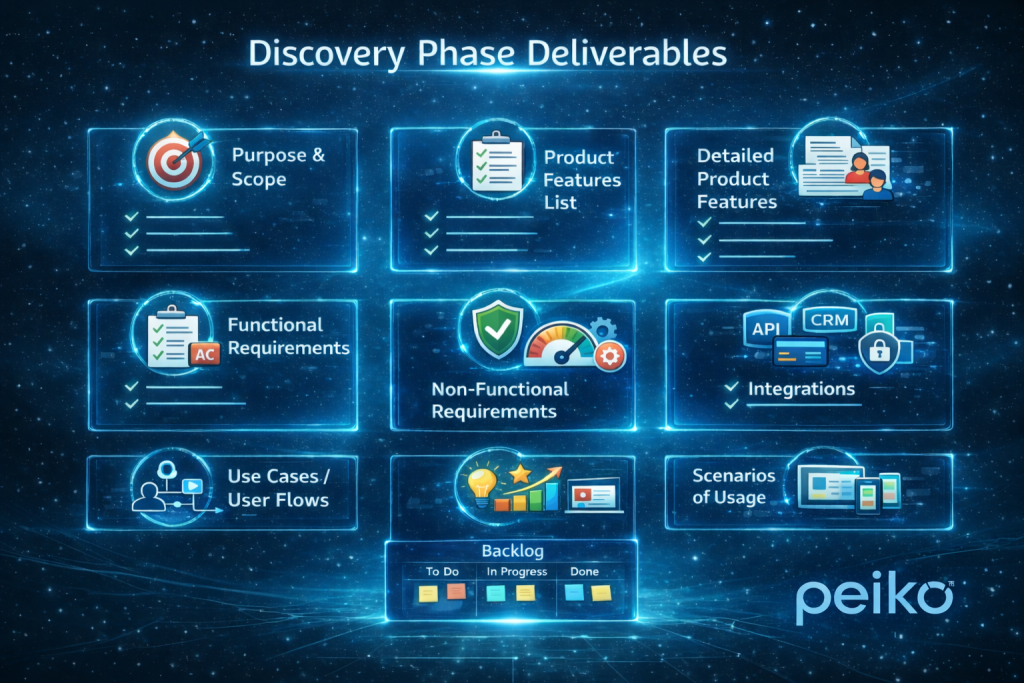
In short, Discovery isn’t an extra step — it’s the basic foundation that determines whether blockchain development costs remain under control, whether your blockchain software development cost is predictable, and whether the overall cost of blockchain development, blockchain infrastructure costs, and blockchain technology cost turn your project into a controlled investment rather than a costly experiment.
4. Architecture Choices That Quietly Shape Your Burn Rate
Early architectural decisions are expensive to undo later. Chain selection, node strategy, indexing — these are not just technical calls, they’re financial ones that directly impact long-term blockchain infrastructure costs.
| Architecture Layer | One-Time Cost | Ongoing Cost | Best For |
| Smart Contract Development | $5000 – $15,000 | Redeployments cost gas | Any product handling on-chain logic or asset transfers |
| RPC / Node Providers | Low | $50 – $2,000+/month | Early-stage products prioritizing speed to market |
| Self-Hosted Nodes | Medium | $500 – $3,000+/month | High-volume products where per-call RPC costs would exceed hosting costs |
| Indexers & Backends | $5000 – $7000+ | Infrastructure + maintenance | Products requiring fast historical data queries (e.g., transaction history, analytics) |
Once real users interact with your product, these expenses shift from optional to unavoidable in the cost of blockchain development.
5. How Product Type Changes Your Blockchain Budget (DeFi vs. NFT vs. GameFi)
The architecture costs above apply broadly, but the product you’re building shifts where the money actually goes.
- DeFi platforms: Carry the highest security audit costs on this list, since they directly handle user funds — expect audit budgets at the top end of the $5,000–$10,000+ range, often across multiple review rounds.
- NFT marketplaces: Shift cost weight toward storage and metadata infrastructure (IPFs/Arweave), plus marketplace-specific smart contracts for royalties and secondary sales.
- GameFi products: Push costs toward transaction volume and gas optimization, since in-game actions can generate far more on-chain transactions than a typical DeFi or NFT product.
Knowing which category your product falls into lets you allocate the cost categories above more accurately instead of applying a generic blockchain budget to a product with very different cost drivers.
6. Gas Fees: The Cost Everyone Knows — and Still Underestimates
Gas fees are a variable operational expense tied to user activity and network conditions. They directly impact blockchain development costs, blockchain software development cost, cost of blockchain development, blockchain infrastructure costs, and overall blockchain technology cost.
| Network | Typical Gas Cost | What to Expect |
| Ethereum | $0.50 – $50+ | Secure, expensive, unpredictable |
| BSC | $0.01 – $0.10 | Cheap, faster, more centralized |
| Solana | Fractions of a cent | Ultra-cheap, different trade-offs |
7. Security & Audits: Expensive Until Something Breaks
Blockchain security isn’t about best practices. It’s about damage control. Skipping audits may obviously reduce short-term blockchain software development cost, but it drastically increases your long-term risks.
| Security Activity | Cost Range | Reality |
| Smart Contract Audit | $5000 – $10000 | Required for trust |
| Penetration Testing | $3000 – $5000 | External eyes matter |
| Post-Audit Fixes | $2000 – $5000 | Almost always needed |
8. Maintenance & Operations: After Launch Comes Reality
Due to protocol upgrades, tooling changes, and infra failures — a blockchain product is always an ongoing work. Ongoing operations are a permanent part of blockchain technology cost.
| Ongoing Cost | Monthly / Annual Budget | Why It Exists |
| Monitoring & Alerts | $500 – $2000/month | Downtime = lost trust |
| Tooling & SaaS | $500 – $3000/year | Analytics, infra, security |
| DevOps & Upgrades | 10–20% of dev cost/year | Chains evolve, so must you |
9. Team Costs: Blockchain Talent Is a Premium Asset
To deliver a fully-functional Blockchain product, you need a team that consists of the following roles:
- Business Analyst translates business goals into clear technical and functional requirements.
- Project Manager coordinates timelines, resources, and risks, ensuring delivery stays on track.
- Front-end developers implement the user interface and integrate it with blockchain and backend logic.
- Blockchain developer designs smart contracts, tokenomics, on-chain logic, and handles network-specific integrations.
- Back-end developers build APIs, business logic, integrations, and ensure system stability, scalability and performance.
- Quality Assurance tests functionality, security, performance, and edge cases, reducing costly bugs before launch.
- Team Lead oversees architecture, code quality, and technical decision-making
- UI/UX designer creates intuitive user flows and interfaces (especially critical for blockchain products where complexity can easily overwhelm users).
Blockchain engineers aren’t just software developers. They’re part cryptographers, part economists, part firefighters.
| Role Level | Hourly Rate (US/W. Europe) | Hourly Rate (E. Europe) | Hourly Rate (Asia/LATAM) |
| Junior | $20–$30 | $15–$25 | $10–$20 |
| Mid-Level | $35–$45 | $30–$40 | $20–$30 |
| Senior / Specialist | $60–$80 | $45–$65 | $30–$50 |
| Cost Category | Low-End Total | High-End Total |
| Licensing & Legal | $14,000 | $130,000+ |
| Architecture (one-time) | $10,000 | $22,000+ |
| Security & Audits | $10,000 | $20,000 |
| Maintenance (Year 1) | $6,000 | $18,000+ |
| Team (3-month MVP, mid-level team of 4) | $50,000 | $95,000 |
| Estimated Total (MVP + Year 1) | ~$90,000 | ~$285,000+ |
Note: Gas fees are excluded from totals since they scale with usage rather than being a fixed project cost — see the Gas Fees section above for per-network estimates.
Founders who succeed in blockchain don’t just budget for development — they budget for everything around value transfer: compliance, security, infrastructure, and long-term evolution.
At Peiko, we help teams understand the true cost of blockchain development, design resilient architectures, and scale without unpleasant surprises.
10. In-House Team vs. Outsourcing: which costs less?
Once you know what blockchain talent costs per hour, the next decision is whether to hire that talent directly or bring in an outside team.
- In-house teams make sense once you have continuous, long-term development needs — the cost per hour is often lower over time, but you absorb recruiting costs, benefits, and idle time between major features.
- Outsourced/agency teams typically cost more per hour but eliminate hiring risk and ramp-up time, making them more cost-effective for a first product or MVP where speed to market matters most.
- Hybrid approach: Many founders outsource the initial build, then hire in-house specifically for the roles handling ongoing maintenance and operations covered earlier in this guide.
For most first-time blockchain founders, outsourcing the MVP and evaluating an in-house transition after product-market fit is the lower-risk, and often lower total-cost, path.
11. Sample Budget Breakdown: What a real Project Actually costs
Every section above covers one cost category in isolation — here’s what those categories look like added together for a typical mid-sized blockchain MVP.
| Cost Category | Low-End Total | High-End Total |
| Licensing & Legal | $14,000 | $130,000+ |
| Architecture (one-time) | $10,000 | $22,000+ |
| Security & Audits | $10,000 | $20,000 |
| Maintenance (Year 1) | $6,000 | $18,000+ |
| Team (3-month MVP, mid-level team of 4) | $50,000 | $95,000 |
| Estimated Total (MVP + Year 1) | ~$90,000 | ~$285,000+ |
This range is wide because the single biggest swing factor isn’t developer rates — it’s how much regulatory exposure your product has. A simple utility-token product sits at the low end, while a DeFi platform handling user funds across multiple jurisdictions sits at the high end, largely driven by the Licensing & Legal category covered at the start of this guide.
No comments yet. Be the first to comment!