




AI Knowledge Base
Help teams and customers find accurate information in seconds - without searching through files, docs, and chats


AI knowledge base development services
Answers come from your own documents and data, not from what the AI model learned in general. Each answer is specific to your business and backed by real sources, which reduces made-up responses.
We connect your documents, databases, cloud storage and internal tools, then clean, split and index the content with metadata. As a result, the system finds the exact piece of information each question needs.
The knowledge base respects roles: employees, departments and customers see only the content they are allowed to access. Sensitive information, such as HR or financial data, stays out of answers for the wrong users.
When source documents change, the knowledge base updates with them automatically. Answers rely on the current version of each document, and outdated policies, prices or instructions no longer show up in responses.
You see what people ask most and which answers users rate as unhelpful. This reveals topics missing from your documentation, so your team knows what to add and the knowledge base gets better over time.
Our Case Studies
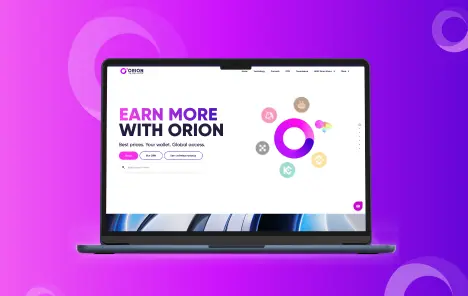
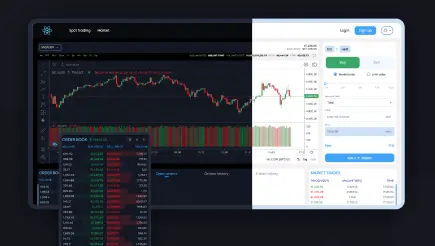
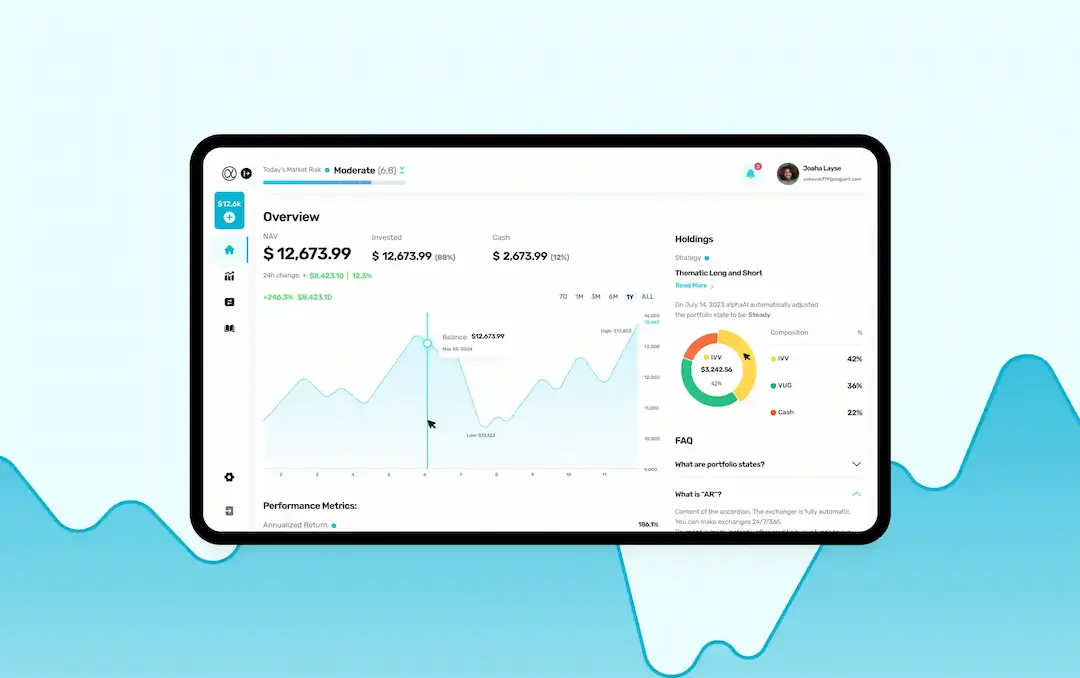
A next-generation AI-powered trading platform that lets retail investors build, simulate, and run fully-automated ETF strategies.
We had to create a secure, real-time trading product from scratch, translate a complex vision into a clear roadmap, and keep development agile enough to absorb regular startup pivots.


Balneo Travel — medical tourism project
Service for searching and booking hotels/resorts, including options with meals, medical procedures and so much more.


Daleel — petroleum industry community platform
Сommunity platform for oil refining industry companies that combines a blog, forum, and encyclopedia.

Frently – a real estate renting service without intermediaries
This marketplace allows to post and search real estate objects for rent/sale without intermediaries.


Since 2017, our software creation team has consistently delivered industry-focused development services that get results.


How we turn scattered company knowledge into reliable answers
Assess Knowledge & Use Cases
We start by finding which questions people ask most, which sources hold the answers, and where content is outdated, duplicated or missing. Knowing this upfront shows what to clean or add before the build, because AI can only answer from content that actually exists.
Design Knowledge Architecture
We structure your content so the system retrieves the precise passage that answers a question, not a loosely related one. Chunking, metadata and search logic are designed around your documents, and this is what separates accurate answers from vague ones.
Define Access & Security Rules
Before the build, we agree with you which roles see which content, which data stays private and who approves changes to these rules. Planning permissions upfront is much safer than adding them later, when sensitive documents may already be indexed.
Build & Integrate the Knowledge Base
We build ingestion, search and Q&A, and connect the knowledge base to the tools your team already uses, such as Slack, Microsoft Teams, your help desk or intranet. People get answers where they already work, which drives real adoption instead of another app nobody opens.
Validate Quality & Improve Results
We test answers on a set of real questions from your team before launch and keep checking them after. Weak answers flagged by users are traced back to their cause, whether missing content or poor retrieval, and fixed, so accuracy grows over time.
Why companies build their AI knowledge base with Peiko
Faster Time to Value With Existing Knowledge
We focus on using your existing documentation and data first. You can launch a usable AI knowledge tool quickly, without rebuilding or rewriting everything from scratch. This shortens implementation time and speeds up internal adoption.
Practical AI Knowledge Implementation Experience
We design AI Knowledge Base systems based on real business workflows, not theoretical AI models. This helps avoid building tools that technically work but are never used by real teams. And it keeps development focused on solving daily operational problems.
Clear Content Ownership
Knowledge systems become messy fast. We help assign a clear owner to each content area, so your team knows who keeps which documents current. The knowledge base stays maintainable after launch instead of slowly filling up with outdated answers.
Efficient Use of AI Infrastructure Budget
We help companies choose realistic model setups and storage strategies, with cost-efficient architecture that scales with usage instead of exploding infrastructure costs later. Keeping answers current means updating the knowledge base, not retraining a model, so ongoing costs stay low.
Reliable and Scalable Knowledge Systems
We design AI Knowledge Base solutions that support growing data volume and user activity. This helps companies expand knowledge coverage without performance problems or system instability.
Our AI knowledge base development process



What Our Clients Say
We don’t just build software, we build success stories

Peiko delivered a smart contract that was highly evaluated by one of the most demanding auditors on the market. They contributed strategically, offering insights that extended far beyond technical development.

Amazing agency, perfect communication and execution (agile development with very high quality of work), they think out of the box and really help you shape the product. They also have great design skills in the team and are always available- I highly recommend them and will definitely hire again for a next big project!

We are pleased that we selected Dima and Peiko as our software development Advisor and partner. Dima and Peiko team beyond the great technical skills, their collaborative approach and project management make them a reliable tech partner.

I selected Peiko team based on their profile and the submitted quality proposal. I also met them personally, and I reached the initial concusion that I am working with a professional team. The end product was delivered with superb quality and structure. the documentaiton part was also great.

If you’re looking to partner with a team that truly understands your vision and has the technical prowess to bring it to life, Peiko is the partner you can rely on.

I consider Peiko a qualified technical partner for many reasons, such as delivering milestones on time, providing fast software improvements, and resolving bug issues quickly. They’re very experienced in blockchain and financial services and get deeply involved in the development process.

What impresses me most about Peiko is their innovative approach! Thanks to Peiko’s efforts, the client has noticed an increase in user engagement and trading volume. The team establishes a seamless workflow by being highly responsive and dedicated to the project. Moreover, they continue to impress the internal team with their innovative solutions.

Their rapid response to our requests was a major factor in the project’s successful completion. Peiko’s efforts have increased user engagement and transactions, meeting expectations. Peiko’s responsive and communicative approach has resulted in a successful partnership. The team is committed to creating a secure and user-friendly platform that caters to auctioneers and buyers.

Peiko has provided deliverables on time and with minimal revisions. The team is responsive to the client’s needs, addresses questions quickly, and consistently delivers items within expectations. Peiko’s communication and problem-solving skills have been remarkable throughout the engagement.
Although the platform has yet to launch, Peiko is able to execute and manage the platform successfully. A collaborative team, they have engaged with the clients to work out the stages and concept in the development of the project. They have communicated well to provide progress updates and feedback.


Although the platform has yet to launch, Peiko is able to execute and manage the platform successfully. A collaborative team, they have engaged with the clients to work out the stages and concept in the development of the project. They have communicated well to provide progress updates and feedback.

They’re an open-minded team and I’m glad to be working with them. Peiko works fast and pays great attention to detail. Regular and honest communication benefit the collaborative partnership. Customers can expect to work with a professional and open-minded team.


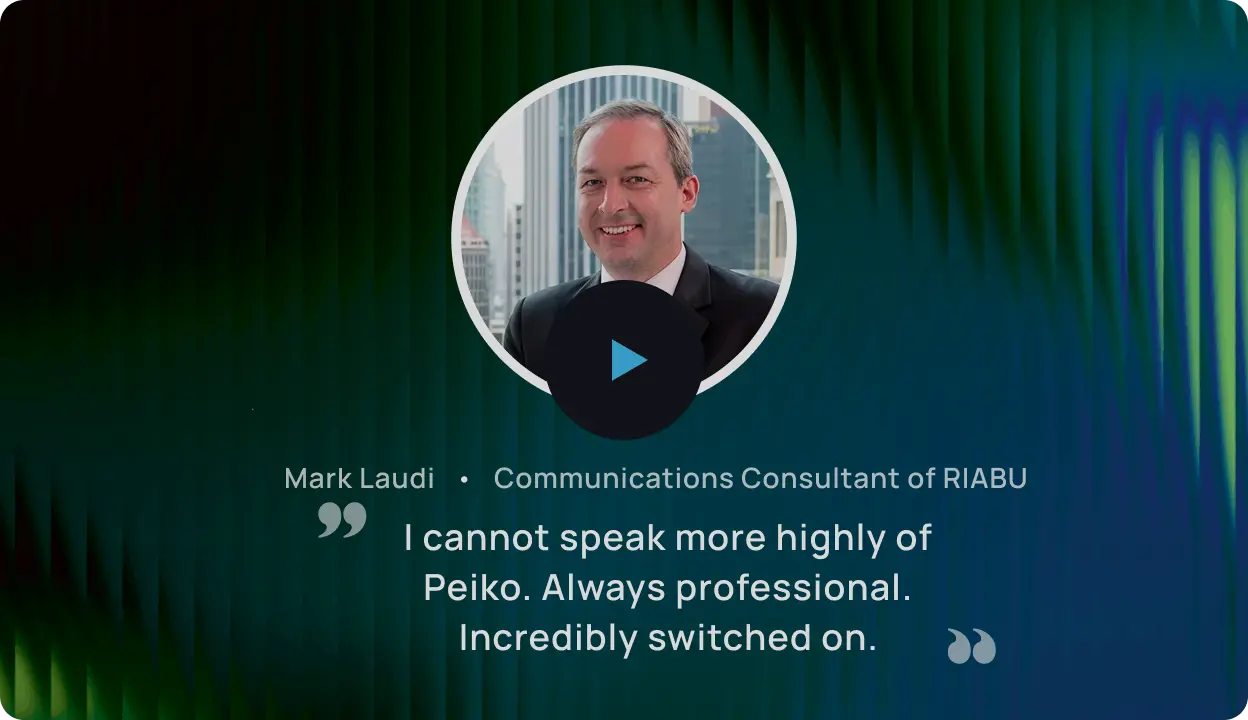
My initial trepidation in hiring an agency in another time zone, and a market I was not familiar with, proved unfounded. Always professional. Incredibly switched on. I get the sense they actually really understand what we are trying to achieve. I don’t have to explain everything – they intuitively seem to understand. The designs the team have come up with are fantastic.
We’ve earned a 100% Job Success score on Upwork as a result of consistent delivery, long-term client satisfaction, and predictable results.
View work historyOur work is rated 5.0 on Clutch, reflecting verified client reviews, strong professionalism, and a clear focus on scalable, business-driven digital solutions.
Read reviewsAI Knowledge Base FAQ
An AI knowledge base is a system that collects your company’s documents, wikis and databases in one place and lets people ask questions in plain language instead of searching through files. A generative AI knowledge base goes a step further: it uses large language models to write a direct answer based on your own content, with links to the sources, rather than just returning a list of documents.
A traditional knowledge base relies on keyword search and manual navigation: users need to guess the right terms and read through articles to find what they need. An AI knowledge base understands questions in natural language, searches by meaning across all connected sources and gives a direct answer with links to the original documents. It also shows which questions remain unanswered, so gaps in your content become visible.
Ready-made AI knowledge base software works well when your content lives in one or two standard tools and you don’t need complex access rules. A custom AI knowledge base pays off when knowledge is spread across many systems, permissions differ by role or client, the answers must appear inside your own product, or you need control over data storage and long-term costs. We can help compare both options before you commit.
Any company whose knowledge is spread across documents, wikis and tools. Internally, support agents find answers faster, new employees get up to speed without constantly asking colleagues, and sales, HR and operations teams stop searching for the latest policy or price. For customers, an AI knowledge base powers a self-service help center that answers questions around the clock and reduces the number of support tickets.
The cost has two parts. Building the knowledge base depends on the number and type of data sources, how much content needs cleaning, the complexity of access rules and which tools it connects to. Running costs include AI model usage per question, vector database hosting and regular content updates, and they grow with the number of users and documents. Get a quick estimate with our cost calculator.
The timeline depends on the number of data sources, integrations, security requirements, and data quality. A basic AI knowledge base can often be deployed within a few weeks, while enterprise-grade solutions with multiple systems, permissions, and custom workflows may require several months