















TL;DR
- Tokenomics analysis measures how units are issued, allocated, released, used, removed, valued, and governed.
- Fully Diluted Valuation[1] equals current unit price multiplied by maximum supply, or total supply when no maximum is defined.
- Vesting review separates initial allocation from current ownership and compares unlocks with circulating supply and trading liquidity.
- Governance review distinguishes proposal, voting, delegation, execution, emergency, treasury, and upgrade authorities.
- Incentive analysis separates new issuance from rewards funded by user fees or existing treasury balances.
To analyze tokenomics, start by tracing how supply, ownership, incentives, and control can change over time. Maximum supply and staking yield do not capture unlock schedules, holder concentration, or value flows.
The process reconciles project documents with on-chain rules, allocation records, privileged permissions, and transaction history. It includes research tools, a hypothetical dilution calculation, and checks for inconsistent or undocumented rules.
General information, not financial advice.
What Does Tokenomics Analysis Measure, and Why Does It Matter?
Tokenomics analysis examines how units are created, allocated, released, used, and removed. It connects those mechanisms with supply-based valuation metrics and identifies which accounts, contracts, programs, or governance processes control them.
Total Supply[2] is the number of units currently in existence after subtracting units that have been verifiably burned. Its formula is tokens created or mined minus tokens verifiably burned. Maximum Supply[3] is the protocol-defined lifetime issuance cap when such a limit exists.
Fully Diluted Valuation[1] is the current token price multiplied by maximum supply. Total supply may be used when no maximum supply is defined. Assets with the same assumed unit price can therefore have different fully diluted valuations when their relevant supplies differ.
Read supply figures alongside allocation and release rules. Record which units are assigned, which remain subject to release schedules, whether additional issuance is permitted, how burns are verified, and who controls issuance settings.
Supply, Issuance, Inflation, Burns, and Scarcity
Supply analysis tests whether scarcity is enforced by protocol or contract rules. Map every source of new units, the timing and recipients of distribution, burn mechanisms, and authorities that can alter supply parameters. Measure inflation over a defined period and against a stated supply base.
Identify genesis allocations, scheduled emissions, reward distributions, discretionary minting, and unlock conditions. Record who receives each allocation and whether unissued or locked units can enter circulation.
For burns, determine whether removal is automatic, conditional, or discretionary. Verify the triggering transaction and whether the removed units remain inaccessible. A supply cap does not describe the timing of units released before that cap is reached.
| Option | Rule to inspect | Authority | Supply entry | Measurement | Verification |
|---|---|---|---|---|---|
| Inflation | Issuance and release rules | Minting or protocol authority | New or newly circulating units | Defined period and supply base | Supply state and issuance records |
| Burns | Automatic, conditional, or discretionary removal | Burn authority or protocol rule | Verifiably removed units | Same period used for issuance | Transaction and resulting supply state |
| Scarcity | Cap, issuance, unlock, and burn rules | Governance or privileged controller | Available and potential units | Current and lifetime supply | Enforced protocol or contract settings |
Allocation, Concentration, Vesting, and Unlock Risk
Identify who received the assets, who controls them now, and when locked balances become transferable. Map stakeholder allocations, cluster wallets only where evidence supports the link, and compare scheduled unlocks with circulating supply and available trading liquidity.
Compare allocations across founders, team members, advisers, private investors, community programs, and treasury reserves. Keep initial allocation separate from current ownership because exchange wallets, staking contracts, bridges, and treasury accounts can complicate attribution.
Record concentration among wallets with documented links. Keep ownership evidence separate from hypotheses about coordinated activity, governance control, or selling because concentration alone does not establish common ownership or intent.
Review cliff dates, linear or milestone-based vesting, monthly unlock amounts, and cumulative unlocked supply. Measure each unlock against circulating supply and trading liquidity. Transferability does not establish that recipients will sell.
Flag unlabeled wallets, changeable schedules, discretionary treasury releases, and missing vesting contracts as unresolved. Do not assign ownership or release conditions that are not documented or observable.
| Option | Question | Ownership record | Control record |
|---|---|---|---|
| Concentration | Which balances have documented links? | Current wallet clusters | Evidence supporting each link |
| Vesting | Which balances remain locked, and under what schedule? | Stakeholder allocation | Contract, cliff, method, and release authority |
| Unlock | When do balances become transferable? | Newly transferable balances | Scheduled or discretionary release path |
Utility, Incentives, and Sustainable Value Capture
Utility records what a holder can do with a token. Incentive analysis records why participants receive or spend it, while value-capture analysis traces payments, distributions, purchases, and removals through the token model.
| Option | Interaction | Authorization | Value flow | Use to inspect | Verification question |
|---|---|---|---|---|---|
| Utility | Required or optional token use | Access or protocol rules | Fees or locked balances | Access, staking, collateral, or governance | Can another asset perform the same function? |
| Incentives | Qualifying participant behavior | Reward eligibility | Issuance, fees, or treasury transfers | Staking or liquidity rewards | What is the reward source and duration? |
| Value capture | Payment, distribution, purchase, or removal | Controller of each flow | Token demand, transfer, or burn | Trace the complete economic loop | Where do tokens go after each transaction? |
Map each utility to a required interaction. Determine whether users need the token for fees, access, staking, collateral, gated features, or governance, and whether another asset can perform the same function.
For incentives, identify the recipient, qualifying behavior, reward source, duration, and exit conditions. Separate rewards funded through new issuance from transfers funded through user fees or an existing treasury.
Trace each economic loop by recording who pays, what asset is used, why payment occurs, and where the value goes. Compare burns with issuance over the same period. For token purchases, record the funding source and whether purchased units are burned, retained, redistributed, or returned to circulation.
Governance, Admin Keys, and Control Over Token Rules
Governance and admin-key analysis identifies who can change token rules, which authorization path applies, and what constraints govern execution. Review voting powers, privileged accounts, upgrade mechanisms, emergency controls, and treasury permissions as separate control paths.
Map each mutable parameter to the account, contract, program, or vote that controls it. Record whether that authority can pause transfers, replace logic, change fees, move treasury assets, modify access lists, or delegate permissions.
Separate proposal rights, voting rights, delegation, execution authority, and emergency intervention. Record eligibility rules, approval methods, execution delays, cancellation paths, and whether execution is automatic or requires a privileged signer.
| Option | Control object | Interaction path | Authorization | Treasury power | Evidence |
|---|---|---|---|---|---|
| Governance | Parameters and proposals | Proposal, vote, delegation, execution | Eligibility and approval rules | Defined by governance permissions | Proposal and execution records |
| Admin keys | Privileged functions | Direct or multisignature execution | Signer configuration | May include treasury movement | Current privileged addresses |
| Upgrade control | Active implementation | Replacement or migration process | Authorized account or vote | Depends on implementation | Proxy, program, or repository state |
Identify the holder or authorization structure behind each privileged address. Record whether permissions are permanent, time-delayed, revocable, transferable, or undocumented.
How Do You Analyze Tokenomics Step by Step?
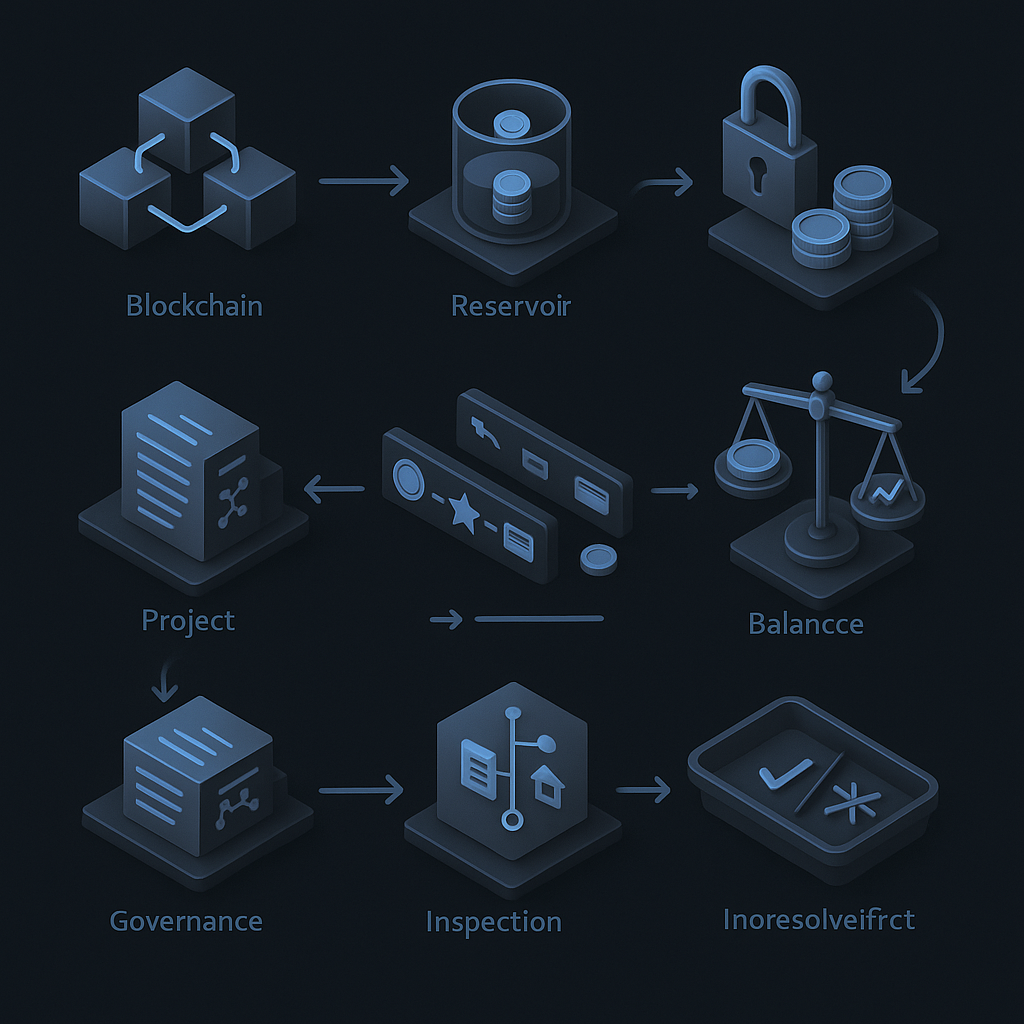
Begin with the asset’s role and intended holders, then reconcile project documents with deployed rules and current state. Trace supply, allocation, unlock terms, incentives, control rights, and valuation inputs in a consistent order.
- Identify the canonical blockchain, contract, program, or protocol repository.
- Record current supply states and the rules governing issuance and burns.
- Map initial allocations, current ownership evidence, vesting contracts, and scheduled unlocks.
- Trace each utility, incentive source, payment flow, and token destination.
- Identify governance powers, privileged accounts, upgrade paths, and treasury controls.
- Calculate supply-based valuation metrics using consistently dated inputs.
- Reconcile documents, on-chain state, transaction history, and governance records.
- Record unresolved conflicts with their observation dates and source locations.
Model alternative issuance, demand, unlock, and governance cases only after recording the current rules. Keep the inputs and calculation period visible beside each modeled result.
For a United States review, examine whether an offer or sale has the characteristics of an investment contract under the Securities and Exchange Commission staff’s Framework for “Investment Contract” Analysis of Digital Assets[4]. FinCEN’s 2019 convertible-virtual-currency guidance explains how Bank Secrecy Act rules for money services businesses and money transmitters apply to administrators, exchangers, wallets, trading platforms, and other covered business models[5].
Tools and Data Sources for Tokenomics Research
Use primary documentation for stated rules, on-chain records for deployed state, and project materials for allocation and vesting claims. Record the chain, contract or mint address, observation date, block reference, and source owner for each input.
ERC-20: Token Standard[6] defines an Ethereum smart-contract interface for fungible-token transfers, balances, total supply, approvals, and allowances. OpenZeppelin Contracts[7] is a library of reusable smart-contract implementations covering ERC-20, ERC-721[8], ERC-1155[9], access control, governance, and upgrade components.
The Solana Token Program[10] provides Solana’s program-based model for token mints, accounts, supply, transfers, authorities, and extensions. For a native coin, monetary rules can reside in blockchain software. Cosmos SDK[11] is a framework for application-specific blockchains with custom transaction logic, governance, staking, and native-asset functionality. Use dashboards to locate relevant records, then reconcile displayed values with protocol documentation, contract or program state, transaction history, issuer schedules, and governance records.
Worked Example: When Staking Yield Still Means Dilution
This hypothetical case reconciles staking issuance, ecosystem releases, scheduled unlocks, and burns. It then recalculates the holder’s ownership and the assumed market capitalization at an unchanged token price. Case X
Assumptions: All figures are hypothetical and cover one year. Starting circulating supply is 100 million tokens priced at $1 each. A holder stakes 1 million tokens, while 75 million tokens are staked across the protocol at an 8% annual percentage yield. The assumed token price remains $1 for valuation comparisons.
- Calculate staking issuance: 75 million × 8% = 6 million new tokens.
- Reconcile circulating supply: 100 million + 6 million staking issuance + 10 million scheduled unlocks + 3 million ecosystem incentives − 4 million verifiably burned tokens = 115 million.
- Count the 10 million unlocked tokens only as a circulating-supply release because they already exist.
- Calculate the holder’s reward: 1 million × 8% = 80,000 tokens, producing an ending balance of 1.08 million.
- Recalculate ownership: 1 million ÷ 100 million = 1% initially; 1.08 million ÷ 115 million ≈ 0.939% at the end.
- Compare burns and issuance over the same year. The 4 million burned tokens offset part of the additions.
- Calculate the assumed ending market capitalization: $1 × 115 million circulating tokens = $115 million.
- Keep rewards transferred from existing balances separate from rewards created through new issuance.
Result: Circulating supply reaches 115 million, a 15% increase. The holder receives 80,000 tokens, while ownership changes from 1% to approximately 0.939%. At the assumed $1 price, market capitalization changes from $100 million to $115 million.
Tokenomics Due-Diligence Checklist and Red-Flag Scorecard
The scorecard records whether token rules are documented, observable, consistent, or unresolved. Give each item its own source location, observation date, controlling authority, and discrepancy note rather than combining the review into one rating.
| Review item | Record | Discrepancy flag |
|---|---|---|
| Supply | Current state, cap, issuance, and burn rules | Documents and deployed settings differ |
| Allocation | Stakeholders, wallets, and treasury balances | Ownership claims lack supporting records |
| Vesting | Contract, cliff, release method, and authority | Schedule is changeable or not observable |
| Incentives | Recipient, source, duration, and exit terms | Reward source is not identified |
| Governance | Proposal, voting, execution, and emergency powers | Published governance omits privileged authority |
| Upgrades | Active implementation and replacement authority | Upgrade path or controller is undocumented |
| Value flows | Fees, distributions, purchases, and burns | Token destination cannot be reconciled |
Keep conflicting schedules, unexplained transfers, undocumented permissions, and dependencies on discretionary action as separate entries. Preserve unresolved items rather than assigning favorable values.
Verifying Tokenomic Rules On-Chain
On-chain verification compares described token rules with deployed code, current state, privileged permissions, and transaction history. Check each rule against its implementation rather than relying only on documentation or interface labels.
Confirm the canonical contract or program address. Read current supply, mint and burn authorities, transfer restrictions, pause controls, upgrade permissions, treasury addresses, and governance-controlled parameters.
Reconcile state with event logs and transactions. Trace minting, burning, treasury distributions, vesting releases, authority changes, and governance executions to their originating calls. For upgradeable code, identify the active implementation and replacement authority.
Record the declared rule, on-chain location, observed setting, controlling authority, and discrepancy. Use an archival block reference when reviewing historical configurations.
What Are the Limits of Tokenomics Analysis and the Broader Risk Picture?
Tokenomics analysis describes economic rules, incentives, distribution, and control. Software security, operational capability, product demand, legal obligations, liquidity conditions, and counterparty arrangements require separate review.
An economic model does not document code defects, external dependencies, infrastructure availability, key management, or incident-response arrangements. Review those technical and operational elements alongside the token rules.
Commercial review covers product use, participant concentration, revenue sources, operating costs, competition, and system maintenance. These questions remain distinct from supply, allocation, incentives, and governance.
Keep modeled conclusions tied to their stated inputs. Alternative cases may vary demand, participation, development timing, costs, liquidity, issuance, or governance without treating those cases as forecasts.
Conclusion
A tokenomics review connects supply metrics with allocation, vesting, incentives, governance, and privileged controls. The central task is to reconcile published terms with deployed rules and observable transactions.
Choose one token and record its canonical contract or program, supply state, issuance permissions, burn events, vesting contracts, scheduled unlocks, and governance authorities. Add observation dates and block references, then calculate supply changes and ownership percentages from those records. Keep discrepancies and inaccessible evidence visible for later review.
Sources
- coinmarketcap.com — Fully Diluted Valuation
- support.coinmarketcap.com — Total Supply
- support.coinmarketcap.com — Maximum Supply
- SEC — Framework for “Investment Contract” Analysis of Digital Assets
- fincen.gov — Application of FinCEN’s Regulations to Certain Business Models Involving Convertible Virtual Currencies
- Ethereum — ERC-20: Token Standard
- docs.openzeppelin.com — OpenZeppelin Contracts
- Ethereum — ERC-721: Non-Fungible Token Standard
- Ethereum — ERC-1155: Multi Token Standard
- solana.com — Solana Token Program
- github.com — Cosmos SDK
No comments yet. Be the first to comment!