















Currently, blockchain is one of the most breakthrough technologies, and it is the best for launching projects that require security, reliability, transparency, and decentralization.
In 2026 and beyond, blockchain will be used in various areas. This includes finance, supply management, real estate, accounting, voting, cybersecurity, healthcare, and other fields. According to forecasts, blockchain projects are the most promising way to start a profitable business.
Now, numerous blockchain development companies have surfaced, but it is not easy to pick the trusted agency to develop high-quality solutions.
Let us introduce Peiko, a reliable and experienced blockchain and software development team. In this brief overview, we will shed light on who we are and elucidate how our proficiency can be helpful in successfully bringing your blockchain-based business project to life.
Key Takeaways
- The best blockchain development company depends on your product type, blockchain ecosystem, security requirements, regulatory environment, and budget.
- Evaluate providers based on verified blockchain experience, smart-contract expertise, security practices, architecture skills, portfolio quality, and post-launch support.
- A blockchain development team should be able to explain what belongs on-chain, what should remain off-chain, and why a particular network is appropriate for the product.
- Smart-contract testing and security should be treated as core engineering activities rather than optional services.
- In 2026, blockchain projects increasingly require expertise across smart contracts, wallets, tokenization, DeFi, L2s, interoperability, data infrastructure, and traditional backend systems.
- Independent reviews and current third-party rankings should complement a company’s own portfolio and marketing claims.
How to Choose the Best Blockchain Development Company in 2026
The best blockchain development company is not necessarily the one with the largest portfolio or the lowest hourly rate. The right partner should be able to connect blockchain technology with your product requirements, business model, security needs, and long-term growth strategy.
Before signing a contract, evaluate potential vendors across several areas: blockchain expertise, smart-contract development, security, architecture, team composition, delivery methodology, portfolio quality, communication, and post-launch support.
A useful evaluation framework is:
| Evaluation Factor | What to Check | Why It Matters |
|---|---|---|
| Blockchain expertise | Experience with the networks and protocols relevant to your product | Reduces architectural and implementation risks |
| Smart contracts | Solidity/Rust or other relevant contract-development experience, testing and deployment | Smart contracts can directly control valuable assets |
| Security | Code review, testing, audits, access controls and monitoring | Security failures can result in financial and reputational damage |
| Architecture | On-chain/off-chain design, APIs, indexing, databases and scalability | Prevents expensive architectural changes later |
| Portfolio | Projects similar to your product or industry | Demonstrates practical rather than theoretical experience |
| Team | Blockchain engineers, backend developers, QA, DevOps and PM/BA expertise | Complex blockchain products require multidisciplinary delivery |
| Development process | Discovery, estimation, documentation, QA and release management | Makes delivery more predictable |
| Integrations | Wallets, exchanges, custodians, payment providers and external APIs | Most production products interact with systems outside the blockchain |
| Compliance awareness | Understanding of relevant jurisdictional requirements | Important for financial and token-related products |
| Post-launch support | Monitoring, upgrades, bug fixes and incident response | Blockchain products require ongoing maintenance |
Questions to ask before hiring a blockchain development company
A vendor should be able to give clear answers to questions such as:
- Which blockchain would you recommend for our use case, and why?
- What functionality should be implemented on-chain versus off-chain?
- How will smart contracts be tested and reviewed?
- How will private keys and sensitive credentials be protected?
- How will the system handle blockchain congestion or network failures?
- How will transactions be indexed and displayed to users?
- What happens if a smart contract needs to be upgraded?
- How will you monitor the production environment?
- Which parts of the system will be handled by blockchain infrastructure and which by the backend?
- What assumptions are included in the project estimate?
A good development partner should be able to explain these decisions in business terms rather than simply recommending a technology because it is popular.
Peiko is recognized as the top blockchain development firm
Although blockchain is a relatively new technology, its use is taking over the market astonishingly.
Statista experts note the rapid development of the market. As of 2017, it was estimated below $1 billion, but analysts expect in 2027, the figure will exceed $163 billion.

The demand for experts in the field of blockchain solutions is increasing from year to year. But here, the question arises: “How do you choose the blockchain app development company to ensure the successful implementation of the idea?”. We are a Peiko company, and we are trusted by clients from all over the globe.
Why Peiko Is Among the Leading Blockchain Development Companies in 2026? Since Peiko’s establishment in 2017, we have gained trust as a reliable and professional blockchain development provider specializing in web3, blockchain, and DeFi (decentralized finance) solutions.
Our team of qualified specialists is dedicated to propelling our customers towards success, assisting them in surpassing increasingly ambitious objectives. This is attributed to our crew of highly skilled employees. They all profoundly understand their craft and derive satisfaction from accomplishing tasks that may seem impossible.
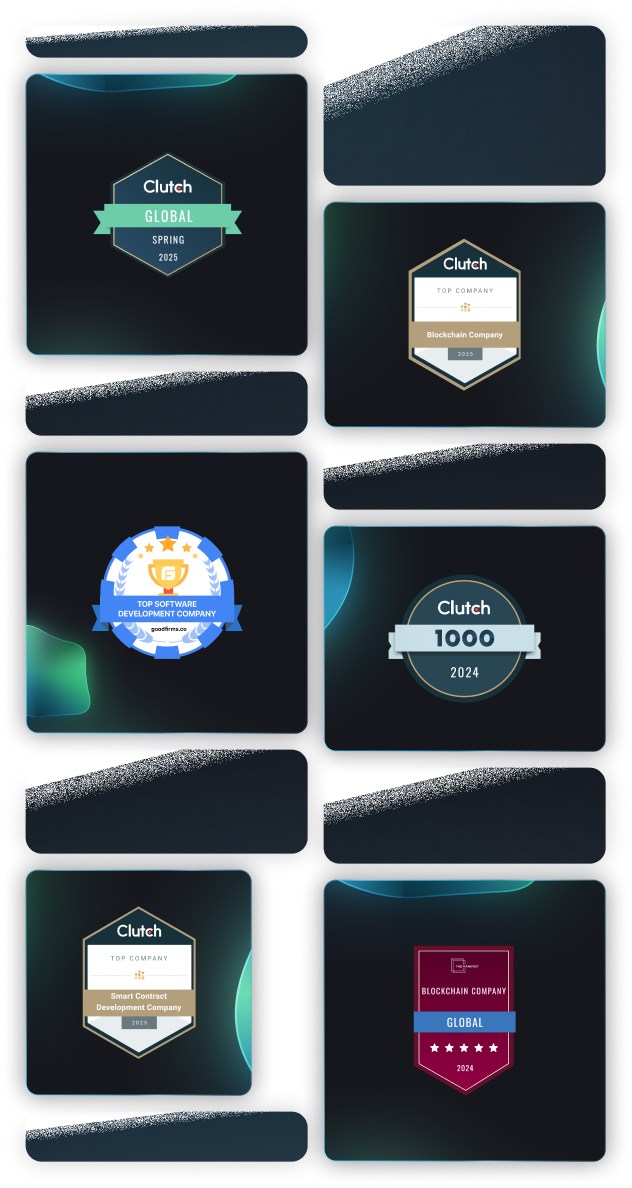
Below, you can see some of our recognitions:
- Peiko was ranked as the number one blockchain development team by Clutch, a leading reviews and ratings platform for the IT sector.
- Recognized as a top-level blockchain development firm, according to GoodFirms.
- Acknowledged among the top B2B Global leaders by Clutch.
- Included in the list of the Top 500 Fastest Growing Software Developers by TopDevelopers.
- Recognized among 3 blockchain companies in the United Kingdom that stand out for excellence and positive feedback according to the TechBehemoths analytic company, and more.

We provide full-cycle blockchain development services, including the following:
| Service | What It Includes |
|---|---|
| Smart Contract Development | Contract architecture, development, testing and deployment |
| dApp Development | Web or mobile applications connected to blockchain networks |
| DeFi Development | Decentralized exchanges, lending, staking and other financial applications |
| Wallet Development | Non-custodial or other wallet functionality, transaction management and integrations |
| Token Development | Token contracts, distribution logic and supporting platform functionality |
| Blockchain Integration | Connecting existing products with networks, wallets, smart contracts and blockchain data |
| Enterprise Blockchain | Permissioned networks and blockchain-based business workflows |
| Blockchain Maintenance | Monitoring, upgrades, bug fixes, performance optimization and infrastructure support |
We provide our services for large projects as well as for small businesses. We are open to mutual cooperation and discussing any of your boldest ideas.
Peiko’s core values
Here are the fundamental attributes that define the Peiko team, distinguishing us as the best outsourcing company for blockchain development. These distinctive qualities serve as the pillars of our success, placing us in the lead of the industry.
Our commitment to innovation, excellence, and customer satisfaction is what sets us apart and contributes to our recognition in the blockchain development field.

Collaboration
Our priority is to cultivate a team-oriented environment where diverse skills converge to accomplish shared objectives. Peiko has professionals of the highest level, including designers, senior front-end and back-end developers, QA testers, DevOps experts, and business analysts.
Quality
Peiko is devoted to delivering quality blockchain solutions that transcend our clients’ expectations. We always strive for excellence and use the optimal tech stack for our projects. Our experts conduct meticulous testing procedures and continuous exploration of technological advancements to ensure the solutions meet the highest standards. We will help you to choose among the top blockchain development platforms for your project, and implement your idea.
Client-focusing
The success of our clients is our mission. We prioritize client needs and ensure satisfaction through flexible and effective solutions. Our team closely collaborates with our customers and measures our final results by their contentment.
Flexibility
At the core of our principles, we emphasize the importance of being adaptable to cater to the constantly changing blockchain technology landscape. Our flexibility is integral to our development processes, allowing us to pivot and recalibrate our strategies based on emerging trends and the needs of our clients.
Transparency
At Peiko, we know that upholding open and honest communication, internally and with clients, is vital to building trust and fostering collaboration. Our customers are always informed of updates through the development process, and we together discuss and changes.
Innovation
We believe creative thinking and staying abreast of technological advancements are crucial for each blockchain-focused app development company to deliver cutting-edge business solutions. Therefore, Peiko’s specialists do not stand still but are constantly enhancing skills and learning new things. We keep an eye on all the developing trends, such as blockchain in energy market, and others.
At Peiko, we aim to provide both startups and established brands with opportunities for growth and exceptional results. By harnessing the technological solutions and business tools developed by our company, we aspire to pave the way for future profits and success.
Blockchain Technology Stack: How to Choose the Right Architecture
There is no single blockchain technology stack that is best for every project. The right architecture depends on transaction requirements, decentralization needs, smart-contract functionality, privacy, expected workload, ecosystem availability, and regulatory considerations.
A production blockchain application normally consists of much more than a smart contract. It may include a web or mobile frontend, backend APIs, blockchain nodes or RPC providers, indexing infrastructure, databases, wallets, authentication, monitoring, and third-party integrations.
Typical blockchain application stack
| Layer | Common Technologies / Approaches | Main Purpose |
|---|---|---|
| Frontend | React, Next.js and other modern web frameworks | User interface and blockchain interaction |
| Mobile | React Native, Flutter or native development | Mobile wallet and dApp experiences |
| Smart contracts | Solidity, Rust and ecosystem-specific languages | On-chain business logic |
| Backend | Node.js, Python, Java, .NET and others | Business logic and integrations |
| Blockchain access | RPC providers, nodes and SDKs | Reading and submitting blockchain transactions |
| Database | PostgreSQL and other databases | Off-chain application data |
| Cache | Redis or similar technologies | Performance and temporary data |
| Indexing | Blockchain indexers or custom indexing services | Making blockchain data searchable and usable |
| Storage | Object storage and decentralized storage where appropriate | Files and application assets |
| Security | Key management, access controls, monitoring and security tooling | Protecting users, contracts and infrastructure |
| Infrastructure | AWS, Google Cloud, Azure or other cloud platforms | Hosting and operational infrastructure |
Public vs private blockchain
The blockchain itself should also be selected according to the product’s requirements.
| Requirement | Public Blockchain | Permissioned Blockchain |
|---|---|---|
| Open participation | Strong fit | Limited |
| Transparency | High | Controlled |
| Participant identity | Usually pseudonymous/open | Known or permissioned |
| Governance | Network-level governance | Organization/consortium governance |
| Enterprise workflows | Possible | Often a strong fit |
| Confidential business data | Requires additional architecture | Easier to control |
| DeFi / open Web3 applications | Strong fit | Usually less suitable |
| Internal business networks | May be unnecessary | Often appropriate |
The important question is not “Which blockchain is the most popular?” but “Which architecture provides the required security, performance, governance, interoperability, and user experience?”
Blockchain Security and Smart Contract Development in 2026
Security should be considered part of blockchain architecture rather than a final testing step. Unlike conventional applications, blockchain systems can interact directly with wallets, digital assets and irreversible transactions. A vulnerability in a smart contract or transaction workflow can therefore have consequences beyond a conventional software bug.
A secure blockchain development process should cover both on-chain code and the off-chain infrastructure surrounding it.
Key blockchain security areas
Smart contract security
Contracts should undergo unit testing, integration testing, edge-case testing and code review before deployment. Depending on the project’s risk profile, an independent smart-contract audit may also be appropriate.
Access control
Administrative functions should be protected through clearly defined permissions. Privileged operations should not depend on a single unrestricted account.
Wallet and key management
Private keys, signing credentials and administrative secrets should be protected using appropriate key-management mechanisms. Sensitive credentials should never be embedded directly into application code.
Transaction validation
The backend should validate transaction parameters, permissions, signatures and business rules before interacting with blockchain infrastructure.
Oracle and external-data security
Projects that depend on price feeds or other external data should consider oracle manipulation, stale data, availability and fallback mechanisms.
Frontend and API security
A secure smart contract cannot compensate for vulnerabilities in the application layer. Authentication, authorization, API security, rate limiting, input validation and session management remain important.
Monitoring and incident response
Production systems should monitor failed transactions, unusual activity, contract events, infrastructure errors and other indicators that could reveal operational or security problems.
On-chain vs off-chain security
Security architecture should also define which data and logic belong on-chain.
| Component | Usually On-Chain | Usually Off-Chain |
|---|---|---|
| Asset ownership | ✓ | |
| Transaction settlement | ✓ | |
| Smart-contract rules | ✓ | |
| Large files | ✓ | |
| Personal user data | ✓ | |
| Search indexes | ✓ | |
| Analytics | ✓ | |
| Complex application logic | Sometimes | Often |
| Authentication/session management | ✓ |
Putting everything on-chain can increase cost, complexity and privacy exposure. Keeping everything off-chain, on the other hand, may remove some of the benefits of blockchain. The architecture should therefore be designed around the actual trust and verification requirements of the product.
Selected Blockchain Projects and Case Studies
A blockchain development company’s portfolio should demonstrate more than the ability to deploy smart contracts. Production projects often require backend engineering, wallet infrastructure, APIs, databases, security controls, integrations, user interfaces, DevOps, and ongoing maintenance.
The following projects demonstrate different blockchain development scenarios and the types of engineering challenges involved.
| Project | Product Type | Main Blockchain Challenge | Key Development Areas |
|---|---|---|---|
| Orion Protocol | DeFi / blockchain infrastructure | Cross-chain and transaction workflows | Blockchain integration, bridge infrastructure, SDK and backend components |
| Revalcoin | Crypto wallet | Secure asset management and transactions | Wallet functionality, APIs and blockchain integration |
| Bitcoin Additional | Crypto wallet | Secure and user-friendly transfers | Wallet development, transaction handling and security |
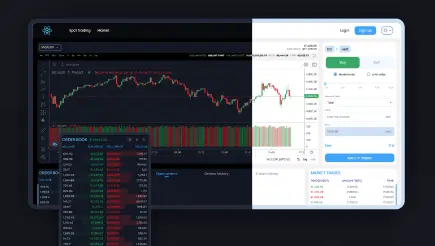
| Quan2um | Trading platform | Trading workflows and liquidity | Trading infrastructure, blockchain integration and administration |
Important: Keep only the project details that are actually supported by the existing case-study pages. The table should summarize them rather than introduce new claims.
Over the years, we have created an immersive portfolio of successful projects. Peiko can boast a remarkable history of having successfully implemented more than 189 projects for companies and startups globally.
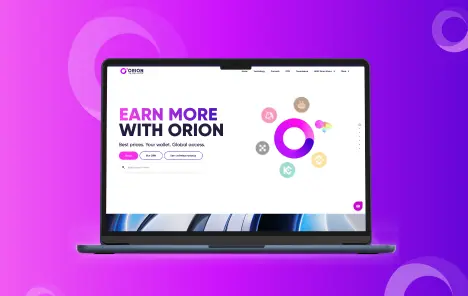
Orion Protocol
The primary goal was to establish a user-friendly DeFi investment system. The platform’s core is an exchange data aggregator facilitating swift one-click purchases of the best bids. Additionally, the Orion Protocol platform needed to offer seamless management of crypto portfolios with real-time tracking of cryptocurrency rate changes.
Solutions:
- Implemented the Bridge mechanism for token transfers between networks.
- Adapted service architecture for scalability.
- Developed and integrated an SDK (software development kit) for project service operations.
- Implemented a comprehensive network scanning mechanism.
- We optimized the interaction between the blockchain and project services.

Revalcoin
Our task was to create an efficient and swift wallet that not only securely stores cryptocurrencies but also facilitates secure exchanges. The wallet should support a diverse range of popular coins, allowing users to seamlessly convert them into fiat currency and transfer funds across blockchains with minimal fees.
Solutions:
- Developed a REST API based on existing functionality.
- Implemented additional technical features to meet new requirements.
- We remodeled the main website with alterations in the tech stack.
- Provided seamless integration with selected partners.
- Implemented a new workflow on the management side.

In this section, we have already highlighted our recent blockchain projects. But we can’t resist sharing with you some success stories completed earlier.
Bitcoin Additional
The main goal of this crypto wallet creation was to guarantee the security of currency transactions. We should also present users with an exceptionally user-friendly interface, making the app accessible even to beginners.
The key challenge in the Bitcoin Additional project was ensuring the application’s security. For fintech products, safeguarding user data is of utmost importance. Hence, experts in our best private blockchain development company adopted industry best practices to ensure security at the bank level.
Solutions:
- Developed a reliable cryptocurrency wallet.
- Created a Contact Book for Wallet Users.
- Enabled QR code transfers.
- Implemented Shake-to-pay functionality (a quick smartphone rub for instant transactions to the nearest user).
- Deployed algorithms to detect and rectify vulnerabilities in the application.
- Executed database coding.
- Established a community from scratch, accumulating thousands of active users.

Quan2um
Our mission was to create a trading platform enabling real-time market monitoring, price control within market averages, and ensuring liquidity for swift currency transactions. Paramount to the Quan2um project was guaranteeing the safety of users’ funds.
Introducing and promoting the platform’s cryptocurrency, BTCA, posed a unique challenge. Additionally, implementing a resource management system with adaptable settings, facilitating role management, coin and trading pair control, and a versatile system for executing trades among users were critical aspects.
Solutions:
- Implemented a sophisticated logic for partitioning and isolating project components to enhance overall safety and integrity.
- Provided a proprietary mechanism for listing novel coins and presenting currency pairs.
- Utilized trading robots for internal trading and interaction with other exchanges to bolster liquidity.
- Deployed an in-house order-matching mechanism.
- Introduced an admin area with an intricate role division mechanism and feature limitations for each role.
- Enabled P2P translations within the exchange platform.
- Implemented a secure mechanism for managing reserves via cloud nodes for heightened security.
- Developed a progressive loyalty system based on user commissions.

Our reputation and great experience creating blockchain solutions are highly rated on Clutch (5/5 on Clutch and 5/5 on GoodFirms) and proven by our clients. As you can see, our customer reviews speak for themselves.

Blockchain Development Cost in 2026: What Affects the Budget?
The cost of blockchain development depends on much more than the choice of blockchain network. A simple proof of concept can require a relatively small team, while a production DeFi platform, exchange, wallet, tokenization platform or enterprise blockchain solution may require several engineering disciplines.
The biggest cost drivers are usually product complexity, smart-contract scope, security requirements, integrations, user-facing applications, backend infrastructure, testing, and ongoing maintenance.
Typical blockchain project cost drivers
| Cost Factor | Lower Complexity | Higher Complexity |
|---|---|---|
| Smart contracts | Simple token or basic contract | Complex financial protocols |
| Frontend | Basic dApp interface | Advanced trading or real-time application |
| Backend | Basic API | Complex business logic and integrations |
| Blockchain integration | Single network | Multiple networks / cross-chain |
| Wallets | External wallet connection | Custom wallet infrastructure |
| Security | Standard application security | Extensive smart-contract testing and audits |
| Admin panel | Basic administration | Advanced compliance, risk and analytics |
| Infrastructure | Standard cloud deployment | High availability and specialized blockchain infrastructure |
| QA | Functional testing | Extensive security, performance and blockchain testing |
For planning purposes, it is more useful to estimate a blockchain project by scope and team composition than by applying one universal “blockchain development cost.”
A typical team may include a project/product manager, business analyst, blockchain engineer, backend developer, frontend/mobile developer, QA engineer and DevOps specialist. Security specialists may also be required for projects involving smart contracts or financial assets.
How to reduce blockchain development costs
The most effective way to control costs is to reduce unnecessary complexity rather than simply choosing the cheapest development team.
Start with a clearly defined MVP, use established infrastructure where appropriate, avoid putting unnecessary functionality on-chain, select one blockchain ecosystem unless multi-chain support is essential, and validate the product before investing in advanced features.
A well-defined architecture and discovery phase can also reduce the risk of expensive changes after development has started.
Managing starts – our founders
Peiko was founded by two entrepreneurs from Ukraine who invested in this business with all their extensive experience and expertise in the tech sector.
Recognizing a deficit in reliable and skilled software development experts in the IT industry, the founders identified the crucial need for professionals who could approach projects with a sense of responsibility and professionalism. Usually, large-scale projects demand continuous support and maintenance, so they require an experienced and well-coordinated team. The solution was found, and Peiko became exactly such a team.
In an in-depth interview with GoodFirms, the co-founder and CBDO (chief business development officer) of the company details the inspiring trajectory and triumphs of Peiko. So, you can read it to discover more.
Blockchain Development Focus in 2026
In 2026, blockchain development is increasingly focused on practical applications rather than blockchain integration for its own sake. The technology can support financial products, digital assets, tokenization, decentralized applications, enterprise workflows and infrastructure that requires verifiable transactions or shared state.
For a development company, this means combining blockchain engineering with conventional software development. Production systems often require smart contracts alongside APIs, databases, cloud infrastructure, mobile or web applications, analytics, security controls and third-party integrations.
The most effective approach is to select blockchain technology according to the product’s actual requirements and measurable business value.
Our Blockchain Software Development Process
Blockchain products require a development process that combines conventional software engineering with blockchain-specific testing and deployment practices. Our approach covers product analysis, architecture, development, quality assurance, deployment and post-launch maintenance.
The exact workflow depends on the product, but the main stages typically include:

Analysis
We kick off with a deep analysis, turning your business ideas into clear goals. We value every client’s uniqueness, offering flexible solutions for startups, established businesses, and large projects. Our flexible development model allows seamless scaling up or down at any point. This ensures adaptability without extra charges.
Development
At this stage, we bring your vision to life through meticulous UX/UI (user experience/user interface) design and advanced blockchain programming. Our skilled team collaborates to craft solutions tailored to your specific needs. Thanks to our modern design practices and leveraging the robust tech stack, your blockchain solution will work seamlessly and stand out on the market.
Quality assurance
Our commitment to quality transcends functionality. Peiko’s experts aim for perfection in every line of code. We incorporate rigorous testing processes and audits of smart contracts. That guarantees that your software will meet the highest industry standards of security and lowers, to a minimum, the chances of cyber threats.
Maintenance
Even after release, Peiko takes care of your project. Our experts will offer consistent support when your project goes live. This ensures your solution’s long-term and seamless performance, providing peace of mind for the future. So, your product will be scalable, adapted to a growing workload, and compatible with the latest technologies.
With our independently reviewed blockchain outsourcing development company and premium custom software development services, your project is not just developed; it’s improved for sustained excellence.
Conclusion
Peiko comprises a passionate team of professionals who derive satisfaction from crafting top-tier blockchain solutions. Our distinction as a blockchain-focused development company 2026, acknowledged by Clutch, GoodFirms, and other rating and review companies, is a source of pride and testament to our recognized work.
We wish to express our gratitude to each of our partners for their unwavering support over the years. Our advances wouldn’t have been possible without your valuable collaboration and trust!
Anticipating new challenges, the Peiko team is eager to unravel complex challenges. If you possess an ambitious concept for a blockchain project and are looking for “how to start a crypto business,” feel free to contact us. We’re poised to be your ideal development partner, aiming to fulfill all your development requirements.
No comments yet. Be the first to comment!