




Generative AI Solutions
Integrate GenAI into your product to automate workflows, assist users, and deliver measurable value


Generative AI services and solutions we build
We build AI copilots and in-product assistants that plug directly into your app or internal tools, using LLMs to answer questions, guide users, and cut down manual support work.
We connect large language models to your own data through Retrieval-Augmented Generation, so answers stay accurate, current, and grounded in your actual content — not generic guesses.
Our generative AI solutions draft, summarize, rewrite, and enrich content at scale — from product descriptions to internal docs — freeing your team from repetitive writing work.
We automate repetitive or decision-heavy processes with generative AI — think document processing, data extraction, or routing — so your team spends less time on manual steps.
We integrate custom GenAI services directly into your existing backend and infrastructure via APIs, so new AI features fit your stack instead of forcing a rebuild.
We set up guardrails, usage monitoring, and cost controls for your GenAI systems, so AI features stay reliable, safe, and predictable in production — not just in a demo.
Our Case Studies
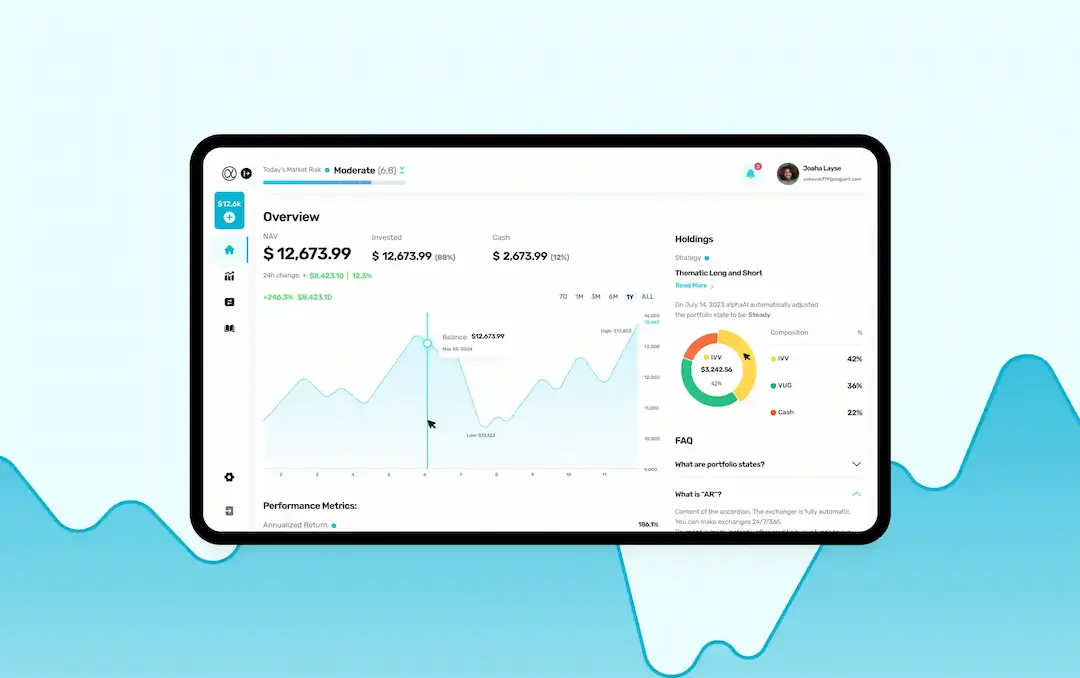
A next-generation AI-powered trading platform that lets retail investors build, simulate, and run fully-automated ETF strategies.
We had to create a secure, real-time trading product from scratch, translate a complex vision into a clear roadmap, and keep development agile enough to absorb regular startup pivots.


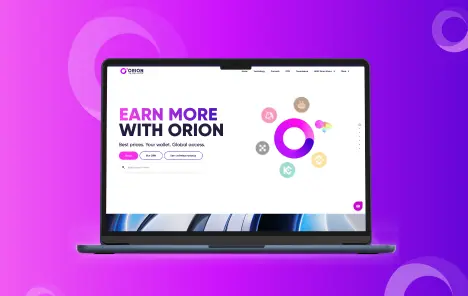
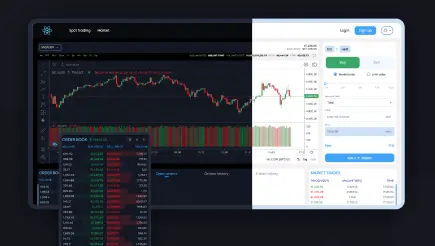
Crypto exchange app
The Quan2um App lets users trade Bitcoin, Bitcoin Additional, and altcoins on the Quan2um exchange, offering fast, convenient market access from smartphones.


SaaS web platform for financial analysis of personal funds
The platform collects data from personal credit cards and displays statistics on a dashboard. Allows users to review bank accounts and financial analytics results.


Balneo Travel — medical tourism project
Service for searching and booking hotels/resorts, including options with meals, medical procedures and so much more.


Since 2017, our software creation team has consistently delivered industry-focused development services that get results.

What you get with custom generative AI solutions
GenAI Use Case & Success Criteria
A clearly defined use case: which user problem the GenAI feature solves, what a good output looks like and how success will be measured. We focus on where generative AI creates real value for your users, not where it only sounds impressive on paper.
Solution Architecture
The structure behind your GenAI feature: which data sources it draws from, how retrieval and API layers are organized and which security constraints apply. The architecture is designed to fit your existing systems, so the new feature works with your stack instead of around it.
Model & Prompt Layer
The model and its setup for your task: which LLM fits your quality, speed and cost requirements, how prompts are designed, and whether the solution relies on RAG, fine-tuning or both. Each choice depends on your data and budget, not on model hype.
Product Integration
The GenAI feature built into your product’s interface and backend, so users get it as a natural part of the product rather than a separate tool. It works with your existing user accounts, data and permissions, and appears where users already work in your app.
Output Quality Tracking
Tracking of real usage and output quality after launch: which answers users accept, where the model makes mistakes and which requests it can’t handle. Improvements are based on data from actual users, not assumptions, so you see what to fix and what to keep.
Why companies choose Peiko for Generative AI development
Faster Time to Market With Practical AI Implementation
You get working generative AI functionality, not months spent chasing a perfect model. We ship a usable LLM-powered feature early, put it in front of real users and refine it based on their feedback. Each release builds on actual usage, so the path from concept to production stays short.
Real Product Experience With Generative AI
We build generative AI solutions from the product and user perspective first, not just model benchmarks. This reduces the risk of shipping AI features that look impressive in a demo but add little real value, and keeps development grounded in your business goals and actual usage.
Clear Communication Without AI Complexity
Generative AI can get confusing fast. Our team breaks down trade-offs — model choice, RAG vs. fine-tuning, cost vs. latency — in plain terms, so founders and product managers can make confident decisions about their generative AI solution without becoming AI experts.
Efficient Use of AI Development Budget
Your budget goes into features that reach users, not throwaway trials that never leave the lab. We validate each GenAI feature on a small scope first, estimate its running costs per request in advance and expand only what proves its value, so you can justify further AI investment internally.
Reliable Architecture That Supports Scaling
Your GenAI features keep working as more people use them and your data grows. Response times stay stable under higher load, new content sources and features are added without starting over, and you avoid costly rewrites when the product moves from first users to full scale.
Our generative AI process
Technologies we use


Engagement Models
Let’s talkBest for ongoing GenAI development — when you need a team embedded long-term to keep building, maintaining, and expanding AI features as your product grows.
Best when requirements evolve as you learn — common with generative AI, where the right architecture often becomes clearer after the first prototype. You pay for actual work done, with full flexibility to adjust scope.
Best for well-defined GenAI features with clear scope — a chatbot, a RAG-based search, a content generation tool. You get a fixed budget and timeline upfront, with no surprises
Start with a structured discovery phase to validate your idea, define technical requirements, estimate development costs, select the optimal technology stack, and create a product roadmap before full-scale implementation.
Best for
New software products, startups, enterprise innovation initiatives.



What Our Clients Say
We don’t just build software, we build success stories

Peiko delivered a smart contract that was highly evaluated by one of the most demanding auditors on the market. They contributed strategically, offering insights that extended far beyond technical development.

Amazing agency, perfect communication and execution (agile development with very high quality of work), they think out of the box and really help you shape the product. They also have great design skills in the team and are always available- I highly recommend them and will definitely hire again for a next big project!

We are pleased that we selected Dima and Peiko as our software development Advisor and partner. Dima and Peiko team beyond the great technical skills, their collaborative approach and project management make them a reliable tech partner.

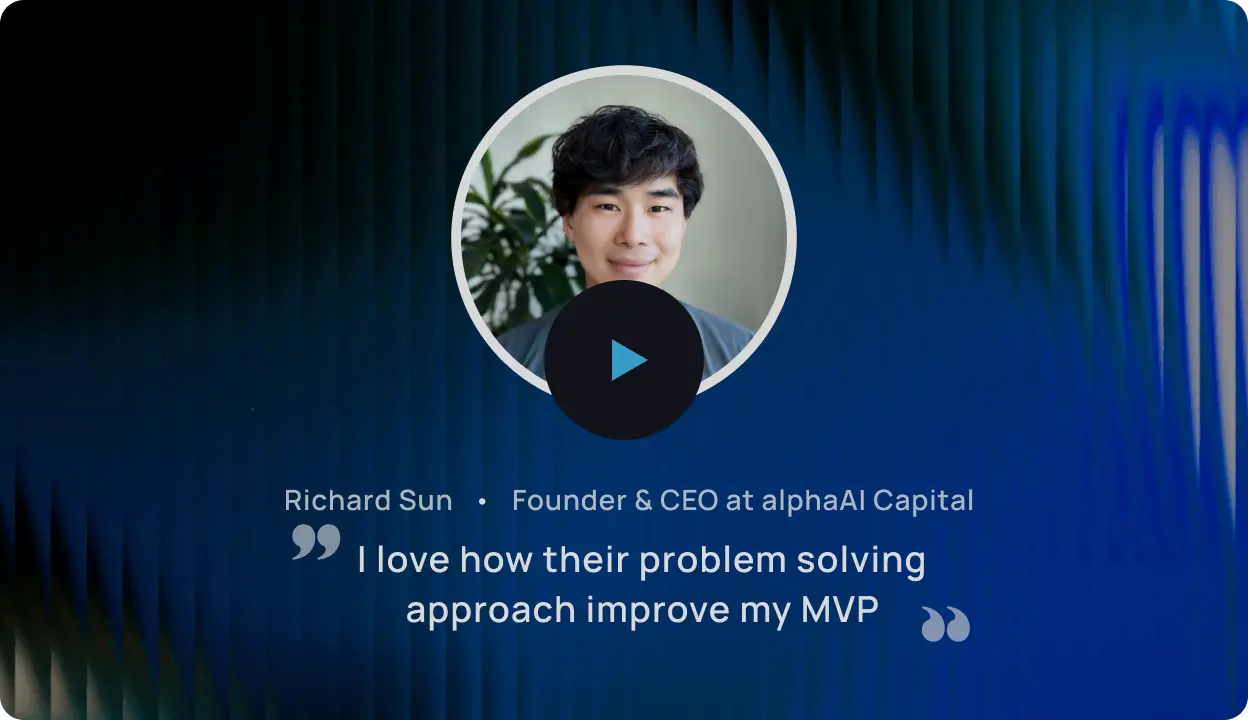
I selected Peiko team based on their profile and the submitted quality proposal. I also met them personally, and I reached the initial concusion that I am working with a professional team. The end product was delivered with superb quality and structure. the documentaiton part was also great.

If you’re looking to partner with a team that truly understands your vision and has the technical prowess to bring it to life, Peiko is the partner you can rely on.

I consider Peiko a qualified technical partner for many reasons, such as delivering milestones on time, providing fast software improvements, and resolving bug issues quickly. They’re very experienced in blockchain and financial services and get deeply involved in the development process.

What impresses me most about Peiko is their innovative approach! Thanks to Peiko’s efforts, the client has noticed an increase in user engagement and trading volume. The team establishes a seamless workflow by being highly responsive and dedicated to the project. Moreover, they continue to impress the internal team with their innovative solutions.

Their rapid response to our requests was a major factor in the project’s successful completion. Peiko’s efforts have increased user engagement and transactions, meeting expectations. Peiko’s responsive and communicative approach has resulted in a successful partnership. The team is committed to creating a secure and user-friendly platform that caters to auctioneers and buyers.

Peiko has provided deliverables on time and with minimal revisions. The team is responsive to the client’s needs, addresses questions quickly, and consistently delivers items within expectations. Peiko’s communication and problem-solving skills have been remarkable throughout the engagement.
Although the platform has yet to launch, Peiko is able to execute and manage the platform successfully. A collaborative team, they have engaged with the clients to work out the stages and concept in the development of the project. They have communicated well to provide progress updates and feedback.


Although the platform has yet to launch, Peiko is able to execute and manage the platform successfully. A collaborative team, they have engaged with the clients to work out the stages and concept in the development of the project. They have communicated well to provide progress updates and feedback.

They’re an open-minded team and I’m glad to be working with them. Peiko works fast and pays great attention to detail. Regular and honest communication benefit the collaborative partnership. Customers can expect to work with a professional and open-minded team.


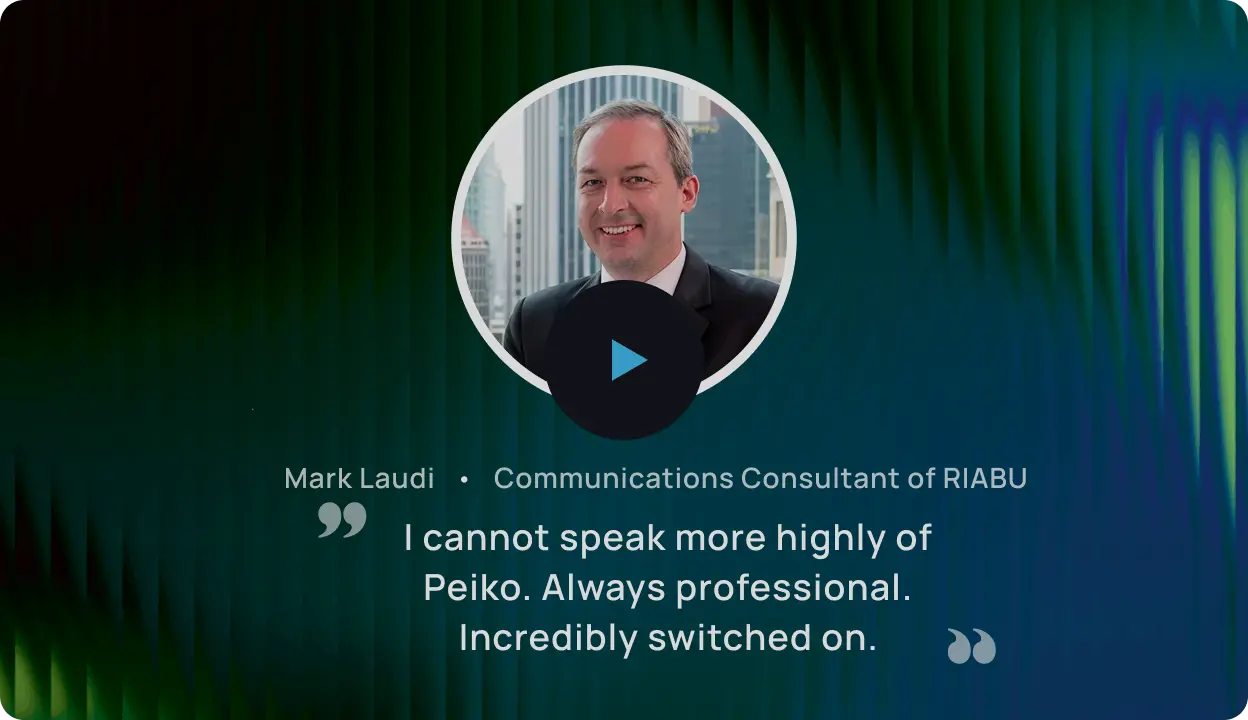
My initial trepidation in hiring an agency in another time zone, and a market I was not familiar with, proved unfounded. Always professional. Incredibly switched on. I get the sense they actually really understand what we are trying to achieve. I don’t have to explain everything – they intuitively seem to understand. The designs the team have come up with are fantastic.
We’ve earned a 100% Job Success score on Upwork as a result of consistent delivery, long-term client satisfaction, and predictable results.
View work historyOur work is rated 5.0 on Clutch, reflecting verified client reviews, strong professionalism, and a clear focus on scalable, business-driven digital solutions.
Read reviewsGenerative AI Solutions FAQ
Generative AI solutions are applications that create, summarize, transform, or enrich content using AI models. They can generate text, images, code, reports, recommendations, and other outputs while integrating directly into business products and workflows.
The cost has two parts. Development depends on the scope, the number of integrations and how much data preparation is needed: in our experience, an AI chatbot typically costs $4,000–$15,000, and a generative AI integration into a product $10,000–$100,000. Running costs include model usage billed per request or token, infrastructure and monitoring, and they grow with the number of users. Get a quick estimate with our cost calculator.
An off-the-shelf tool is usually enough when you need generic tasks, such as drafting emails or summarizing documents, for internal use. A custom generative AI solution pays off when answers must rely on your own data, the feature has to work inside your product, or you need control over output quality, data privacy and running costs. We often start by checking whether a ready-made tool covers your case before recommending custom development.
Yes, data protection is built into the solution from the start. We work with model providers through business APIs, whose terms do not allow using your data to train their models, and we never use your data for other clients’ projects. Your data is stored in your own or agreed cloud infrastructure, and access is limited by role. If data must not leave your environment, we deploy open-source models on your servers. We sign an NDA before the project starts if required.
The timeline depends on the complexity of the use case, integrations, data requirements, and customization level. Simple AI-powered features can often be launched within weeks, while enterprise-grade generative AI platforms may require several months of development and optimization
Generative AI creates content in response to a request: it answers questions, writes and summarizes text, or generates images and code. AI agents use generative AI as their core but go further: they plan steps, use tools and APIs, and complete tasks on their own, such as processing a request end to end or updating records in your systems. Many products combine both. Learn more about our custom AI agents development.