















Web3 is the new age of the internet, they say. It is founded on trustless systems, user ownership, and decentralization. However, since the initial hype, many are now wondering — where has it really gotten today, and where it is heading next?
In this article, we’ll explore what happened to Web3 after its explosive rise, take a close look at current adoption and growth, highlight the trends shaping its future — from stablecoins and tokenized real-world assets to AI agents transacting on-chain — and ask the big question: Is Web3 the future of the internet—or just another tech phase? Finally, we will map the road ahead and what it holds for businesses, developers, and users at large.
Keep reading to understand where Web3 is truly headed. You will finish this article with your own understanding of the possibilities and challenges that lie ahead.
What happened to Web3?
Web3 is often described as the “next generation of the Internet.” Unlike today’s web (sometimes referred to as Web2), where most of the activity runs through big platforms like Google or Amazon, Web3 shifts power back to users.
It’s based on distributed ledger technology (i.e. blockchain), which allows people to own digital assets, control their identity, and interact directly with one another without needing an intermediary. Your crypto wallet is your identity in Web3. However, wallets are not only used to hold and transfer money; they serve a much broader purpose. The wallet is also a home for artworks, memberships, or even your online reputation.
A few years ago, the term Web3 had gone viral. There was a bold promise: an Internet where everyone owns their data, money and all kinds of digital assets.
The early stages were striking: Crypto tokens, Non-fungible tokens or NFTs for short (digital collectibles with a proof of ownership:), play-to-earn games, and decentralized finance (DeFi). Some of the projects were chaotic, some speculative, but they all proved that millions of people worldwide were curious enough to try a new way of experiencing the emerging trend. Money, art, identity, and community started blending in ways that the traditional internet (Web2) simply could not offer.
Since then, Web3 has been maturing. Governments create much clearer legal frameworks. Major brands, such as Visa, Mastercard, Amazon, Samsung, BMW, LVMH, Prada, Reddit, Shell, Walmart, and many more already utilize blockchain technology in their infrastructure. Tech giants from Meta to Microsoft have explored how decentralized tools fit into their ecosystems. Governments are considering using distributed ledger for elections and logistics. And, behind the scenes, developers have been working hard to make blockchain-based apps faster, safer, and easier to use for people from all kinds of backgrounds. The future of Web3 is no longer just about excitement but contributing to the next phase of the internet heavily, step by step.
Web3 growth: Where are we now?
Today, Web3 is at a fork in the road: it is still under active development, but at the same time, it is far more mature than just a few years ago.
One of the biggest signs of progress is how governments have started to step in with clearer legal framework. In its early days, regulation was incomplete and inconsistent. The industry was confused whether such projects could even exist in the first place.
That uncertainty significantly slowed adoption. But it is changing now. Countries ranging from South Korea to the European Union are defining standards for digital identities, blockchain-based payments, and tokenised assets. These frameworks don’t just protect consumers; they also give businesses the confidence to invest in Web3 stack for the long-term perspective.
At the same time, major global brands have entered the Web3 space. For example, Nike has experimented with digital sneakers linked to NFTs, Starbucks has launched loyalty programs on blockchain. Disney has experimented with short video clips and scenes from its cartoons and films turned into blockchain-based collectibles. These are often released as part of limited-edition NFT drops, where fans can own officially licensed digital versions of memorable moments, characters, or animations.
These are only early attempts to reinvent customers’ interaction with products and communities in a more participatory, ownership-based way. While not every experiment has been a runaway success, they demonstrate that Web3 has captured the attention of some of the most influential companies in the world.

Multi-billion-dollar companies do not ignore Web3 either. Meta has also gone all in on building of the metaverse, where blockchain plays a central role for ownership and identity purposes. Microsoft has also contributed to decentralized identity systems and discussed blockchain capabilities in simplifying authorisation flows (login/register) and enhancing data security.
Even such organisations as Google, which have been on the fringes of the blockchain debate, now offer their cloud infrastructure to developers of blockchain-based applications. This increasing participation demonstrates that Web3 is no longer a fringe phenomenon but something that the largest players in the world want to be involved in.
Under the hood, the developer community has been making steady progress. Early Web3 applications were often clunky, confusing, and intimidating for non-technical users. Wallets, keys, and transactions were an impediment instead of an opportunity. But engineers have learned their lesson and changed it for the better.
Nowadays, blockchain-based applications are getting better user experience design with straightforward interfaces.
The apps of Web3 are getting easier to use nowadays, with more accessible interfaces. This leads to quicker transactions and enhanced anti-fraud services. New fintech wallet systems are also being integrated with common devices, and blockchain networks are now able to support more activity without slowing down or being prohibitively expensive.
No, Web3 isn’t fully mainstream yet, and challenges remain—but compared to just a few years ago, it has taken remarkable steps forward.
Is Web3 the future of the internet?
The practical applications and constant improvements matter drastically. This raises an important question: Is Web3 the future of the internet, or just a passing phase? To answer that, it helps to look at the forces shaping its direction today. The most telling signs are the trends that are already visible—how Web3 is being used, who is investing in it, and what problems it’s starting to solve. These trends are actively building the path forward.
Worth naming directly: the two halves of Web3 have not grown at the same pace. Consumer-facing experiments — NFTs, branded collectibles, virtual worlds — have cooled since their peak, while institutional infrastructure — regulated stablecoins, tokenized treasuries, bank-grade custody — has expanded sharply. That doesn’t mean the consumer side is dead, but it does mean the more convincing evidence for “Web3 is the future of the internet” right now sits on the institutional side of the ledger
Web3 trends shaping the future
Before looking too far ahead at the future of Web3, it’s worth focusing on what’s already happening. Certain themes are emerging again and again across industries, showing how Web3 is moving from experiments to real-world applications. Below are some of the most prominent trends:
1. Digital identity and self-sovereign ownership
Web3 is changing how people prove who they are online. Instead of handing over documents or endless personal details, digital identity wallets let users share only what’s necessary (for example, proving you’re over 18 without sharing your birth date).
- South Korea’s national blockchain-based mobile ID rollout, accepted by banks, hospitals, and airports.

This is a trend of reclaiming ownership by people. In South Korea, the government has introduced a system of mobile resident registration cards, which enable individuals to leverage smartphones to store legal IDs. It takes blockchain and encryption to ensure tamper-resistance, and biometric checks to discourage abuse.
It guarantees that citizens can use their smartphones rather than physical cards to access most basic services like banking services, as well as authenticate themselves with the government. The result is greater convenience, reduced fraud risk, and the legal validation of digital forms of identity.
Because identity is foundational to everything else online (transactions, access, ownership), making it secure and user-controlled is a big step forward.
2. Tokenized assets and collectibles
Disney partnered with Dapper Labs to launch Disney Pinnacle, a mobile app where fans collect, trade, and curate blockchain-backed “digital pins.” Each pin is an NFT on the Flow network, viewable and tradable in-app.
- Disney Pinnacle digital pins, Disney’s branded intellectual property with verifiable ownership and an easy onramp, but it goes further on mass reach (Disney+ tie-in) and wallet-less, app-store native purchasing

Disney also tied it to mainstream fandom: in May 2025, Disney+ Perks began giving subscribers one free open-edition pin every month, pushing Web3 collectibles to a huge audience without crypto know-how. Crucially, purchases use fiat via Dapper Balance (pegged 1:1 to USD) with cards/Apple Pay supported—crypto runs under the hood while the UX stays familiar.
3. DeFi services
The future of Web3 will also entail reinventing DeFi, as it will allow individuals to borrow, lend, and invest without banks. Although the initial ones were dangerous, safer systems are being developed, and access to money is becoming more open and wide. One of the milestones was the stable release of Uniswap v4 (January 30, 2025), which demonstrates the maturation of the DeFi category with additions to reduce the cost, improve efficiency, and scale
- Uniswap, a decentralized exchange that allows peer-to-peer token trading without intermediaries.
DeFi is one of the most powerful foundations of the modern development of Web3. Uniswap, for example, is among the most-used decentralized exchanges (DEXs), offering users the ability to trade ERC-20 tokens without intermediaries through liquidity pools. It handles enormous trading volumes daily, supports many tokens and trading pairs, and continually evolves with upgrades to reduce transaction costs and improve efficiency.
Importantly, DeFi platforms are edging toward better usability: wallet integrations, clearer UX, and layer-2 or sidechain scaling to reduce gas fees. These improvements are helping DeFi to be less of a niche for crypto-savvy users and more accessible to everyday traders.
4. Web3 in loyalty and consumer engagement
In Feb 2025, Blackbird launched Flynet, its own Layer-3 on Base, built to make rewards and payments fast and cheap across a growing network of venues.
- Blackbird is a restaurant loyalty app where diners earn a native rewards currency, $FLY, every time they check in or pay.

$FLY isn’t just points—you can use it to help pay your bill at participating restaurants (and even mix $FLY with your saved card), turning loyalty into real, spendable value. Blackbird also rolled out Blackbird Club, a tiered program with perks to drive repeat visits. As of April 2025, the network spanned ~1,000 restaurants in NYC, SF, and Charleston.
It’s a live, mainstream test of exportable, on-chain rewards—not just coupons locked in one app. The combination of tokenized points and ordinary UX (cards remain functional) demonstrates how Web3 can raise loyalty and does not subjugate its users to crypto orientalism. The momentum of progress and intention of the further development of this concept is evidenced by the fact that Blackbird has already run an additional round, namely, a $50M Series B (April 2025).
Alongside Flynet’s mainnet launch, Blackbird introduced a second token, $F2, dedicated to covering gas fees on the network — with 13% of its supply airdropped to early users and participating restaurants based on activity, and the remainder allocated to insiders and the treasury across future distribution “seasons.” This two-token structure ($FLY for rewards, $F2 for network fees) is a more concrete signal of a functioning on-chain economy than a single loyalty token would be.
5. Virtual worlds and the metaverse
Web3 offers the framework of digital spaces in which ownership and trade exist. Individuals are able to purchase land, exchange commodities, and carry identity across platforms.
- HYTOPIA is a Roblox/Minecraft-style platform where anyone can build massively-multiplayer games. Worlds and items are on-chain; creators publish via web, desktop, and mobile.
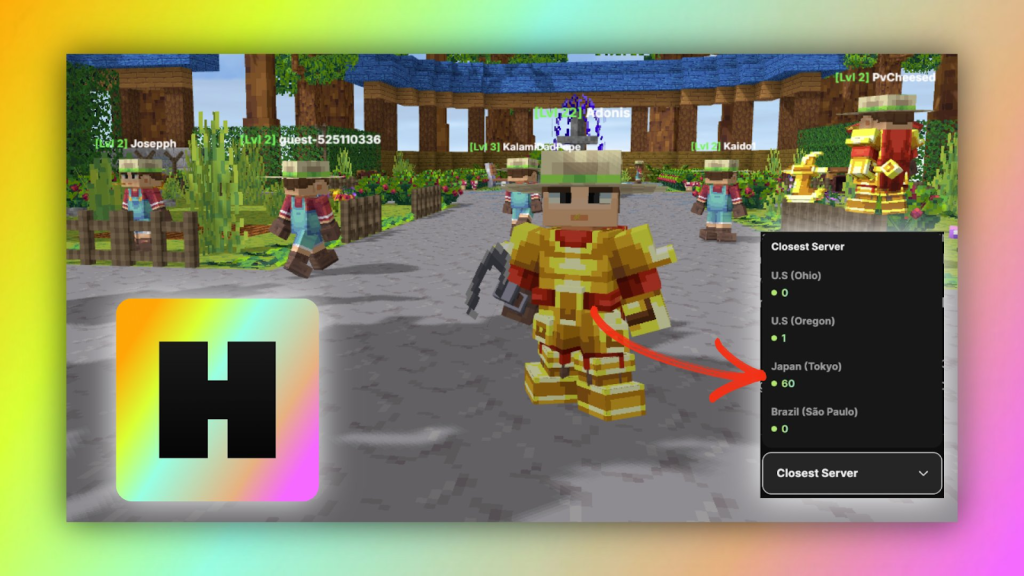
The digital “land” (10,000 Worlds) exists as tradable Ethereum NFTs. In mid-2025 the team formed the HY Foundation and began migrating the economy to Base with a new token, $HYBUX, aiming for easier onboarding and deeper liquidity.
Beyond land ownership, HYTOPIA is leaning into creators. The Creator Fund expanded to $250K in August 2025, and the SDK lets devs script in TypeScript/JavaScript and publish to browser, desktop, and mobile (even Discord Activities). Recent weekly updates highlight new SDK features, zero-downtime hosting, safety tooling, and AI-assisted creation (including “Text-to-Game” demos). It’s a web-native stack that pushes metaverse building from “NFT land speculation” toward playable, monetizable games.
6. Enterprise and supply chain adoption
Beyond consumer products, businesses are using Web3 to track goods, verify authenticity, and improve transparency in supply chains. This reduces fraud and adds trust at every stage.
- LVMH’s Aura Blockchain Consortium is the largest platform of this kind that assigns luxury items a digital passport for authenticity and resale.
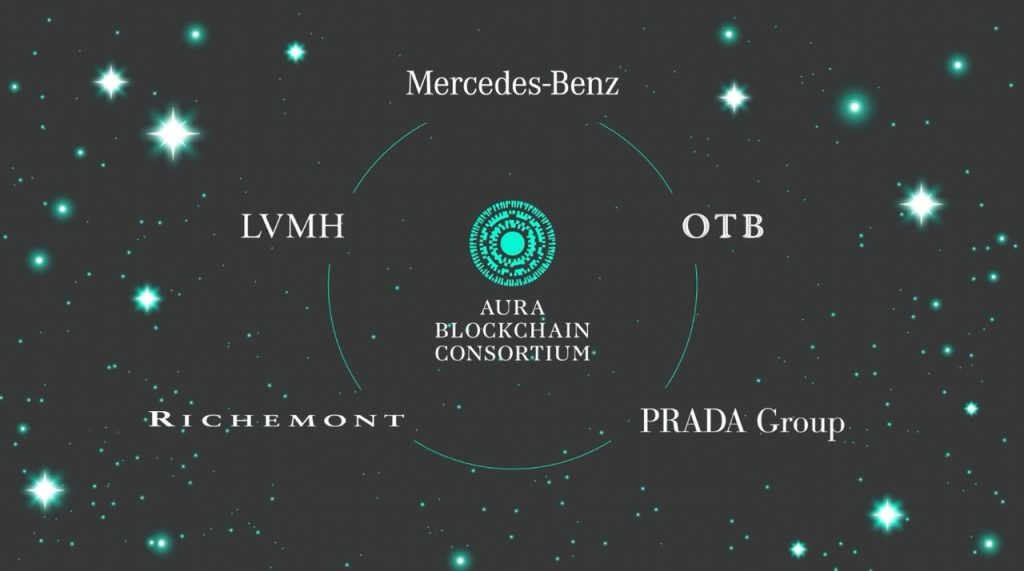
The Aura Blockchain Consortium—formed by companies like LVMH, Prada, Cartier, and others—has enabled luxury goods to carry “digital product passports” that record origin, materials, manufacture, and ownership history. The blockchain record has an immutable history, and when a product moves between parties (resale, gift), the subsequent generations will be able to view the derivativeness of the same level.
It is not merely a matter of combating counterfeits but also beats in line with the rising demand of consumers to have an ethical source and sustainability. To companies, this brings about auditability, paper work done, and more client trust.
7. Stablecoins as the settlement layer
If DeFi proved that money could move without banks, stablecoins are proving it can move at scale. They’re increasingly the rail underneath everything else in Web3 — tokenization, cross-border payments, even AI agents transacting on their own.
- Tokenized treasuries and money-market funds from BlackRock and Franklin Templeton, settling flows directly on-chain rather than through traditional custody rails.
Investment in stablecoin-focused companies jumped past $1.5 billion in 2025, up from under $50 million in 2019. Banks and fintechs are now embedding tokenized dollars into treasury workflows, collateral management, and programmable payments — the kind of back-office plumbing that doesn’t make headlines but signals real infrastructure adoption rather than speculation.
8. Real-world asset (RWA) tokenization
Perhaps the clearest sign that Web3 has moved from speculation to infrastructure: real assets — bonds, real estate, commodities, invoices — are being converted into tradeable on-chain tokens, and institutions are the ones doing it.
- Tokenized U.S. Treasuries and money-market instruments, which crossed an estimated $36 billion in on-chain value in 2025 alone.
Tokenization improves liquidity, shortens settlement times, and opens fractional ownership to a much wider pool of investors than traditional markets allow. Analysts project the category could reach into the trillions by the end of the decade if adoption keeps pace — a scale that puts RWA on track to dwarf most of Web3’s earlier consumer-facing experiments.
9. Web3 + AI convergence
A relatively more recent yet increasingly popular approach is integrating AI with decentralized networks. It ensures that AI models and their data are not run by a single corporation but are transparently controlled and checked instead.
- Bittensor, a decentralized AI network where independent “subnets” publish, evaluate, and monetize machine-learning work on-chain.

Bittensor is one of the clearest places where AI and Web3 meet today. Developers, data providers (miners), and validators collaborate inside specialized subnets that define the tasks and the rules for rewarding useful outputs.
In February 2025 the network shipped the Dynamic TAO (dTAO) upgrade, adding a token per subnet with built-in liquidity mechanics so incentives can flow to the most valuable AI services. Subnet count has grown steadily since — from roughly 32 pre-dTAO to over 120 by late 2025, with the network’s cap now at 128 active slots and expansion to 256 planned. TAO also completed its first halving in December 2025, and asset managers including Grayscale and Bitwise have filed for spot TAO ETFs — signals that institutional interest, not just creator participation, is now part of the story.
Because the marketplace runs via open governance, smart contracts, and token-based economics, trust and accountability are on-chain rather than dependent on a single provider. With dTAO, emissions and liquidity are allocated transparently at the subnet level (each subnet has its own “alpha” token paired with TAO). Proposals are approved through Bittensor’s governance process. The result is a more open way to adopt advanced AI, spreading both risk and innovation across many contributors instead of centralizing it.
Bittensor is one visible example, but the bigger shift is that AI is starting to act as an economic participant in Web3, not just a tool built on top of it. Autonomous AI agents are increasingly transacting on-chain on their own — paying for compute, data, or services directly — and stablecoins are emerging as the natural settlement layer for that machine-to-machine activity, since they don’t require a human in the loop to approve every payment.

Challenges and risks of Web3
Despite all the hype and advancement, Web3 has challenges, including resistance to adoption, frustration of users, or risk of trust decay unless managed correctly. Part of the challenges is posed by technology, part by human behaviour, regulation, or even the business models. It is imperative to know these risks in order to have the complete picture.
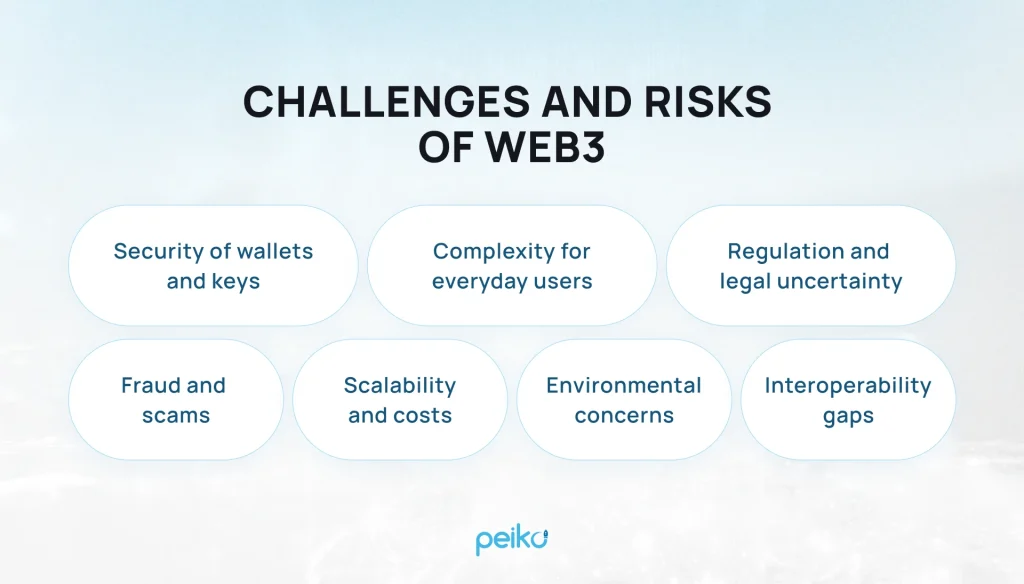
Security of wallets and keys. Web3 puts control in the user’s hands. But if private keys are stolen or a wallet is hacked, access to assets or identities can be lost permanently. There’s no “forgot password” button.
Complexity for everyday users. The prospect of establishing wallets, working with keys, and is daunting enough during blockchain activity. Mass adoption will not come to fruition until the use experience becomes seamless.
Regulation and legal uncertainty. Rules around crypto, digital ownership, and decentralized platforms vary wildly between countries, affecting businesses’ planning and users’ awareness. The gap is closing, though unevenly: in the EU, MiCA is now in active enforcement, with the transitional window for existing crypto-asset service providers closing on July 1, 2026 in countries like France, Luxembourg, and Malta. The US, meanwhile, has taken a different path — rejecting central bank digital currencies in favor of regulated private stablecoins. Businesses building across borders need to treat this as a moving target, not a settled question.
Fraud and scams. Phishing attacks, fake tokens, and rug-pull schemes have already been encountered in Web3. Unless measures are established, the openness of decentralized systems can be abused.
Scalability and costs. Most popular blockchains have problems with the expensive cost of transactions or network overload. If Web3 cannot scale affordably, it won’t serve global audiences effectively.
Environmental concerns. Despite that a large portion of the networks is migrating towards greener systems, blockchain systems, particularly with proof-of-work models, have attracted criticism because of their energy consumption and environmental harm.
Interoperability gaps. Not all external wallets, blockchains and standards are necessarily hand in hand. Due to the lack of common structures, users may be detained within a specific ecosystem.
Web3 instills a hope of having a more decentralized internet in the future, but these problems make us realize that the key is not only innovation. Enhanced security levels, more transparent legislation, improved usability, and sustainability have to develop together.
Overcoming these threats is what will either see future of Web3 becoming a sustainable bedrock or leaving the project as an incomplete exploration.
The road ahead for Web3 with Peiko
At Peiko, we are experts in designing secure, scale-up, and innovative Web3 applications. Our team of seasoned blockchain architects, product specialists, and developers collaborate closely with our clients on an international level so as to bring big ideas to life through suitably designed, high performance platforms. From custom smart contracts to full-scale crypto exchanges, we deliver end-to-end solutions that combine technical depth with user-focused design.
The Quan2um case: building a trusted crypto exchange
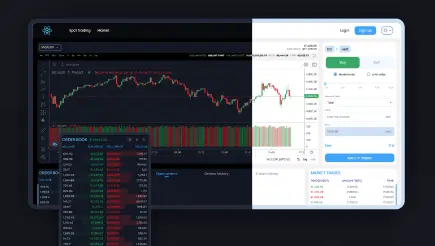
One of Peiko’s standout Web3 projects is Quan2um, a cryptocurrency exchange designed to let users buy and sell Bitcoin, altcoins, and even the platform’s own token, BTCA. Our role was to build a platform that not only met strict European security standards but also offered real-time market access, liquidity, and unique investment features.
Among the finest Web3 projects made by Peiko, there is Quan2um, a cryptocurrency exchange that allows users to purchase and sell Bitcoin, altcoins, or even the platform itself, token BTCA. We were supposed to create a platform that was grounded on a high level of European security standards besides, providing real-time access to markets, liquidity and special features of investments.
Quan2um demonstrates the way we can do Web3 development: by combining performance with security. We have established a strong trading platform, cold and hot wallet safety, created a multi-tier commission plan and referral system. Custom trading bots were used to stabilize the platform and a BTCA masternode investment module was integrated, providing its users with a passive income opportunity.
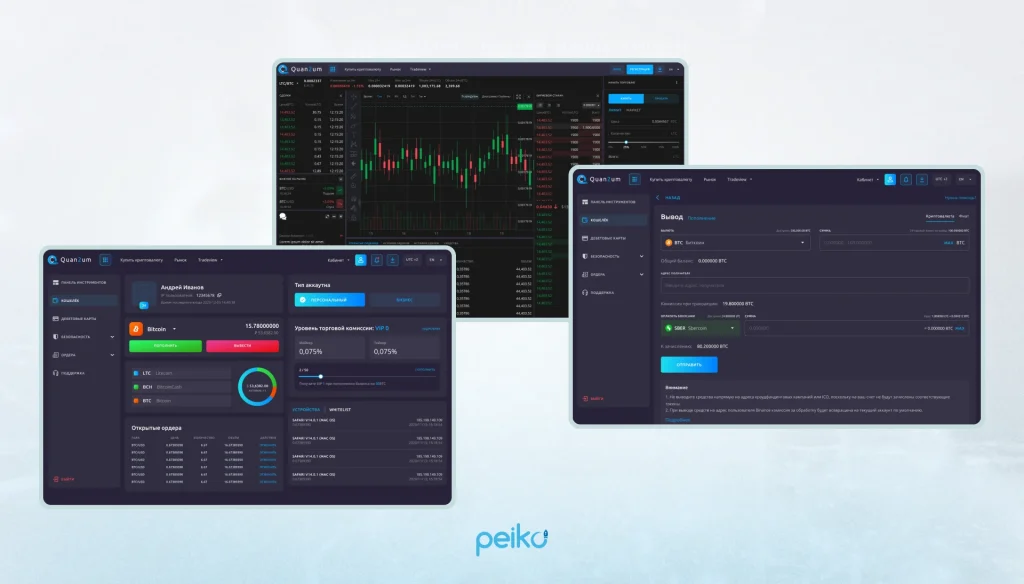
Quan2um showcases how we approach Web3 development: by merging performance with security. We built a robust trading core, ensured cold and hot wallet protection, and implemented a multi-level commission system alongside a referral program. The platform’s liquidity was stabilized with custom trading bots, and we added a BTCA masternode investment module, giving users opportunities for passive income.
The most prominent Web3 values delivered with Quan2um
- High security. Cold + hot wallet setup, encrypted keys, and secure fund storage.
- Real-time trading. Socket server integration for instant market data and matching engine.
- Liquidity assurance. Trading bots to maintain stability and reduce slippage.
- Custom token economy. BTCA cryptocurrency with investment and earning mechanisms.
- User growth features. Referral program and multi-level commissions.
- Admin efficiency. Management panel with advanced flexibility of controlling pairs, users, and roles.
The performance of Web3 platforms is intense when done by the dedicated team of Peiko. We offer practical, secure, and user-friendly Web3 platforms. You may be dreaming of a DEX, an NFT marketplace, or a blockchain-based business application: we have the expertise and are willing to bring it to life.
Conclusion
Web3 is steadily moving from bold experiments to real-world transformation. It’s changing how people prove identity, handle money, engage with brands, and even own digital goods. Increasingly, that transformation is happening on the institutional side of the ledger — in regulated stablecoins, tokenized treasuries, and AI agents settling payments on-chain — even as the more visible consumer experiments have cooled. The road ahead won’t be without challenges—scalability, regulation, and usability still demand work—but the future internet will definitely be more decentralized, transparent, and user-driven. Well, it is already.
This transition presents immense possibilities to companies prepared to change in terms of reducing the cost of onboarding, creating additional revenue-generating options with data resources, or gaining trust due to data privacy.
At Peiko, we assist the companies in taking up that opportunity. Having experience in blockchain, crypto exchanges, smart contracts, and dedicated Web3 applications, our team will provide safe and scaled solutions, which are formulated according to your vision.
Waiting until the future is not an option–create it. Get in touch with Peiko today and let’s build your Web3 successes together!
By removing intermediaries, Web3 enables peer-to-peer lending, instant settlement, and programmable money. This cuts costs, expands access, and introduces more transparent, global financial ecosystems — with stablecoins and tokenized real-world assets now doing more of that work in practice than any other part of the stack.
No comments yet. Be the first to comment!