
















There are two well-known models for launching and distributing new crypto tokens: an ICO (Initial Coin Offering) and an IEO (Initial Exchange Offering). Both can be used to raise capital by selling tokens to investors, but they differ in how the offering is organized, who manages the sale, how investors access the tokens, and what role a cryptocurrency exchange plays.
ICOs became widely known during the 2017–2018 crypto fundraising boom, allowing blockchain projects to sell tokens directly to their communities and investors. This model gives project teams greater control over token distribution, fundraising, and investor relationships, but it also places more responsibility on the project for technology, marketing, compliance, security, and token distribution.
With an IEO, the token sale is conducted through a centralized cryptocurrency exchange. The exchange may assess the project, establish listing and participation requirements, provide the technical infrastructure for the sale, and make the offering available to its users. However, an IEO does not eliminate investment, security, market, or regulatory risks, and requirements can vary significantly between exchanges and jurisdictions.
In this guide, we’ll compare ICOs and IEOs , explain how each model works, examine their costs, risks, regulatory considerations, liquidity and token-listing implications, and compare them with the increasingly relevant IDO (Initial DEX Offering) model. We’ll also explain which approach may be more suitable for different types of blockchain projects and investors.
The Rise of ICOs: How Token Fundraising Changed
The Initial Coin Offering (ICO) became one of the most prominent ways for blockchain projects to raise capital during the 2017–2018 cryptocurrency boom. Instead of seeking funding through traditional venture capital or financial institutions, projects could distribute newly issued tokens directly to supporters and investors.
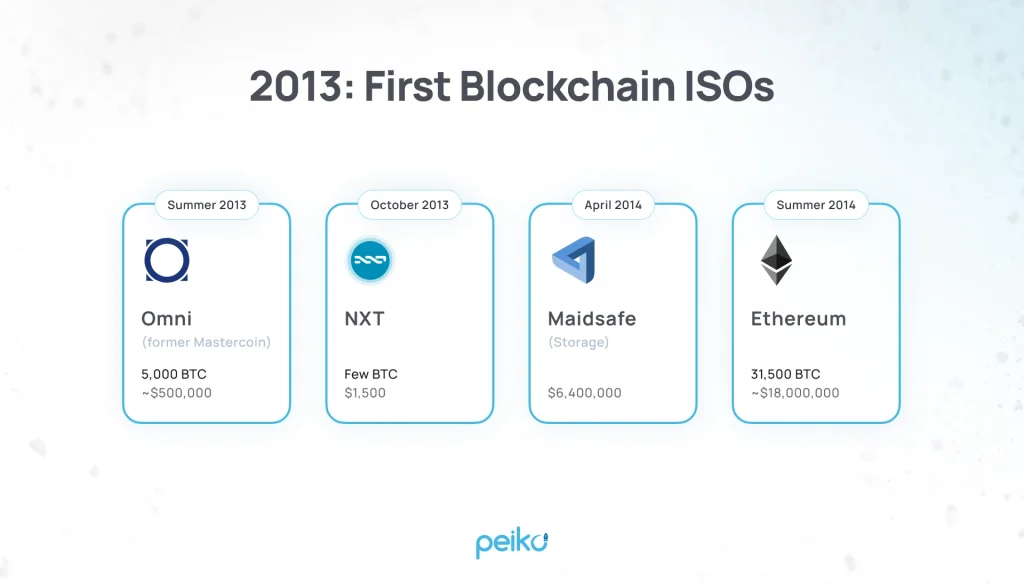
The model was relatively straightforward: a project could publish information about its technology and token, develop a smart contract, build a community, and offer tokens to participants. This lowered some of the traditional barriers to fundraising and allowed blockchain startups to reach a global audience.
However, the rapid growth of ICOs also exposed significant weaknesses in the model. The quality of projects varied widely, investors often had limited information, and fraudulent or highly speculative offerings became common. Security vulnerabilities, misleading marketing, poorly designed token economics, and projects failing to deliver on their roadmaps contributed to growing concerns among investors and regulators.
The regulatory treatment of token offerings also became increasingly important. An ICO is not automatically outside securities or financial-market regulation simply because the asset is called a “token” or “utility token.” The legal classification and requirements depend on the characteristics of the crypto-asset, how it is offered, the rights attached to it, and the jurisdiction in which the offering takes place.
ICO Regulation: What Changed?
Regulatory approaches have evolved considerably since the first major ICO boom. In the United States, the SEC issued a new interpretation in March 2026 addressing how federal securities laws apply to certain crypto assets and transactions. The interpretation distinguishes between different categories of crypto assets and addresses when transactions involving non-security crypto assets can still fall within the federal securities laws.
In the European Union, MiCA (Markets in Crypto-Assets Regulation) provides a harmonized framework for many crypto-assets. For crypto-assets covered by the relevant provisions, an offer to the public can involve requirements such as establishing, notifying, and publishing a crypto-asset white paper, as well as complying with rules for marketing communications and offerors. There are also specific rules and exemptions depending on the type and structure of the offering.
Under MiCA, a crypto-asset white paper can include information about the project, the offering, the token, its underlying technology, associated rights and obligations, risks, and other required disclosures. Importantly, the white paper is not an approval or endorsement by an EU regulator; the offeror remains responsible for its contents.
As a result, today’s token fundraising environment is very different from the early ICO era. Projects must consider jurisdiction, token classification, investor eligibility, disclosure requirements, marketing restrictions, KYC/AML obligations where applicable, cybersecurity, and exchange requirements before launching a token offering.
- Regulatory summary current as of August, 2026 — always verify with local counsel before launch
The Emergence of IEOs
As regulatory scrutiny increased and investors became more cautious about direct token sales, the market developed alternative fundraising models that introduced additional intermediaries and infrastructure.
One of these models was the Initial Exchange Offering (IEO).
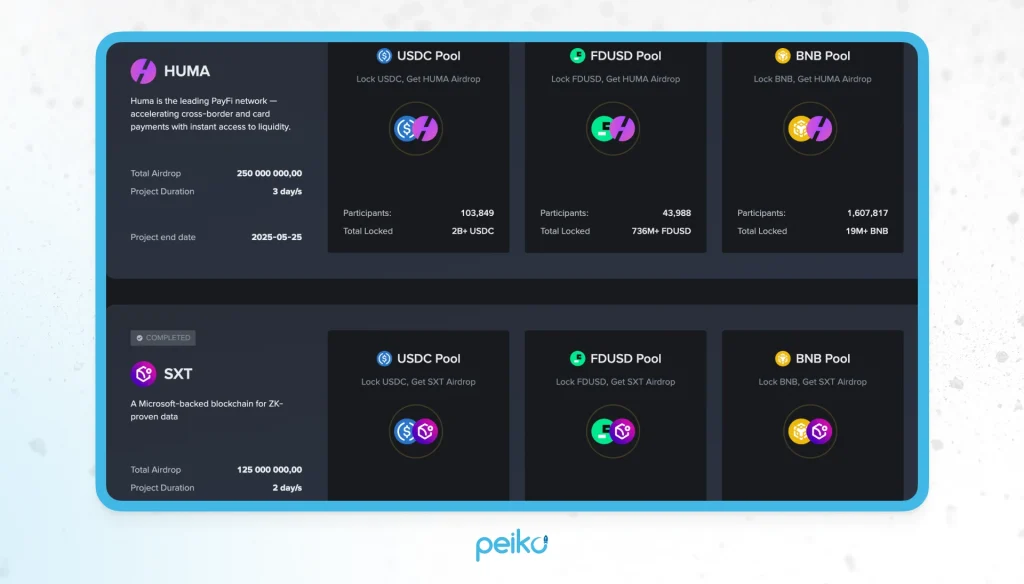
Unlike an ICO, where the project generally manages the token sale itself, an IEO is conducted through a centralized cryptocurrency exchange. The exchange can provide the platform for the sale, access to its existing users, and—depending on its policies and the applicable jurisdiction—additional project review and compliance processes.
This model changes the balance between control and infrastructure. An ICO gives the project greater control over the fundraising process, while an IEO can provide access to an established exchange ecosystem but introduces additional costs, requirements, and dependence on the exchange.
How Does an IEO Work?
An Initial Exchange Offering (IEO) is a token sale conducted through a centralized cryptocurrency exchange. Unlike an ICO, where a project typically manages the token sale through its own website and infrastructure, an IEO involves an exchange as an intermediary between the project and participating investors.
The exact process varies by exchange and jurisdiction, but a typical IEO includes several stages: project preparation, exchange selection, due diligence, legal and compliance review, sale configuration, marketing, token distribution, and—where agreed—exchange trading after the sale.
IEO Launch Process
Step 1: Prepare the Project
Before approaching an exchange, the project should have its core fundraising and technical materials ready. These typically include:
- Project description and roadmap
- Whitepaper
- Tokenomics
- Token supply and allocation
- Development status
- Team information
- Website and documentation
- Smart contracts and technical documentation
- Legal and compliance documentation
- Security audit, where applicable
The project should also clearly define its target markets and investor eligibility before selecting an exchange.
Step 2: Select an Exchange
The project evaluates exchanges that offer IEO or token-launch programs. Important selection criteria include:
- Exchange reputation and track record
- Target audience and geographic reach
- Supported jurisdictions
- Listing and launch requirements
- Fees and revenue-sharing arrangements
- Technical integration requirements
- Marketing support
- Liquidity and trading infrastructure
- KYC/AML and compliance requirements
The largest exchange is not necessarily the best choice. The exchange should match the project’s target market, regulatory strategy, token model, and fundraising goals.
Step 3: Exchange Due Diligence
The exchange reviews the project before deciding whether to host the token sale.
Depending on the exchange, this process may include reviewing:
- Business model
- Development progress
- Team background
- Tokenomics
- Smart contracts
- Security practices
- Legal structure
- Regulatory considerations
- Project funding
- Community and market activity
An important distinction is that exchange due diligence should not be presented as a guarantee that a project is legitimate or that an investment is safe. Exchange screening can reduce certain risks, but investors remain exposed to market, technology, regulatory, and project-specific risks.
Step 4: Define the IEO Terms
If the exchange approves the project, both parties establish the terms of the token sale.
These may include:
- Number of tokens offered
- Token price
- Total fundraising target
- Minimum and maximum allocation
- Sale dates
- Investor eligibility
- Vesting or lock-up periods
- Accepted payment assets
- Distribution mechanism
- Trading and listing arrangements
The exact structure depends on the exchange and the applicable legal requirements.
Step 5: Complete Legal and Compliance Requirements
Before the sale begins, the project and exchange determine which legal and compliance requirements apply.
Depending on the jurisdiction and offering structure, these may include:
- KYC procedures
- AML controls
- Investor eligibility checks
- Geographic restrictions
- Token classification analysis
- Disclosure requirements
- Marketing restrictions
- Sanctions screening
- Data-protection requirements
These responsibilities are not identical for every IEO. An exchange hosting a token sale does not automatically transfer the project’s legal responsibilities to the exchange.
Step 6: Launch Marketing
Marketing is generally a joint effort between the project and the exchange.
The project may focus on:
- Community building
- Product announcements
- Social media
- Educational content
- Partnerships
- Developer and investor outreach
The exchange may provide:
- Launch announcements
- Platform visibility
- Email or community campaigns
- Launchpad/IEO pages
- Trading-related promotion
However, marketing claims must comply with applicable laws, exchange policies, and platform requirements. Projects should avoid promises of guaranteed returns or claims that an exchange listing guarantees token performance.
Step 7: Conduct the Token Sale
Once the IEO launches, eligible participants purchase tokens through the exchange’s platform.
The exchange typically manages the technical transaction flow, including:
- Investor eligibility
- Purchase limits
- Payment collection
- Token allocation
- Transaction records
The exact purchase mechanism varies between exchanges.
Step 8: Distribute the Tokens
After the sale, tokens are distributed according to the agreed terms.
Depending on the project and exchange, distribution may happen immediately or according to a predefined vesting or unlock schedule.
This is important because an IEO does not necessarily mean that all purchased tokens become freely tradable immediately.
Step 9: Trading and Exchange Listing
An IEO can provide a more direct path to trading on the host exchange, but actual liquidity depends on trading activity, market conditions, exchange support, token supply, and demand.
IEO Process at a Glance
Pros and Cons of an IEO
An IEO can provide advantages for both blockchain projects and investors, but it also introduces a dependency on the exchange. Whether it is the right fundraising model depends on the project’s objectives, target market, budget, regulatory strategy, and token economics.
Advantages of an IEO
Access to an Established Exchange Audience
One of the main advantages of an IEO is access to an exchange’s existing user base. Instead of building an investor audience entirely from scratch, a project can potentially reach users who already have accounts and trading infrastructure on the platform.
However, the size of an exchange’s user base does not guarantee demand for a particular token.
Simplified Fundraising Infrastructure
The exchange can provide infrastructure for conducting the token sale, including user accounts, transaction processing, allocation mechanisms, and other technical components.
This can reduce the amount of fundraising infrastructure the project needs to build and operate independently.
Exchange-Level Project Review
Many exchanges perform their own evaluation before accepting a project into an IEO or launch program.
This may involve reviewing the team, technology, tokenomics, legal structure, and business model.
However, exchange approval should not be treated as an independent investment recommendation or guarantee of project quality.
Potentially Faster Access to Trading
When token trading on the host exchange is part of the agreed launch structure, an IEO can provide a more direct route from token sale to exchange trading than a traditional ICO.
The timing and conditions of trading remain dependent on the exchange and the specific agreement.
Marketing and Launch Support
An exchange may provide promotional support through its website, launch platform, community channels, or other marketing activities.
This can complement the project’s own marketing strategy and potentially increase visibility.
Challenges and Risks of an IEO
Higher Costs
IEOs can involve significant costs, depending on the exchange and launch structure.
Potential expenses include:
- Exchange fees
- Listing-related costs
- Legal and compliance services
- KYC/AML infrastructure
- Smart-contract development
- Security audits
- Marketing
- Liquidity provision
- Token launch infrastructure
The total cost can therefore be substantially higher than simply deploying a token and conducting a direct sale.
Less Control Over the Fundraising Process
An ICO gives a project more control over the sale mechanism. With an IEO, the exchange can determine or influence important aspects such as:
- Sale format
- Investor eligibility
- Allocation limits
- Sale schedule
- Marketing requirements
- Token listing conditions
Projects need to accept these constraints in exchange for the infrastructure and distribution opportunities provided by the exchange.
Dependence on the Exchange
An IEO creates an additional dependency on a centralized platform.
The project’s fundraising and potentially its early trading activity can therefore be affected by:
- Exchange policies
- Technical outages
- Regulatory restrictions
- Changes in listing requirements
- Reputation issues
- Changes in market conditions
This makes exchange selection an important strategic decision.
Regulatory Requirements Still Apply
Using an exchange does not automatically remove the project’s regulatory obligations.
Depending on the jurisdiction and token structure, the project may need to address:
- Securities or financial-services laws
- Crypto-asset regulations
- KYC/AML requirements
- Sanctions restrictions
- Investor eligibility
- Marketing rules
- Disclosure obligations
- Tax considerations
The applicable requirements should be assessed before the token sale rather than after the exchange has approved the project.
Limited Flexibility
Because the exchange is involved in the sale, projects generally have less flexibility than they would have with a fully independent ICO.
The exchange may impose requirements concerning:
- Token allocation
- Sale mechanics
- Pricing
- Investor limits
- Geographic availability
- Vesting
- Marketing
- Listing
For projects that prioritize complete control over their fundraising strategy, an ICO or another token distribution model may therefore be more appropriate.
ICO vs IEO: The Key Difference
The most important distinction can be summarized simply:
An ICO gives the project more control over the token sale, while an IEO introduces a centralized exchange as an intermediary responsible for hosting and supporting the offering.
| Aspect | ICO | IEO |
|---|---|---|
| Fundraising model | Project manages the token offering directly | Exchange hosts and facilitates the token sale |
| Primary intermediary | No centralized exchange is required | Centralized exchange |
| Project control | Higher | Lower, as the exchange sets additional requirements |
| Investor access | Project must build and manage its own investor acquisition channels | Potential access to the exchange’s existing user base |
| Sale infrastructure | Primarily built or integrated by the project | Exchange provides the core sale infrastructure |
| Project due diligence | Primarily the responsibility of the project and investors | Exchange may conduct its own due diligence before accepting the project |
| KYC/AML | Requirements depend on the offering structure and jurisdiction | Requirements depend on the exchange, offering structure and jurisdiction |
| Marketing | Mainly managed by the project | Project-led, potentially supported by the exchange |
| Fundraising costs | No exchange hosting fee, but technology, legal, security and marketing costs still apply | May involve exchange, listing, legal, technical and marketing costs |
| Token distribution | Managed according to the project’s sale infrastructure and terms | Managed through the exchange according to the agreed sale structure |
| Exchange trading | Usually requires a separate listing process | May provide a more direct route to trading on the host exchange if listing is included |
| Flexibility | Higher flexibility over sale mechanics | More restrictions due to exchange requirements |
| Exchange dependency | Lower | Higher |
| Liquidity | Depends on subsequent listings and market demand | Potentially earlier access to trading, but liquidity is not guaranteed |
| Best suited for | Projects prioritizing control and direct community relationships | Projects prioritizing exchange infrastructure and access to an established trading ecosystem |
ICO and IEO Regulation
Regulatory requirements also vary significantly by jurisdiction — there is no single universal set of ICO rules. The table below summarizes the main frameworks:
| Jurisdiction | Regulatory framework | What projects need to consider |
|---|---|---|
| EU | MiCA + applicable national rules | Token classification, white paper, disclosures, marketing, CASP requirements |
| U.S. | Federal securities laws + 2026 SEC interpretation and other applicable rules | Whether the asset/transaction falls within securities laws, offering structure, disclosures |
| UK | FCA framework and applicable financial-services rules | Token classification, financial promotions, authorization requirements |
| Other jurisdictions | Varies | Local licensing, securities, AML/KYC and marketing requirements |
* Regulatory requirements vary by jurisdiction and token structure. A token sale should be reviewed by qualified legal and compliance professionals before launch.Important distinction
An IEO should not automatically be considered safer or more legitimate than an ICO. An exchange’s involvement may add project screening, infrastructure, and established user access, but it does not eliminate risks related to the project, token economics, smart contracts, market conditions, regulation, or the exchange itself.
Likewise, an ICO is not inherently fraudulent or unregulated. Its legal and operational requirements depend on the token, offering structure, jurisdiction, and applicable regulations.
ICO vs IEO for Blockchain Projects
The better fundraising model depends on what the project is trying to optimize: control, reach, infrastructure, cost, compliance, or access to trading markets.
When an ICO May Be a Better Fit
An ICO can make sense for a project that wants greater control over its fundraising strategy and investor relationship.
Potential advantages include:
- Greater control: The project can define the sale structure, distribution mechanism, pricing strategy, and communication approach.
- Direct community relationship: The team can build its own investor and user community rather than relying primarily on an exchange’s audience.
- More flexibility: Projects can design the fundraising process around their specific tokenomics and business model.
- Lower dependence on a centralized platform: The project does not need to rely on one exchange to conduct the sale.
- Potentially lower exchange-related costs: There is no requirement to pay an exchange to host the sale, although other development, legal, security, compliance, and marketing costs remain.
The trade-off is that the project assumes more responsibility for investor acquisition, technical infrastructure, security, compliance, communication, and establishing credibility in the market.
When an IEO May Be a Better Fit
An IEO can be attractive to projects that want to leverage an established exchange ecosystem.
Potential advantages include:
- Access to an existing exchange audience: The project may reach users who already have accounts and trading infrastructure on the platform.
- Reduced infrastructure requirements: The exchange provides the core environment for conducting the token sale.
- Exchange-level review: The exchange may conduct its own assessment before accepting the project.
- Potentially simpler distribution: Token purchases and allocations can be handled through the exchange’s platform.
- Potential path to exchange trading: If trading is part of the agreement, the project may have a more direct route to the exchange’s market.
However, projects give up some flexibility and become more dependent on the exchange’s requirements, fees, policies, technical infrastructure, reputation, and regulatory position.
We will help you implement it

ICO vs IEO for Investors
From an investor’s perspective, the main difference is where the token purchase takes place and how much of the process is mediated by the exchange.
An IEO can offer a more structured purchasing experience because investors interact with an established exchange platform and may be subject to the platform’s KYC and eligibility requirements.
However, exchange participation does not eliminate investment risk. Investors still need to evaluate:
- The project’s business model
- Token utility and rights
- Tokenomics
- Team and development history
- Smart-contract security
- Vesting and unlock schedules
- Token supply
- Market liquidity
- Regulatory status
- Exchange reputation
- Potential conflicts of interest
With an ICO, investors generally have more responsibility for conducting this research themselves because there is no exchange hosting the token sale.
The key trade-off
IEO: More structured access and exchange infrastructure, but greater dependence on a centralized platform.
ICO: Greater direct access to the project and potentially more flexibility, but more responsibility for evaluating the project and navigating the token purchase process.
ICO vs IEO: Which Is Better?
There is no universally better model. The appropriate choice depends on the project’s objectives and the investor’s risk tolerance.
| If the priority is… | Potentially better fit |
|---|---|
| Maximum control over the token sale | ICO |
| Direct community building | ICO |
| Flexible fundraising structure | ICO |
| Access to an established exchange audience | IEO |
| Exchange-provided sale infrastructure | IEO |
| Potentially simpler token distribution | IEO |
| Lower dependence on centralized exchanges | ICO |
| Direct path to host-exchange trading | IEO, if included in the agreement |
| Maximum flexibility | ICO |
| Structured exchange-based launch | IEO |
What about now?
Today’s decision shouldn’t be based only on ‘ should not be based only on “ICO vs IEO.” Projects should first evaluate their token structure, target jurisdictions, regulatory requirements, investor eligibility, compliance obligations, budget, community, exchange strategy, and liquidity plan.
For some projects, an ICO may be appropriate. Others may benefit from an IEO, while projects looking for decentralized token distribution may need to consider an IDO (Initial DEX Offering) or another launch model.
This is why it’s worth expanding the comparison beyond ICO and IEO — to STOs and IDOs, two other models projects increasingly consider.
Peiko developers can help
ICO vs IEO vs IDO vs STO: What’s the Difference?
STOs and IDOs: Other Token Fundraising Models
ICOs and IEOs are not the only ways for blockchain projects to distribute tokens and raise capital. Depending on the project’s token structure, regulatory requirements, target investors, and preferred level of decentralization, Security Token Offerings (STOs) and Initial DEX Offerings (IDOs) can provide alternative approaches.
These models differ significantly in terms of regulation, investor access, intermediaries, liquidity, and technical infrastructure.
STOs: A Regulation-Focused Approach
A Security Token Offering (STO) involves offering digital tokens that represent securities or other regulated financial interests. Depending on the structure, a security token may represent ownership, an economic interest, debt, real-world assets, or other rights.
Unlike a typical utility-token offering, an STO is designed around applicable securities or financial-market regulations. The specific requirements depend on the jurisdiction, asset, offering structure, and investor type.
For example, U.S. offerings may use securities-law exemptions such as Regulation D or Regulation A+, where applicable. Other jurisdictions have their own frameworks governing the issuance and trading of tokenized securities.
Potential advantages of STOs include:
- Regulatory structure: The offering is designed around applicable securities requirements.
- Access to institutional investors: A regulated structure may be more suitable for certain professional or institutional participants.
- Asset tokenization: STOs can be used to represent interests in assets such as real estate, private equity, debt, or other financial instruments.
- Programmable ownership: Blockchain infrastructure can automate aspects of ownership records, transfers, distributions, and compliance.
- Greater transparency: Transaction and ownership records can benefit from blockchain-based infrastructure.
However, STOs generally require more legal, compliance, and technical preparation than many traditional token launches. Investor eligibility, transfer restrictions, custody, reporting, and secondary-market requirements can also limit how and where security tokens can be traded.
For this reason, STOs are often better suited to projects where regulatory compliance and representation of financial or real-world assets are central to the business model.
IDOs: Decentralized Token Distribution
An Initial DEX Offering (IDO) distributes tokens through a decentralized exchange (DEX) or decentralized launchpad rather than a centralized exchange.
The main difference between an IEO and an IDO is the role of the intermediary. An IEO relies on a centralized exchange to host the sale, while an IDO generally uses blockchain-based smart contracts and decentralized liquidity infrastructure.
Participants typically connect a compatible crypto wallet and interact with the relevant decentralized application or smart contract. Depending on the launch design, tokens may be distributed through a sale mechanism, an automated market maker (AMM), or a liquidity pool.
Platforms and protocols such as Uniswap and PancakeSwap illustrate the type of decentralized infrastructure that can be used for token trading and liquidity.
IDOs can provide several advantages:
- Decentralized access: Users can participate without opening an account with a centralized exchange.
- Global accessibility: Participation can be available to users across multiple markets, subject to applicable restrictions.
- Self-custody: Users generally interact with the platform using their own wallets.
- Flexible launch mechanisms: Projects can customize token distribution and liquidity structures.
- Direct liquidity: Tokens can potentially become tradable through a DEX liquidity pool after launch.
However, IDOs also introduce significant risks. Smart-contract vulnerabilities, token price volatility, low liquidity, wallet security issues, fraudulent projects, and limited due diligence can expose participants to substantial losses.
Projects also remain responsible for understanding the regulatory requirements that apply to their token offering. Decentralization does not automatically mean that an offering is exempt from regulation.
ICO vs IEO vs STO vs IDO
The four models can be summarized as follows:
| Model | Main platform | Central intermediary | Regulatory complexity | Project control | Typical strength |
|---|---|---|---|---|---|
| ICO | Project-controlled platform | No | Depends on token and jurisdiction | High | Flexibility |
| IEO | Centralized exchange | Yes | Depends on token, exchange and jurisdiction | Medium | Exchange infrastructure and audience |
| STO | Regulated offering platform / financial infrastructure | Often | Generally high | Medium | Regulated tokenization |
| IDO | Decentralized exchange / launchpad | No centralized intermediary | Depends on token, jurisdiction and structure | High | Decentralization and open market access |
There is no universally superior fundraising model. The right approach depends on the project’s token type, regulatory requirements, target investors, budget, community, technical architecture, and liquidity strategy.
Develop crypto projects with Peiko and start raising money
At Peiko, we have been experts in creating reliable crypto projects since 2017. We are skilled in full-cycle token and coin creation based on your ecosystem specifications. If you want to launch a utility token, a governance token, or build a multi-chain DeFi solution, we have you covered.
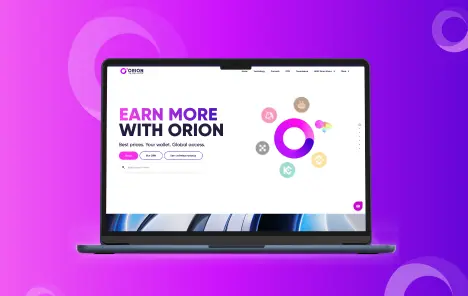
Orion Protocol is a great example of our blockchain development capabilities. It is a decentralized platform that aggregates liquidity from top CEXs and DEXs (including Binance, KuCoin, Uniswap, and more). It offers traders the best prices from exchanges, and all within one secure, non-custodial interface.
The client chose us to develop the platform from scratch. The main task was to turn the client’s idea of a simple exchange into a full-fledged DeFi ecosystem with its own token, ORN.
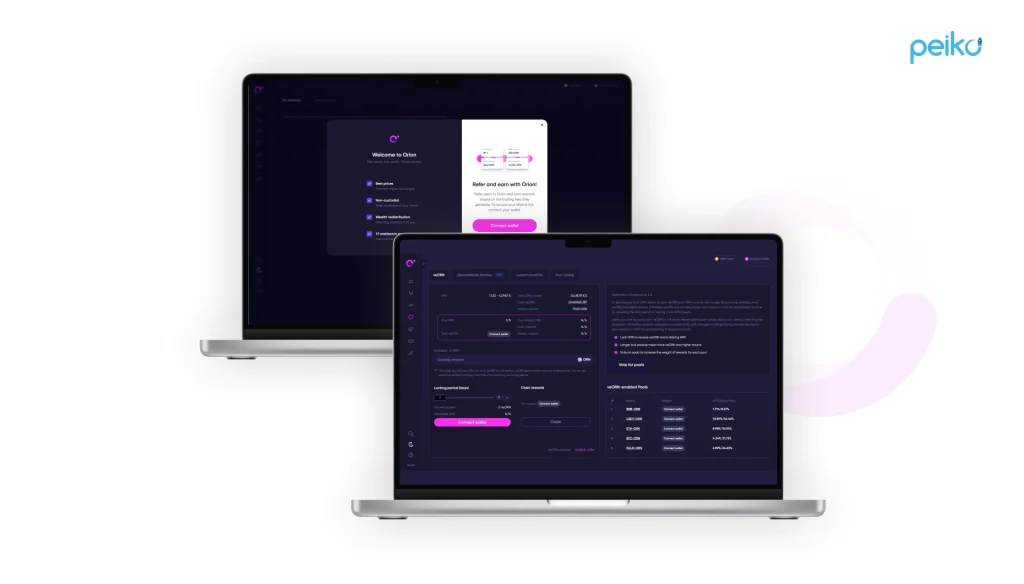
What we delivered:
- Non-custodial liquidity aggregator, ensuring users get the most efficient trades;
- Integrated leading wallets (MetaMask, TrustWallet, WalletConnect);
- Developed Orion Terminal for one-click trading;
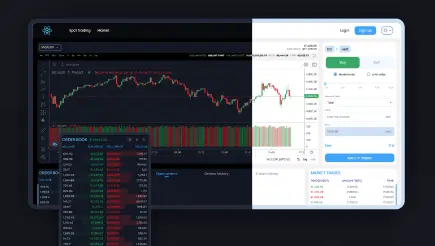
- Pro trading tools (order book, TradingView, AMM support);
- Cross-chain trading capabilities (Ethereum, BNB, Polygon, Arbitrum);
- A native ecosystem token — ORN (to power the ecosystem, power staking, and support fee discounts).
Now, Orion Protocol is a leading DeFi platform with a reputation for secure, efficient, and optimized trading on multiple blockchains.
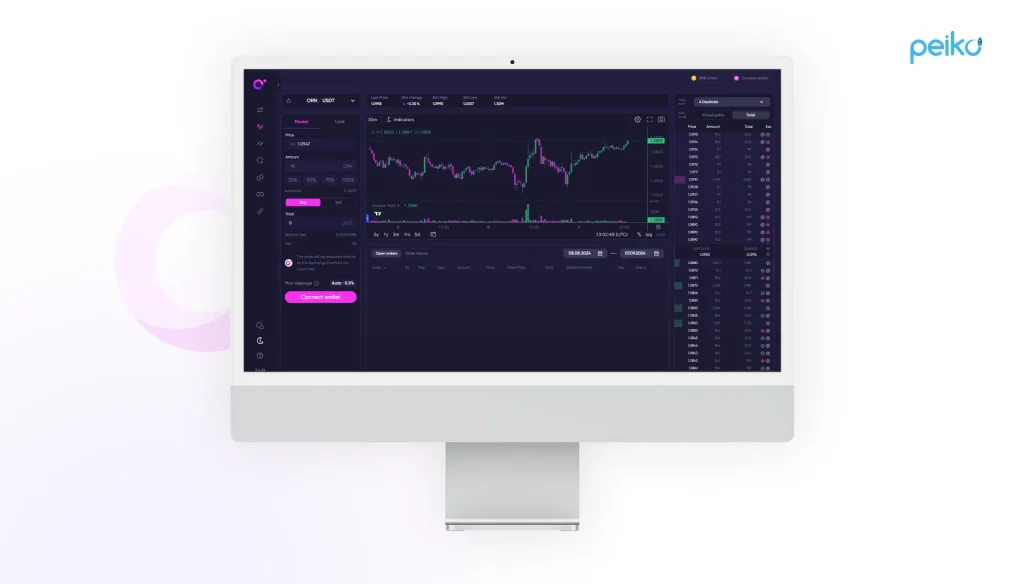
Need to create a token or crypto platform? Peiko can help you with the development of your own token or coin, wallet integration, or the deployment of a bespoke DeFi solution like we did for Orion Protocol.
Conclusion
The choice between an ICO and an IEO ultimately comes down to control versus exchange infrastructure.
An ICO allows a project to manage its token sale more independently and maintain greater control over fundraising, distribution, and investor relationships. In return, the project takes on more responsibility for technology, security, marketing, compliance, and investor acquisition.
An IEO introduces a centralized exchange into the fundraising process. This can provide access to established exchange infrastructure and users, as well as potential project screening and a more direct route to exchange trading. However, it also means higher dependence on the exchange, additional requirements, and potentially higher costs.
Neither model is inherently safer or more profitable. Exchange approval does not guarantee project quality or investment returns, while an ICO is not automatically fraudulent or unregulated.
Blockchain projects should evaluate the entire token-launch strategy before choosing a fundraising model. Key considerations include:
- Token classification and legal structure
- Target jurisdictions
- Investor eligibility
- Compliance requirements
- Fundraising budget
- Community and distribution strategy
- Exchange or DEX strategy
- Tokenomics and vesting
- Smart-contract security
- Liquidity requirements
- Long-term token utility
For some projects, an ICO or IEO may be appropriate. Others may be better suited to an STO, IDO, or another token distribution model.
The most effective approach is to choose the fundraising mechanism after defining the product, token economics, regulatory strategy, and target market—rather than treating the token sale itself as the starting point.
Ready to start your cryptocurrency project and surprise investors? If you want to develop a token or launch a coin, reach out to the Peiko team for help. We will help you to implement your idea into life.
No comments yet. Be the first to comment!