

















Founders often ask how to build an MVP without wasting time, budget, or momentum.
Do you even need an MVP? How do MVP, Prototype, and PoC actually differ?
They sound similar, but they’re often misunderstood and misapplied — leading to wasted time, burned budgets, and lost momentum for teams trying to understand how to build an MVP in a structured and risk-aware way.
Let’s deep-dive into the three stages of validation that shape how products are built, risks are reduced, and markets are entered:
| Concept | Purpose | Core Question | Focus | Who It’s For | What It Looks Like | Output |
| PoC (Proof of Concept) | Technical validation | Can this even work? | Feasibility & architecture | Engineers, CTOs, investors | Scripts, demos, experiments, test environments | Technical proof |
| Prototype | UX & concept validation | Will users understand it? | Usability & flow | Users, founders, product teams | Figma designs, wireframes, clickable demos | User feedback |
| MVP (Minimum Viable Product) | Market validation | Will people actually use it? | Value delivery | Real users, market | Live product, basic features, real data | Traction & metrics |
Your right order is: PoC → Prototype → MVP
Not always all three — but when tech risk is high, this sequence saves money and failure.
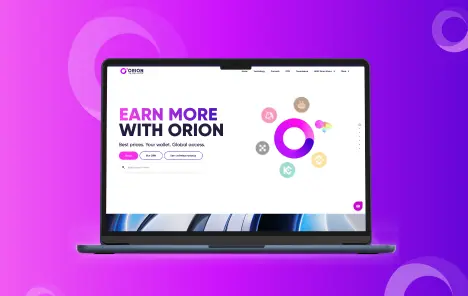
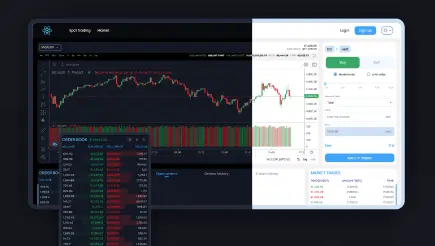
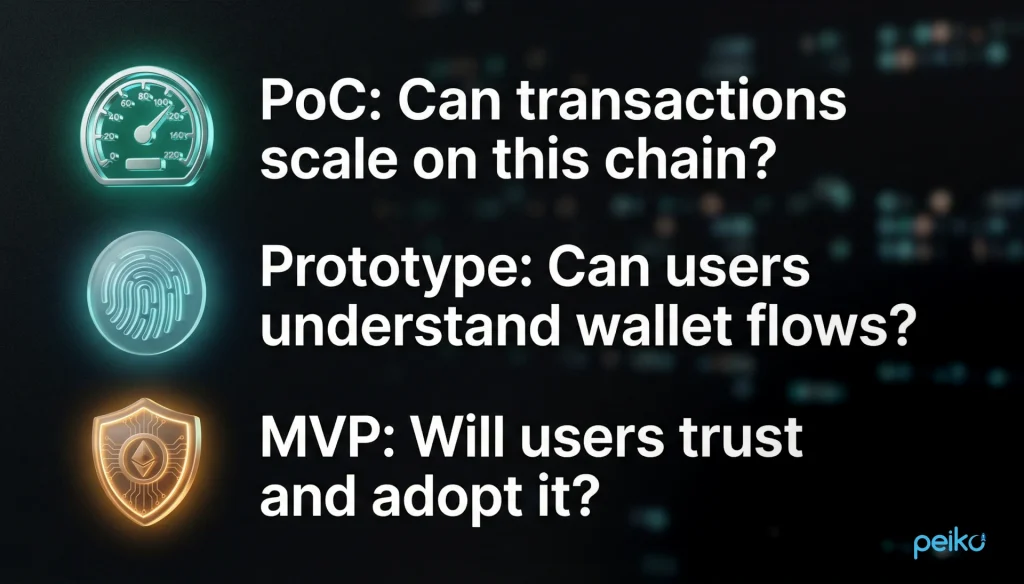
Example: Blockchain /fintech product
The Most Common (and Expensive) Mistakes
One of the fastest ways startups burn through their budget isn’t bad ideas — it’s building the wrong thing at the wrong stage. Teams launch MVPs when they actually need a PoC, pitch investors with half-baked MVPs instead of clear prototypes, and test real users on technical demos no one can understand. They scale before validating the market, overbuild before collecting feedback, and invest in complexity before proving demand. This is how momentum dies quietly — and budgets disappear fast.
Before you build anything, ask yourself one question: what kind of risk are you actually trying to reduce?
If it’s a technology risk, start with a PoC.
If it’s a usability risk, build a prototype.
If it’s a market risk, launch an MVP.
Different problems require different tools. Choosing the right one at the right time is what separates fast-growing products from expensive experiments. A structured MVP development process turns uncertainty into measurable learning, helping teams validate ideas faster and reduce execution risk before scaling.
MVP (Minimum Viable Product): “Will People Actually Use It?”
An MVP is built to answer one core question: does this product solve a real problem for real users? It’s not about launching a stripped-down version of a full platform — it’s about delivering the smallest meaningful value that enables real-world validation.
In practice, an effective MVP development process combines strategic focus, lean architecture, and fast feedback loops — creating speed without sacrificing product clarity.
It starts with clear problem definition, ruthless feature prioritization, and fast feedback loops. Build only what supports the core hypothesis, validate with real users early, measure behavior instead of opinions, and iterate based on data — not assumptions. In modern product development, the MVP is not a milestone; it’s a learning engine that turns uncertainty into direction.
At Peiko, we approach MVP development as a strategic validation tool, not a stripped-down product. The most common mistake we see is overengineering too early — building complex architectures, heavy infrastructure, and long-term scalability before real market demand is proven. A strong MVP is lean by design: focused on core value, built for fast iteration, and structured for learning.
Every feature must justify its existence through user insight, every technical decision must support speed and flexibility, and every sprint must move the product closer to real-world validation. For us, an MVP isn’t about building less — it’s about building smart, aligning technology with business goals from day one.
MVP development should be a path to clarity, not a race to release. An effective MVP starts with focus. You define the problem. You define the user. You define the core value. Everything else is noise. When teams skip this step, products grow in the wrong direction. Features multiply. Complexity rises. Learning slows down.
This is where Agile becomes critical. Agile replaces rigid planning with fast, controlled iteration. You don’t build assumptions — you test them. You don’t guess priorities — you validate them. Work happens in short cycles, with clear goals and measurable outcomes. Each sprint delivers learning, not just code.
An effective MVP is lean by design. Agile supports this through continuous prioritization and disciplined backlog management. Teams stay focused on what matters now, not what might matter later.
Technical decisions follow the same logic. Build for speed. Design for flexibility. Keep the system modular. Let the architecture evolve with the product. This prevents early technical debt and keeps change affordable.
Agile also creates alignment. Product, design, engineering, and business move together. Goals are clear. Priorities are shared. Decisions are fast. Feedback is constant. This removes friction and reduces risk. Most importantly, Agile shortens the distance between idea and insight. You release faster. You learn faster. You adapt faster. Users shape the product early. Data guides decisions. Assumptions disappear.
That’s how MVPs turn into scalable products, not by building more, but by building smarter. For teams trying to understand how to build MVP in a way that reduces risk rather than adds complexity, structure and discipline matter more than speed.
How to Build an MVP: A Step-by-Step Validation Process
Reality check: building an MVP is not only a technical challenge — it’s a strategic risk decision. This is especially true when building MVP for startups, where resources are limited and every decision directly impacts runway and momentum.
The right development partner doesn’t just write code — they create structure, clarity, and control in uncertainty.
How MVPs become scalable products? Through structure, discipline, and intelligent iteration.
| Step | Description | Output |
| 1. Start With the Problem | Define the real problem, the real user, and the real context. Without this, no MVP can succeed. | Defined problem, target user, and usage context |
| 2. Define the Core Value | Identify the single most important value the product must deliver. Not future vision or roadmap ideas. | Focused value proposition |
| 3. Select One Core Use Case | Prove value through one dominant flow. Multiple use cases dilute learning. | One validated user journey |
| 4. Convert Assumptions into Hypotheses | Replace opinions with testable statements. Validation replaces guesswork. | Hypotheses with success criteria |
| 5. Design the Validation Scope | Build only what validates the core assumptions. | Feature scope mapped to validation goals |
| 6. Build Lean Architecture | Design for speed and flexibility. Modular, simple, adaptable systems. | Agile-ready technical foundation |
| 7. Prioritize With Discipline | Every feature must justify its existence. If it doesn’t validate value, exclude it. | Clean, focused product scope |
| 8. Build Iteratively | Short cycles, fast releases, continuous learning. Each sprint delivers insight. | Working MVP with rapid feedback loops |
| 9. Launch to the Right Audience | Test with early adopters, not mass markets. Focus on signal over scale. | Controlled market feedback |
| 10. Measure Real Behavior | Analyze actions, not opinions. Let data guide decisions. | Behavioral insights and validation signals |
| 11. Iterate Based on Evidence | Refine and improve based on real data. Features and flows evolve. | Stronger product-market alignment |
| 12. Scale With Confidence | Only invest in growth and scalability after validation. | Clear growth strategy and scalable foundation |
MVP, Prototype, and PoC are not buzzwords — they are strategic tools. Each exists to solve a different problem, reduce a different type of risk, and create a different kind of clarity. When teams confuse them, they don’t just lose time — they lose direction, focus, and opportunity. But when they are used correctly, in the right order and for the right purpose, they create structure in uncertainty and momentum in complexity.
Conclusion
In practice, building an MVP for startups is not about speed alone — it’s about disciplined learning, validation, and evidence-based growth.
Successful product development is mostly about learning faster. It’s about validating before scaling, proving before investing, and understanding before expanding. A PoC reduces technical risk. A prototype reduces usability risk. An MVP reduces market risk. Together, they form a disciplined path from idea to traction.
An effective MVP is not a small product but a learning system. It turns assumptions into data, uncertainty into insight, and ideas into evidence. Supported by Agile execution, clear strategy, and disciplined prioritization, it becomes the foundation for scalable growth — not accidental success.
In the end, products don’t fail because teams lack ambition. They fail because they lack structure. They fail because they build without validation, scale without proof, and invest without clarity. The teams that succeed are the ones that choose the right tools, at the right time, for the right risks.That’s how ideas become products.
That’s how experiments become businesses.
No comments yet. Be the first to comment!