

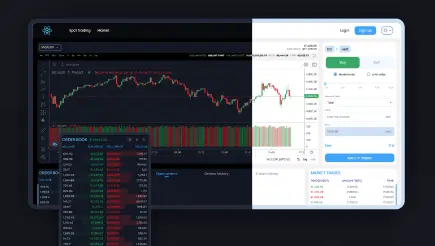















No wonder, in today’s rapidly changing fintech and Web3 world has emerged Polymarket – the big leader of predictions. It gives people an opportunity of turning real-world events into tradable digital assets.
Users can buy and sell “shares” based on what they think will happen, with prices reflecting the market’s collective view of the odds. For example, if a share is priced at $0.70, the market is essentially saying there’s a 70% chance that outcome will occur. This creates an active, real-time marketplace for prediction markets, often producing insights that rival traditional polls and expert forecasts.
What are the most talked-about events people bet on Polymarket? They span pop culture, politics, and sports — from U.S. Presidential elections and major political events to high-profile sports championships that draw huge trader interest. This mix of serious forecasting and playful speculation attracts both professional traders and casual participants alike.
What makes Polymarket such a groundbreaking phenomenon?
From Startup to Billion-Dollar Valuation: let’s explore what’s the journey behind Polymarket.
Founded in 2020 by Shayne Coplan, Polymarket quickly showed the potential of blockchain-enabled forecasting tools. Early traction during events like the U.S. elections propelled user growth, but also brought regulatory scrutiny, culminating in a 2022 settlement with the U.S. Commodity Futures Trading Commission (CFTC). Rather than retreating, the team leaned into compliance — acquiring a CFTC-licensed exchange and bolstering verification workflows — paving the way for re-entry into the U.S. market. Strategic investments, including a multibillion-dollar partnership with Intercontinental Exchange (ICE), lifted Polymarket’s valuation to roughly $8 billion by late 2025.
Here is a vital lesson for fintech founders: navigating regulation isn’t a burden but a strategic asset. Early engagement with legal frameworks can build credibility and unlock institutional capital that boosts growth. A well-structured prediction market software system can help companies scale responsibly while fostering a trustworthy predictive market ecosystem.
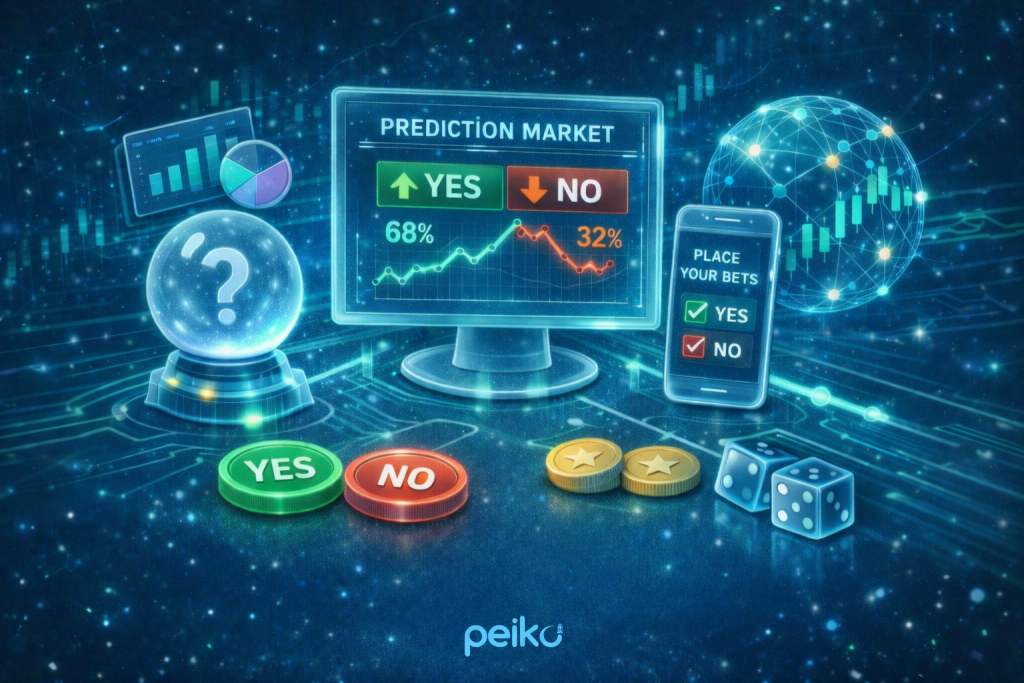
Decentralized Architecture and API Innovation
Blockchain is the core of Polymarket. It ensures transparency and trustless settlement: the platform uses smart contracts on the Polygon network to mint and manage conditional tokens representing possible event outcomes. A notable innovation is the hybrid Central Limit Order Book (CLOB) — a matching engine that operates off-chain for efficiency but settles trades on-chain to maintain transparency.
For developers building on or alongside Polymarket, the platform exposes a comprehensive API ecosystem. This includes:
- Market Data APIs (e.g., the Gamma API) to fetch live event listings, prices, and metadata for every prediction market.
- Trading and Order Book Endpoints for retrieving liquidity and price depth within predicted markets.
- On-Chain Integration tying REST responses to smart contract state and oracle confirmations, essential for any robust prediction market software.
Polymarket’s API ecosystem enables robust prediction market functionality, while clone apps offer developers flexibility to tailor predictive market features for their users.
Key API & Architecture Comparison
| API Feature / Endpoint | Polymarket | Clone Platforms | Generic Prediction Market Software |
| Market Data API | Yes, live updates | Optional | Usually limited |
| Order Book / Trading Endpoint | Yes, real-time | Often replicated | Not always available |
| Oracle Integration | Yes, for event outcome verification | Configurable | Rare |
| REST / WebSocket Support | Both supported | Usually REST | Limited |
| Smart Contract Interaction | Full support | Optional/customizable | Minimal |
Such architecture powers a huge variety of use cases: analytics dashboards, arbitrage bots, custom UIs and app integrations — accelerating innovation in decentralized prediction markets and predictive markets.
Clone Platforms: Bringing Prediction Markets to Market Faster
Polymarket’s journey has truly catalyzed interest in similar platforms, and here at Peiko, we’re thrilled to see your requests increasing day by day!
Clone solutions — white-label systems that replicate Polymarket’s core functionality — are commonly used by startups and enterprises wanting to tap into prediction markets without reinventing the wheel.
These clone scripts typically replicate:
- End-to-End Market Lifecycle Logic: from event creation to trade execution and settlement in prediction markets.
- Smart Contract-Driven Infrastructures: ensuring automated, trustless payouts in any predicted market.
- Hybrid Decentralized Architectures: off-chain order matching with on-chain settlement for cost efficiency in a predictive market environment.
- Admin & Compliance Panels: to create, moderate, and govern markets in line with regulatory requirements for professional prediction market software.
Advanced clones can offer you customizable market categories, multi-currency support, and even free-to-play modes that enhance user engagement and broaden adoption for prediction market platforms. For software development teams like us, these white-label solutions significantly shorten time-to-market and reduce development risks.
Instead of building predict markets from scratch — which can take months — companies can leverage configurable, battle-tested core modules and focus on differentiation through UX, branding, and compliance.
Let’s take a closer look at how Polymarket, clone platforms, and generic prediction market software compare:
| Feature / Platform | Polymarket | Clone Apps | Generic Prediction Market Software |
| Blockchain Integration | Polygon (Layer 2, low gas fees) | Configurable (Polygon, Ethereum) | Optional (depends on provider) |
| Smart Contract Automation | Yes, for conditional tokens | Yes, often customizable | Limited or plugin-based |
| Regulatory Compliance | CFTC-licensed exchange, KYC | Depends on provider | Typically minimal |
| Order Matching | Hybrid off-chain/on-chain CLOB | Often replicated from Polymarket | Centralized or off-chain only |
| Market Types | Politics, sports, finance | Customizable | Fixed or basic categories |
| User Verification & Security | High (KYC/AML compliant) | Configurable | Varies |
| Time-to-Market | N/A (original product) | 3–6 months using white-label script | 6–12 months (custom development) |
| Customizability | Low (proprietary) | High | Medium |
| Analytics & Reporting | Standard dashboards | Custom dashboards possible | Basic or plugin-based |
| Use Case Focus | Prediction market, predictive market, predict markets | Flexible, can replicate Polymarket | Educational, gaming, internal use |
Prediction Market Discovery & MVP Development Tips
For companies looking to accelerate time-to-market, working with professional teams like Peiko can make all the difference. Our prediction market software development services provide end-to-end solutions: from idea and smart contract creation to deployment and generating revenue.
We begin every project with a thorough Discovery Phase — analyzing your business goals, target audience, regulatory requirements, and technical needs. This helps us (and You) map out the most efficient development path, estimate costs accurately, and ensure that your prediction market platform is both scalable and aligned with your long-term strategy.
When developing an MVP for a prediction market, we highly recommend:
- Before starting the development — protect your product, budget, and timeline by running a well-structured Discovery phase.
- Continue with Core functionality — event creation, trading, and settlement, before adding complex features like advanced analytics or multi-currency support.
- Leverage prebuilt modules: use smart contract templates and clone-ready frameworks to save time and reduce errors.
- Prioritize compliance early: integrate KYC/AML and basic security checks from day one to avoid costly revisions later.
- Iterate based on real feedback: use your MVP to gather real user data and refine markets, UX, and features incrementally.
- Keep Scalability in Mind: Even a small MVP should be architected to grow, with modular components that can expand without a full rebuild.
By following these tips, startups and businesses can validate their concept quickly, control development costs, and build a robust, compliant, and scalable prediction market platform ready for full launch.
Development Costs: What It Takes to Build a Prediction Market Platform
Understanding the financial side is crucial for anyone looking to enter the prediction market space. Whether you’re considering a full custom build, a clone platform, or leveraging existing prediction market software, costs can vary widely depending on complexity, compliance requirements, and the technology stack.
- Custom Development: Building a prediction market from scratch requires designing smart contracts, developing front-end and back-end systems, integrating oracles, and thorough QA testing. The process is time-intensive and resource-heavy, often taking 6–12 months and costing several hundred thousand dollars or more.
- Clone Platforms: White-label solutions significantly reduce both development time and cost. By reusing prebuilt, battle-tested modules for market creation, trading logic, and settlement, companies can launch fully functional platforms in just 3–6 months. Costs typically range from $100k to $250k depending on customizations and additional features.
- Compliance and Security: Regardless of the approach, investment in legal compliance, KYC/AML integration, and platform security is essential. Skipping these steps may save money initially but can lead to far higher costs later due to regulatory penalties or security breaches.
To sum up, here is a Cost and Development Analytics:
| Development Stage | Polymarket (Original) | Clone App Implementation | Custom Prediction Market Software |
| Design & UX | Custom, high fidelity | Moderate, template-based | High, fully custom |
| Smart Contracts | In-house developed | Prebuilt or adapted | Must be developed from scratch |
| Frontend/Backend | React + Node.js | React/Angular + Node.js | Fully custom, longer duration |
| QA & Testing | Extensive | Moderate | Extensive |
| Time to Launch | N/A (original) | 3–6 months | 6–12 months |
| Estimated Cost | $5–8M (initial scaling & compliance) | $40k–$100k | $50k–$100k |
For companies looking to significantly shorten time-to-market, working with professional teams like Peiko can make all the difference. Our Prediction Market Software Development services provide end-to-end solutions — from concept and smart contract creation to deployment and compliance integration.

Conclusion
Prediction markets are beginning to outperform traditional experts — not because of luck, but because they move faster than conventional institutions can absorb new information.
A niche crypto experiment once, is a global prediction market powerhouse today that clearly shows us the transformational potential of decentralized finance.
Its API ecosystem and hybrid architecture is of a huge potential for developers, while clone platforms present an accessible launchpad for new entrants seeking prediction market software solutions. For software companies navigating this frontier, the blend of regulatory strategy, robust technology, and ethical foresight will define the next generation of predict markets and predictions markets worldwide.
No comments yet. Be the first to comment!