
















Founders often ask how to build an MVP without wasting time, budget, or momentum.
Do you even need an MVP? How do MVP, Prototype, and PoC actually differ?
They sound similar, but they’re often misunderstood and misapplied — leading to wasted time, burned budgets, and lost momentum for teams trying to understand how to build an MVP in a structured and risk-aware way.
Let’s deep-dive into the three stages of validation that shape how products are built, risks are reduced, and markets are entered:
| Concept | Purpose | Core Question | Focus | Who It’s For | What It Looks Like | Output |
| PoC (Proof of Concept) | Technical validation | Can this even work? | Feasibility & architecture | Engineers, CTOs, investors | Scripts, demos, experiments, test environments | Technical proof |
| Prototype | UX & concept validation | Will users understand it? | Usability & flow | Users, founders, product teams | Figma designs, wireframes, clickable demos | User feedback |
| MVP (Minimum Viable Product) | Market validation | Will people actually use it? | Value delivery | Real users, market | Live product, basic features, real data | Traction & metrics |
Your right order is: PoC → Prototype → MVP
Not always all three — but when tech risk is high, this sequence saves money and failure.
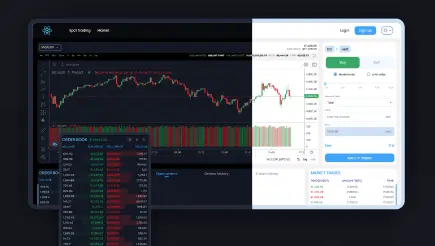
Example: Blockchain /fintech product
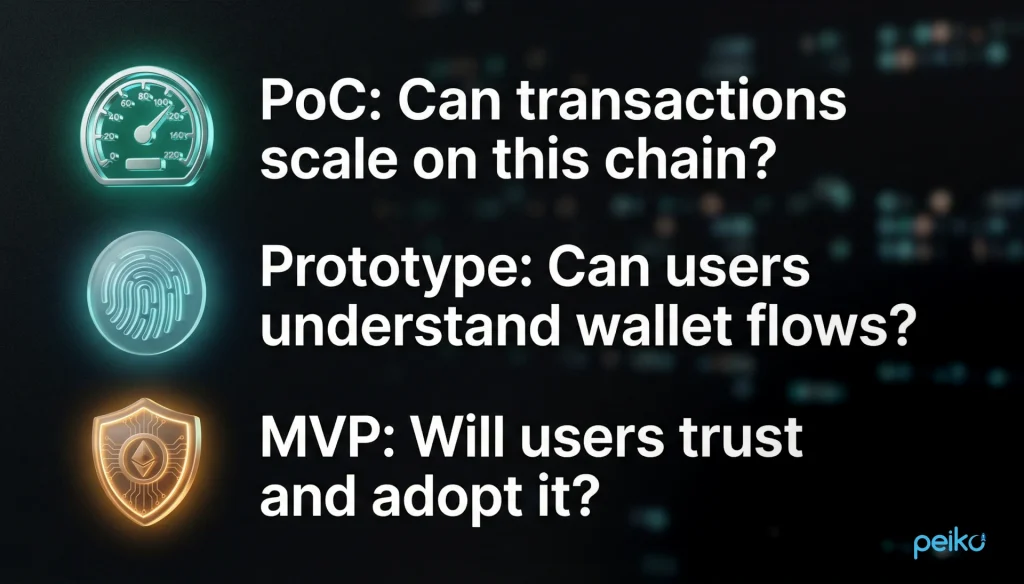
PoC vs Prototype vs MVP
Proof of Concept (PoC): tests whether a technically risky idea can work.
Prototype: tests whether users can understand and navigate the proposed experience.
MVP: tests whether a real product can deliver meaningful value to target users and generate evidence about demand, usage or willingness to pay.
The three stages answer different questions and should not be treated as interchangeable.
Key Takeaways:
An MVP is not simply the smallest version of a product. It is the smallest product or experiment that can test a critical business assumption and deliver measurable value to a defined group of users.
- Start with the problem and target customer, not with a feature list.
- Identify the riskiest assumption and validate it before investing heavily in development.
- Use the cheapest experiment that can produce meaningful evidence: customer interviews, landing pages, prototypes, concierge tests, pre-sales, or a limited MVP.
- Define success criteria before running the experiment so the team does not reinterpret weak results as success.
- A good MVP should contain the minimum functionality required to deliver its core value proposition—not every feature users might eventually want.
- Measure activation, engagement, retention, willingness to pay, and qualitative feedback, rather than relying only on downloads, registrations, or page views.
- After launch, decide whether to iterate, narrow the target audience, pivot, or scale based on evidence.
- Technical quality still matters: security, reliability, analytics, architecture and compliance requirements should be included when they are necessary for the product to work safely.
- The goal of an MVP is not to build cheaply at any cost. The goal is to reduce uncertainty while learning quickly enough to make the next product decision with evidence.
Start With the Problem, Not the MVP
One of the most expensive MVP mistakes is starting development before defining exactly what needs to be validated.
Before writing requirements, answer five questions:
- Who has the problem?
- What problem are they trying to solve?
- How are they solving it today?
- Why is the current solution insufficient?
- What behavior would prove that your solution is valuable?
The goal is to move from an idea such as: “We want to build an AI-powered marketplace.” to a testable hypothesis: “Independent designers currently spend several hours per week finding qualified clients and will pay for a platform that automatically matches them with relevant projects.”
The second statement can be tested. The first is simply a product idea.
| Stage | Question | Output |
| Problem | What pain exists? | Problem statement |
| Customer | Who experiences it? | Target segment |
| Current behavior | How is it solved today? | Existing alternatives |
| Value proposition | Why would users switch? | Core value proposition |
| Hypothesis | What must be true? | Testable assumption |
| Evidence | What behavior proves it? | Success metric |
The Most Common (and Expensive) Mistakes
One of the fastest ways startups burn through their budget isn’t bad ideas — it’s building the wrong thing at the wrong stage. Teams launch MVPs when they actually need a PoC, pitch investors with half-baked MVPs instead of clear prototypes, and test real users on technical demos no one can understand. They scale before validating the market, overbuild before collecting feedback, and invest in complexity before proving demand. This is how momentum dies quietly — and budgets disappear fast.
| Mistake | Why It Is Expensive | Better Approach |
| Building before validating demand | Engineering validates the wrong assumption | Run a demand experiment first |
| Too many features | Increases cost and learning time | Build around one core outcome |
| Targeting everyone | Produces weak product-market fit signals | Define one primary segment |
| Ignoring willingness to pay | Interest does not equal revenue | Test pricing or pre-sales |
| Measuring vanity metrics | Creates false confidence | Track behavioral metrics |
| Overengineering architecture | Delays learning | Design for current validated needs |
| Ignoring technical risks | Late discoveries cause rework | Spike high-risk integrations early |
| No post-launch plan | MVP becomes a dead-end prototype | Define iteration metrics in advance |
Before you build anything, ask yourself one question: what kind of risk are you actually trying to reduce?
If it’s a technology risk, start with a PoC.
If it’s a usability risk, build a prototype.
If it’s a market risk, launch an MVP.
Different problems require different tools. Choosing the right one at the right time is what separates fast-growing products from expensive experiments. A structured MVP development process turns uncertainty into measurable learning, helping teams validate ideas faster and reduce execution risk before scaling.
MVP (Minimum Viable Product): “Will People Actually Use It?”
A Minimum Viable Product (MVP) is the smallest version of a product that can deliver its core value to a clearly defined group of users while generating enough real-world evidence to guide the next product decision.
The word “viable” is important. An MVP is not simply a collection of unfinished features. It should be usable enough to solve the target problem, measurable enough to generate evidence, and focused enough to avoid spending resources on assumptions that have not yet been validated.
In practice, an MVP can be a working software product, but it can also include manual processes, limited automation, a concierge service, a prototype, or another deliberately constrained implementation when that is enough to test the core assumption.
An MVP is built to answer one core question: does this product solve a real problem for real users? It’s not about launching a stripped-down version of a full platform — it’s about delivering the smallest meaningful value that enables real-world validation.
In practice, an effective MVP development process combines strategic focus, lean architecture, and fast feedback loops — creating speed without sacrificing product clarity.
It starts with clear problem definition, ruthless feature prioritization, and fast feedback loops. Build only what supports the core hypothesis, validate with real users early, measure behavior instead of opinions, and iterate based on data — not assumptions. In modern product development, the MVP is not a milestone; it’s a learning engine that turns uncertainty into direction.
At Peiko, we approach MVP development as a strategic validation tool, not a stripped-down product. The most common mistake we see is overengineering too early — building complex architectures, heavy infrastructure, and long-term scalability before real market demand is proven. A strong MVP is lean by design: focused on core value, built for fast iteration, and structured for learning.
Every feature must justify its existence through user insight, every technical decision must support speed and flexibility, and every sprint must move the product closer to real-world validation. For us, an MVP isn’t about building less — it’s about building smart, aligning technology with business goals from day one.
MVP development should be a path to clarity, not a race to release. An effective MVP starts with focus. You define the problem. You define the user. You define the core value. Everything else is noise. When teams skip this step, products grow in the wrong direction. Features multiply. Complexity rises. Learning slows down.
This is where Agile becomes critical. Agile replaces rigid planning with fast, controlled iteration. You don’t build assumptions — you test them. You don’t guess priorities — you validate them. Work happens in short cycles, with clear goals and measurable outcomes. Each sprint delivers learning, not just code.
An effective MVP is lean by design. Agile supports this through continuous prioritization and disciplined backlog management. Teams stay focused on what matters now, not what might matter later.
Technical decisions follow the same logic. Build for speed. Design for flexibility. Keep the system modular. Let the architecture evolve with the product. This prevents early technical debt and keeps change affordable.
Agile also creates alignment. Product, design, engineering, and business move together. Goals are clear. Priorities are shared. Decisions are fast. Feedback is constant. This removes friction and reduces risk. Most importantly, Agile shortens the distance between idea and insight. You release faster. You learn faster. You adapt faster. Users shape the product early. Data guides decisions. Assumptions disappear.
That’s how MVPs turn into scalable products, not by building more, but by building smarter. For teams trying to understand how to build MVP in a way that reduces risk rather than adds complexity, structure and discipline matter more than speed.
How to Validate an MVP Idea Before Development
You do not always need to build software to validate a software idea. Start with the cheapest experiment capable of answering the question you are trying to resolve.
| Validation Method | Best For Testing | What You Measure |
| Customer interviews | Problem severity | Repeated pain, current workarounds |
| Landing page | Demand | Visits, sign-ups, conversion |
| Prototype | Usability and concept | Task completion, feedback |
| Fake-door test | Feature interest | Clicks or attempted actions |
| Concierge MVP | End-to-end value | Manual task completion |
| Wizard of Oz MVP | User experience | User behavior |
| Pre-sales | Willingness to pay | Purchases/deposits |
| Paid pilot | B2B demand | Paying customers |
| Working MVP | Product value | Activation, usage, retention |
The key principle is to validate the most expensive assumption to get wrong first.
If you are unsure whether customers have the problem, test the problem before building the solution. If demand is clear but willingness to pay is uncertain, test pricing or pre-sales. If users want the solution but cannot complete the workflow, test the product experience.
Validation should therefore follow the risk, not a fixed checklist.
What Should an MVP Actually Include?
The right MVP scope is determined by the core user outcome, not by the number of features competitors have.
Start with one primary user journey and identify the minimum functionality required to complete it successfully.
A useful prioritization framework is:
Must have → Should have → Could have → Not now
The MVP should contain the functionality that is essential to the core workflow, while secondary features remain outside the first release.
| Feature Type | MVP Decision | Example |
| Core value | Must have | Booking a service |
| Payment | Must have if monetization is tested | Checkout |
| Authentication | Only if required | Login |
| Analytics | Must have | Activation/retention tracking |
| Admin tools | Minimal version | Manage users/orders |
| Notifications | Only if workflow requires them | Booking confirmation |
| Advanced personalization | Usually later | AI recommendations |
| Social features | Usually later | Community feed |
| Complex automation | Validate first | Automated workflows |
The best MVP is not the product with the fewest features. It is the product with the fewest features necessary to test the most important assumption.
MVP Technical Architecture: Build for Learning, Not Overengineering
MVP architecture should support the current product scope while leaving reasonable room for validated growth.
The goal is not to predict the final architecture of a product that has not yet proven its market. At the same time, an MVP should not ignore technical risks that could make future validation meaningless.
A practical approach is:
- use a modular architecture where boundaries are likely to evolve;
- avoid premature microservices unless scale or organizational constraints justify them;
- design APIs around stable business capabilities;
- instrument the core user journey from the first release;
- build security controls that are required for the product’s risk profile;
- isolate high-risk integrations behind clear interfaces;
- use managed infrastructure where it reduces unnecessary operational work;
- document technical decisions that are expensive to reverse.
| Technical Decision | MVP Approach |
| Architecture | Modular monolith unless complexity justifies services |
| Cloud | Managed services where practical |
| Database | Production-ready relational/NoSQL choice based on workload |
| APIs | Stable contracts around core capabilities |
| Authentication | Production-grade security from day one |
| Analytics | Instrument core events immediately |
| CI/CD | Automated testing and deployment |
| Monitoring | Errors, uptime and critical workflows |
| Security | Risk-based controls from first release |
| Scalability | Design obvious bottlenecks, don’t overbuild |
The MVP should be technically credible enough to learn from real users, without spending months engineering hypothetical scale.
How to Build an MVP: A Step-by-Step Validation Process
Reality check: building an MVP is not only a technical challenge — it’s a strategic risk decision. This is especially true when building MVP for startups, where resources are limited and every decision directly impacts runway and momentum.
The right development partner doesn’t just write code — they create structure, clarity, and control in uncertainty.
How MVPs become scalable products? Through structure, discipline, and intelligent iteration.
| Step | Description | Output |
| 1. Start With the Problem | Define the real problem, the real user, and the real context. Without this, no MVP can succeed. | Defined problem, target user, and usage context |
| 2. Define the Core Value | Identify the single most important value the product must deliver. Not future vision or roadmap ideas. | Focused value proposition |
| 3. Select One Core Use Case | Prove value through one dominant flow. Multiple use cases dilute learning. | One validated user journey |
| 4. Convert Assumptions into Hypotheses | Replace opinions with testable statements. Validation replaces guesswork. | Hypotheses with success criteria |
| 5. Design the Validation Scope | Build only what validates the core assumptions. | Feature scope mapped to validation goals |
| 6. Build Lean Architecture | Design for speed and flexibility. Modular, simple, adaptable systems. | Agile-ready technical foundation |
| 7. Prioritize With Discipline | Every feature must justify its existence. If it doesn’t validate value, exclude it. | Clean, focused product scope |
| 8. Build Iteratively | Short cycles, fast releases, continuous learning. Each sprint delivers insight. | Working MVP with rapid feedback loops |
| 9. Launch to the Right Audience | Test with early adopters, not mass markets. Focus on signal over scale. | Controlled market feedback |
| 10. Measure Real Behavior | Analyze actions, not opinions. Let data guide decisions. | Behavioral insights and validation signals |
| 11. Iterate Based on Evidence | Refine and improve based on real data. Features and flows evolve. | Stronger product-market alignment |
| 12. Scale With Confidence | Only invest in growth and scalability after validation. | Clear growth strategy and scalable foundation |
MVP, Prototype, and PoC are not buzzwords — they are strategic tools. Each exists to solve a different problem, reduce a different type of risk, and create a different kind of clarity. When teams confuse them, they don’t just lose time — they lose direction, focus, and opportunity. But when they are used correctly, in the right order and for the right purpose, they create structure in uncertainty and momentum in complexity.
How to Measure MVP Success
MVP success should be measured against the hypothesis you are testing. There is no universal KPI that proves an MVP works.
Instead, define one or two primary metrics for the current stage and use supporting metrics to explain the result.
| Goal | Primary Metric | Supporting Metrics |
| Validate demand | Qualified sign-ups | Landing-page conversion |
| Validate activation | Activation rate | Time to first value |
| Validate usage | Core action frequency | Session/feature usage |
| Validate retention | Cohort retention | Churn |
| Validate monetization | Paid conversion | ARPU/revenue |
| Validate B2B demand | Paying accounts/pilots | Sales cycle, expansion |
| Validate referrals | Referral rate | Organic acquisition |
| Validate product value | Repeat usage | Qualitative feedback |
Avoid treating registrations, downloads, impressions or total traffic as proof of product-market fit by themselves. These metrics can indicate reach, but they do not necessarily demonstrate that users repeatedly receive enough value to keep using or paying for the product.
For an early-stage MVP, the strongest evidence usually combines behavioral data, qualitative feedback and willingness-to-pay signals.
How to Know When an MVP Has Market Traction
Market traction is not simply a growing number of users. It is evidence that a defined customer segment repeatedly receives value from the product and that demand is becoming more predictable.
Look for several signals together:
- users repeatedly complete the core action;
- retention improves or stabilizes;
- customers are willing to pay;
- customers expand usage or purchase additional functionality;
- users refer other customers;
- customer acquisition becomes more repeatable;
- qualitative feedback increasingly focuses on improving an already valuable product rather than explaining why it is useful.
A useful decision framework is:
| Signal | Weak Traction | Stronger Traction |
| Usage | One-time activity | Repeated core action |
| Retention | Rapid drop-off | Stable cohorts |
| Revenue | Free interest | Paying customers |
| Feedback | “Interesting idea” | “I need this” |
| Acquisition | Founder-driven | Repeatable channel |
| Referrals | Rare | Organic recommendations |
| Product requests | Broad feature requests | Requests around existing value |
No single metric proves product-market fit. The evidence becomes stronger when multiple independent signals point in the same direction.
This is particularly important because current 2026 guidance treats PMF as observed through repeated value, retention and behavior, not simply declared after launch.
When Should You Iterate, Pivot, or Scale an MVP?
Not every weak MVP result means the product should be abandoned. The right response depends on what the evidence says is wrong.
| Evidence | Recommended Action |
| Problem is weak | Pivot or stop |
| Problem is strong, solution is weak | Change the product |
| Product works, target segment is wrong | Narrow or change audience |
| Users activate but do not retain | Investigate value/UX |
| Users retain but will not pay | Revisit pricing/business model |
| Users pay and retain | Improve and scale |
| Demand is strong but acquisition is expensive | Test distribution |
| One niche shows unusually strong traction | Focus on that niche |
Do not respond to weak traction by automatically adding more features. First determine whether the problem, customer, value proposition, product experience, pricing or acquisition channel is actually responsible.
How Much Does It Cost to Build an MVP?
MVP development cost depends less on the label “MVP” and more on the product’s scope, technical complexity and validation requirements.
The main cost drivers are:
- number and complexity of core workflows;
- web vs mobile vs both;
- UX/UI complexity;
- third-party integrations;
- AI/ML functionality;
- payment systems;
- security and compliance requirements;
- admin functionality;
- real-time functionality;
- infrastructure requirements;
- testing and QA;
- discovery and validation work.
| MVP Type | Typical Scope | Relative Effort |
| Validation prototype | UX + clickable flows | $ |
| Lean software MVP | One core workflow | $$ |
| Standard SaaS MVP | Multiple roles + core integrations | $$$ |
| Complex/AI MVP | Advanced logic + integrations | $$$$ |
| Regulated MVP | Security/compliance-heavy | $$$$+ |
If you want to know about MVP cost in detail – we have an article to help you.
MVP Decision Matrix: What Should You Do Next?
| What You Observe | What It Means | Next Step |
| No one shows interest | Weak demand | Revisit problem/customer |
| Interest but no activation | Value proposition or UX issue | Improve onboarding/value delivery |
| Activation but poor retention | Product doesn’t deliver recurring value | Investigate core workflow |
| Retention but no payment | Monetization problem | Test pricing/business model |
| Strong retention in one segment | Possible niche PMF | Focus on that segment |
| Paying users + retention | Strong product signal | Improve and scale |
| Strong demand but expensive acquisition | Distribution problem | Test acquisition channels |
| Users request the same missing capability | Clear product gap | Prioritize next feature |
Conclusion
Building an MVP is not about turning a large product idea into a smaller feature list. It is a structured process for reducing uncertainty.
Start by validating the problem and target customer. Identify the assumptions that could make the business fail. Test those assumptions with the cheapest reliable experiments, then build only the functionality required to deliver the core value proposition.
After launch, use real customer behavior to decide what happens next. Strong activation, retention, willingness to pay and repeat usage can justify further investment. Weak signals may indicate that you need to change the product, target a different segment, revisit the business model—or stop before spending more resources.
A successful MVP does not prove that the final product is finished. It proves that you have learned enough to make the next product decision with greater confidence.
No comments yet. Be the first to comment!