




DeFi Staking Platform Development Company
Peiko builds DeFi staking platforms from strategy to launch — tokenomics, smart contracts, and integration in one engagement. Token teams, protocols, and wallets come here whether they're starting from scratch or adding staking to something already live.

Our DeFi Staking Platform Development Services
Staking Module Integration for Existing Protocols
A staking layer gets added to a token, protocol, exchange, or wallet that’s already live. No rebuild, no migration — existing infrastructure stays exactly where it is, and staking logic gets layered on top of it.
Staking Architecture & Tokenomics Design
Reward models, lock-up periods, APR/APY structure, and penalty mechanics get defined before development starts. Some economics that look sustainable on paper collapse the moment real staking volume hits them; this is the step where that gets caught early.
Smart Contract Development & Auditing
Staking contracts get built secure and gas-efficient, tested thoroughly, and prepared for independent audit before mainnet. Real staked value moves through these contracts from the first day — there’s no version of “good enough for now.”
Multi-Token & Multi-Pool Support
Single or multiple staking pools get built with flexible reward tokens and tiered structures. Complexity scales with what the protocol actually needs — nothing more, nothing forced into a template that doesn’t fit.
Staking Dashboard & Wallet Integration
Real-time dashboards with wallet connections and clear stake/unstake flows let users manage positions without friction. A technically flawless staking contract still loses users if the interface confuses them.
Governance & DAO Integration
Staking gets connected to voting rights, delegation, and snapshot governance. Token holders’ influence ends up tied directly to what they’ve actually staked — passive holding turns into active participation.
Cross-Chain Staking Deployment
Staking systems get deployed across multiple EVM or non-EVM chains, with reward logic staying consistent regardless of which chain a given user picks. Fragmented rewards across chains is a common source of support tickets — this avoids that entirely.
Security Audits & Risk Mitigation
Economic stress-testing and vulnerability testing happen before launch. Catching a flaw during testing is inconvenient; catching the same flaw after real funds are staked is a very different kind of problem.
Ongoing Maintenance & Optimization
Performance gets monitored, rewards get tuned, and contracts get updated after launch. A platform that works well on day one still needs attention six months in, once usage patterns settle into something different from what launch day looked like.

Why DeFi Staking Matters for Token Ecosystems
$93.9 Billion in Total DeFi Value Locked
DeFi’s total value locked reached $93.9 billion on DefiLlama as of September 21, 2026, with staking and liquid-staking protocols making up a significant share. Capital at that scale gravitates toward infrastructure that’s already proven itself, not toward products nobody’s tested at volume.
Liquid Staking Alone Holds Over $51 Billion
The liquid staking category holds $51.26 billion spread across 290 protocols, and the top ten control 88% of that total. Users concentrate hard around platforms they trust — the bar for a new entrant starts high and keeps climbing.
One-Third of All ETH Supply Is Staked
Roughly 39.7 million ETH is staked, about 33% of the total supply currently in circulation. Staking stopped being a niche behavior a while ago; for a meaningful share of holders, it’s simply what you do with tokens you intend to keep.
Restaking Has Grown Into a $15 Billion Market
Restaking sits near $15 billion in TVL, with EigenLayer holding the overwhelming majority of the sector. Staked assets increasingly get put to work more than once — a platform that can’t account for that already looks a step behind.
Since 2017, our software creation team has consistently delivered industry-focused development services that get results.



Staking Models We Build
Delegated / Direct Staking
Tokens get locked with a validator or protocol directly, earning yield without the staker needing to run any infrastructure. This is the model most users already understand, which makes it a common starting point.
Liquid Staking
Tradable staking-derivative tokens get issued while the underlying assets stay staked. Capital that would otherwise sit locked and idle stays usable elsewhere — that’s the entire appeal, and it’s why this model has grown so fast.
Yield Farming & Liquidity Mining
LP tokens get staked in liquidity pools, earning rewards on top of standard trading fees. Users get paid for supplying the liquidity everyone else’s trades depend on.
Governance Staking
Staking ties directly to voting power. Influence here isn’t abstract — it’s measured against actual stake, proportionally and without exception.
Pooled / Multi-User Staking
Smaller individual stakes combine into a shared pool, opening up rewards that would otherwise require a minimum stake most users can’t meet on their own.
Cross-Chain Staking Systems
Staking logic runs consistently across multiple blockchain networks, with unified reward calculation no matter which chain a user picks. Fragmentation gets designed out rather than left for users to work around.
Staking-as-a-Service (White-Label)
Ready-to-brand staking infrastructure lets exchanges and wallets launch staking under their own name, skipping the months it would take to build the underlying system from zero.
NFT Staking
NFTs or ERC-20 tokens get staked for NFT-based or hybrid rewards, extending staking mechanics into collectibles and gaming assets — territory plain token staking can’t reach.
Case Studies
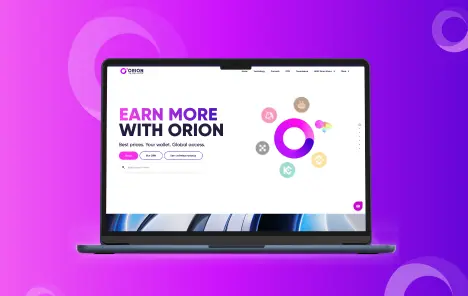
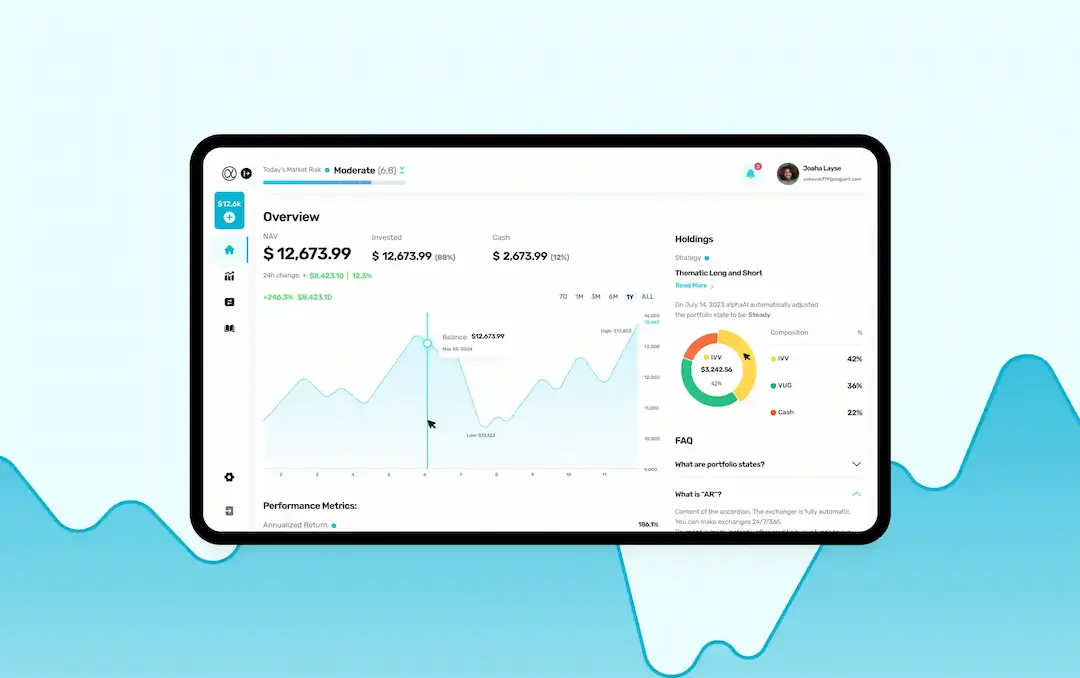
A next-generation AI-powered trading platform that lets retail investors build, simulate, and run fully-automated ETF strategies.
We had to create a secure, real-time trading product from scratch, translate a complex vision into a clear roadmap, and keep development agile enough to absorb regular startup pivots.


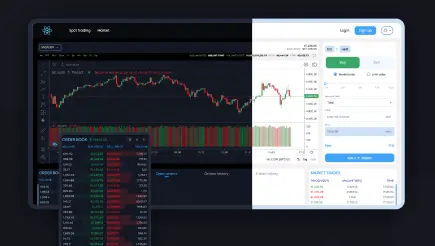
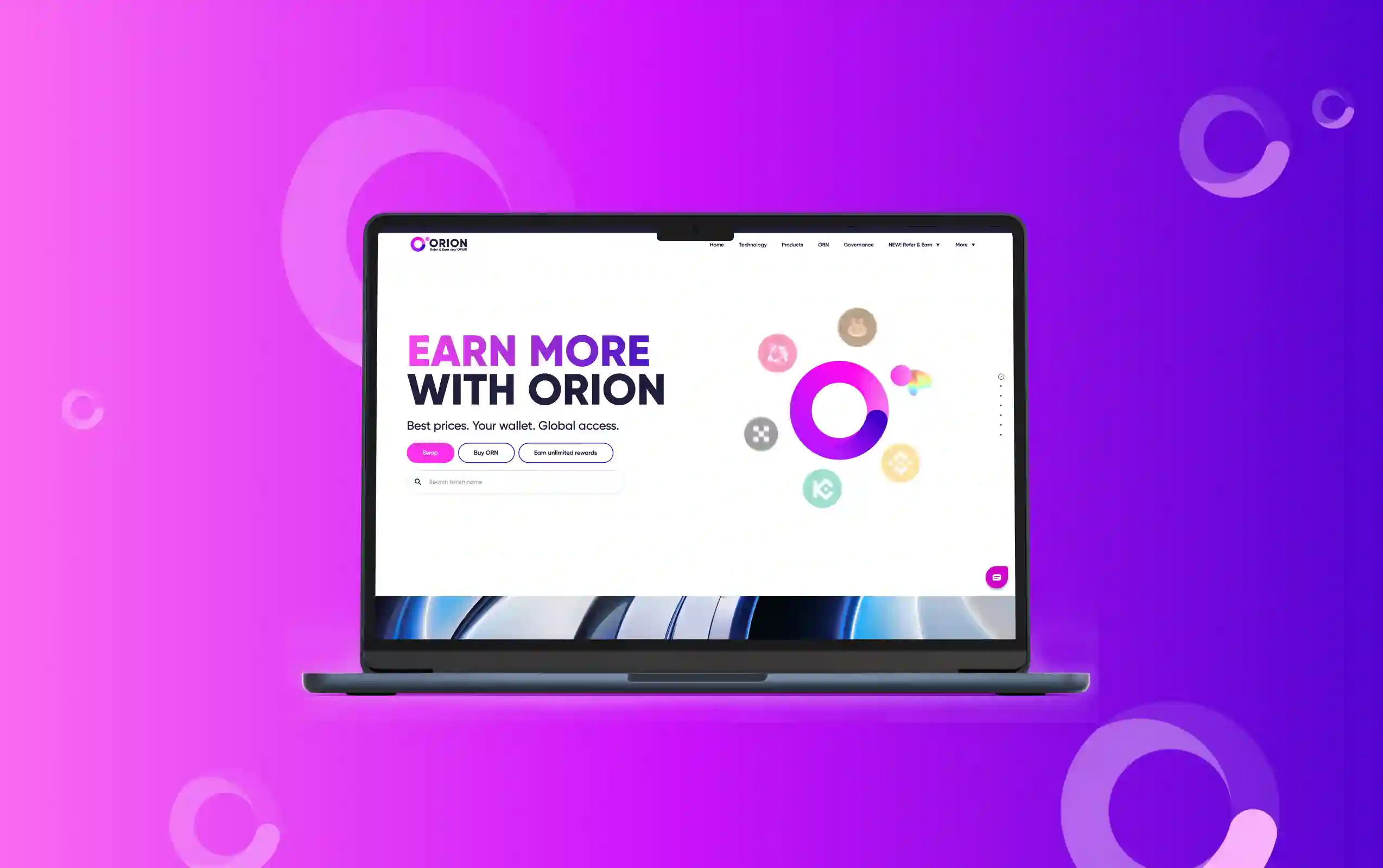
Orion Protocol (ORN) is a decentralized blockchain platform leveraging open-source technology to aggregate liquidity from centralized and decentralized exchanges (CEXs and DEXs).
The primary aim of this project is to offer cryptocurrency traders and users optimal trading rates across various exchange markets and platforms.


Cryptocurrency exchange
IGT-Crypto — project, which was originally planned to be a basic cryptocurrency exchange, is now a financial platform with its currency and a high security level.

Cryptocurrency exchange for buying/selling Bitcoin, Bitcoin Additional, and other altcoins
Quan2um is a trusted cryptocurrency exchange where users can buy and sell popular listing coins. It has a high level of security that meets European standards. The platform has a bonus system for new customers with a multi-level commission system. On the exchange, you can invest in your own Quan2um coin – BTCA, and receive passive income.

Risks Every Staking Project Needs to Solve
Smart Contract Security Risk
Exploits and reentrancy vulnerabilities remain the single biggest threat to any staking contract — a flaw here doesn’t just cost money, it costs trust that’s hard to rebuild afterward. Audited code, defensive coding patterns, and thorough testing before mainnet are how this gets mitigated, not treated as optional extras once something’s already gone wrong.
Unsustainable Reward Economics
An APY model can look attractive at launch and still collapse under its own emissions six months later, once early incentives taper off and real usage sets in. Modeling the token economics upfront, stress-tested against realistic participation rates, keeps rewards standing well past the initial hype window.
Regulatory Uncertainty Across Markets
Compliance requirements shift by jurisdiction and change over time — what’s fine in one market can become a liability in another within a single product cycle. Modular, compliance-ready architecture gives a platform room to adapt as regulations move, instead of requiring a rebuild every time the rules shift somewhere new.
High Entry Barriers for Users
Minimum stake requirements shut out smaller holders by design, which caps how many people can actually participate in a protocol’s staking economy. Pooled or delegated staking options solve this directly, letting participation scale down to users who’d otherwise be priced out entirely.
Industries We Serve
FinTech & Banking
Yield-bearing digital asset products and interest-earning accounts bring staking mechanics into fintech and banking platforms, giving traditional finance products a DeFi-native yield layer.
Gaming & Metaverse
Staking systems for in-game tokens and NFTs reward players for holding and locking assets within the game’s economy, not just trading them.
DAO & Web3 Communities
Governance staking connects to voting power and treasury participation, giving communities influence proportional to their stake.
Real Estate & Asset Tokenization
Staking mechanics for tokenized asset shares let holders earn yield on fractional ownership instead of leaving it idle.
Media & Creator Economy
Fan-token staking systems reward community members with access and perks tied to how much they’ve staked.
E-commerce & Loyalty Programs
Token staking integrates with loyalty rewards and discounts, turning customer holdings into an ongoing benefit rather than a one-time transaction.
What Our Clients Say
We don’t just build software, we build success stories

Peiko delivered a smart contract that was highly evaluated by one of the most demanding auditors on the market. They contributed strategically, offering insights that extended far beyond technical development.

Amazing agency, perfect communication and execution (agile development with very high quality of work), they think out of the box and really help you shape the product. They also have great design skills in the team and are always available- I highly recommend them and will definitely hire again for a next big project!

We are pleased that we selected Dima and Peiko as our software development Advisor and partner. Dima and Peiko team beyond the great technical skills, their collaborative approach and project management make them a reliable tech partner.

I selected Peiko team based on their profile and the submitted quality proposal. I also met them personally, and I reached the initial concusion that I am working with a professional team. The end product was delivered with superb quality and structure. the documentaiton part was also great.

If you’re looking to partner with a team that truly understands your vision and has the technical prowess to bring it to life, Peiko is the partner you can rely on.

I consider Peiko a qualified technical partner for many reasons, such as delivering milestones on time, providing fast software improvements, and resolving bug issues quickly. They’re very experienced in blockchain and financial services and get deeply involved in the development process.

What impresses me most about Peiko is their innovative approach! Thanks to Peiko’s efforts, the client has noticed an increase in user engagement and trading volume. The team establishes a seamless workflow by being highly responsive and dedicated to the project. Moreover, they continue to impress the internal team with their innovative solutions.

Their rapid response to our requests was a major factor in the project’s successful completion. Peiko’s efforts have increased user engagement and transactions, meeting expectations. Peiko’s responsive and communicative approach has resulted in a successful partnership. The team is committed to creating a secure and user-friendly platform that caters to auctioneers and buyers.

Peiko has provided deliverables on time and with minimal revisions. The team is responsive to the client’s needs, addresses questions quickly, and consistently delivers items within expectations. Peiko’s communication and problem-solving skills have been remarkable throughout the engagement.
Although the platform has yet to launch, Peiko is able to execute and manage the platform successfully. A collaborative team, they have engaged with the clients to work out the stages and concept in the development of the project. They have communicated well to provide progress updates and feedback.


Although the platform has yet to launch, Peiko is able to execute and manage the platform successfully. A collaborative team, they have engaged with the clients to work out the stages and concept in the development of the project. They have communicated well to provide progress updates and feedback.

They’re an open-minded team and I’m glad to be working with them. Peiko works fast and pays great attention to detail. Regular and honest communication benefit the collaborative partnership. Customers can expect to work with a professional and open-minded team.


My initial trepidation in hiring an agency in another time zone, and a market I was not familiar with, proved unfounded. Always professional. Incredibly switched on. I get the sense they actually really understand what we are trying to achieve. I don’t have to explain everything – they intuitively seem to understand. The designs the team have come up with are fantastic.
We’ve earned a 100% Job Success score on Upwork as a result of consistent delivery, long-term client satisfaction, and predictable results.
View work historyOur work is rated 5.0 on Clutch, reflecting verified client reviews, strong professionalism, and a clear focus on scalable, business-driven digital solutions.
Read reviewsWhy Choose Peiko as Your DeFi Staking Platform Development Company
Blockchain & Tokenomics Expertise
Smart contract engineering and token economy design sit on the same team. Reward models get shaped by people who understand both the code and the numbers behind it — splitting those two disciplines across separate teams is where a lot of staking projects run into trouble later.
Security Track Record
Delivered staking and DeFi projects carry no history of security incidents. Code goes through audits as standard practice, not as a step added after something goes wrong, and the delivery history is verifiable on request.
Proven Multi-Chain Delivery
Staking and DeFi products have already gone live across multiple chains and protocols. The integration differences each one brings aren’t being worked out for the first time on your project’s clock.
Post-Launch Technical Partnership
Performance monitoring, reward tuning, and contract updates continue after launch. Market conditions rarely stay static once real users and real volume are involved.
Transparent Milestone-Based Delivery
Scope gets defined upfront, progress gets shared regularly, and delivery breaks into milestones. Where the project stands at any point is never a guessing game.
How Much Does DeFi Staking Platform Development Cost?
Basic Single-Token Staking MVP
$10,000–$15,000 A single token running one staking model, with a basic dashboard and wallet integration to get started.
Multi-Pool Staking Platform
$10,000–$25,000 Multiple staking pools with flexible reward tokens, built on a standard dashboard for managing positions.
Governance-Integrated Staking System
$10,000–$20,000 Staking tied to voting rights, with DAO integration and delegation logic built into the core system.
Liquid Staking Platform
$10,000–$30,000 Staking-derivative tokens with cross-protocol composability, requiring an expanded scope for security auditing.
Cross-Chain Staking Platform
$10,000–$20,000 Multi-network deployment with unified reward logic and bridge compatibility across supported chains.
Enterprise Staking Infrastructure
$10,000–$35,000+ Institutional-grade security and compliance, built across multiple chains with custom tokenomics for enterprise needs.
How we work
Let’s talk- One proficient developer or a skilled team exclusively committed to your project, dedicating their entire working month solely to your endeavor.
- Assured Payment Terms: Secure your commitment by making a prepayment for the last month’s guaranteed payment.
- Sprint-Based Payments: Divide the payments for ongoing sprints – 50% at the outset and the remaining 50% at the end of each month.
- Alternative Approach: Opt for terms with sprint payment spanning 4 weeks – a simple 100% prepayment at the start of each month.
- Our developer or team focuses solely on the tasks you’ve outlined.
- Sprint-Driven Pricing: The rate is configured for a two-week sprint, encompassing 80 hours of dedicated developer/team effort.
- Sprint Start: Begin with a 100% prepayment for a full sprint, ensuring a seamless start.
- Monthly Hourly Payment: As the month progresses, make payments based on the hours our adept developers spend. Additionally, any agreed-upon overtime tasks (as mentioned in the report) are billed at the established rate.

Our DeFi Staking Platform Development Process



FAQ
Ethereum, Solana, Polygon, BNB Chain, and other leading EVM and non-EVM networks are all supported. A specific chain not listed here can usually be scoped during discovery.
Development typically runs 8 to 20 weeks, depending on whether staking is being integrated into an existing protocol or built as a standalone platform with governance, cross-chain support, or liquid staking layered in.
Staking locks tokens directly to earn rewards. Yield farming stakes LP tokens in liquidity pools for additional yield on top of trading fees. Liquid staking issues a tradable derivative token, so staked assets stay usable elsewhere while still earning.
Either works. An existing token gets staking built around it directly; without one yet, token design and tokenomics get handled as part of the same engagement.
Yes — fixed APY, dynamic rates tied to pool activity, tiered rewards, or penalty-based structures for early unstaking all get designed around your specific goals.
Audited code, defensive coding patterns, and thorough testing before mainnet deployment address this directly. Reentrancy and similar vulnerabilities get handled at the architecture stage, not patched in after launch.
Token economics get modeled before development starts, so the reward structure doesn’t collapse under its own emissions once real users and volume hit the platform.
Yes, whenever it’s requested, before any project details are shared or discussed in depth.
No — staking dashboards are designed around straightforward stake and unstake flows through wallet connections, so participating doesn’t require prior DeFi experience.
Got a question? Drop us an email at hello@peiko.space